

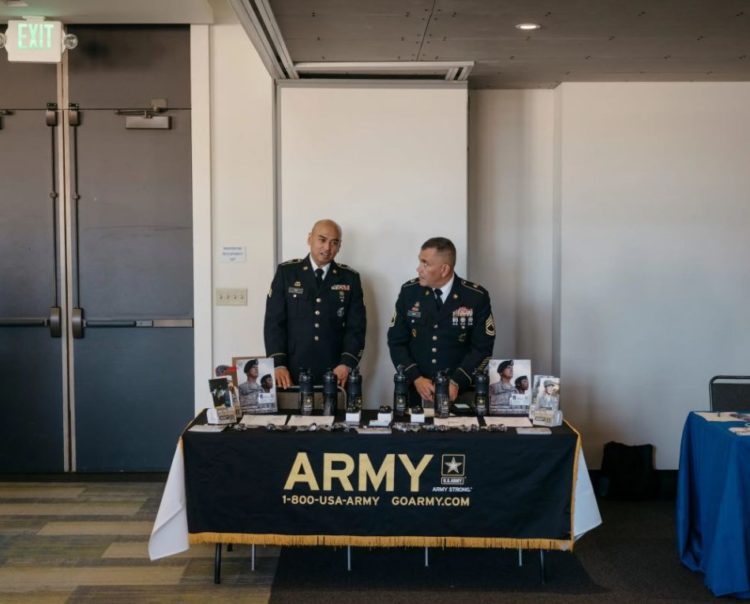

Personally, I would think it would be more difficult to lure a skilled and experienced civilian population into the Corps. I hope I’m wrong about that.
There Are Not as Many Qualified Applicants to Choose From
Just showing up at a recruiting office willing to serve is not enough. Every year, fewer and fewer potential applicants qualify for military service. Obesity, mental health issues, past criminal records, and lack of a high school diploma cut deeply into the pool of potential warfighters. Contrary to elitist smears that claim losers join the military because they can’t get into college or hold a regular job, studies have consistently shown that service members are more likely to have high school diplomas and college degrees and less likely to have criminal records than the general population.
Since we have an all-volunteer force, the military depends on a constant flow of new recruits every year. A 2017 survey conducted by the Pentagon shows that of Americans between the ages of 17 and 24, a full 71% are ineligible to serve in the United States military. The situation isn’t any better today.
In other words, more than 24 million of the 34 million young people in that age group could not join our armed forces, even if they wanted to, which most of them do not.
Here is the situation we are faced with: Only 29% of our nation’s young adults are qualified to serve. This manpower shortage in our troops directly compromises national security.
Shrinkage
In what some might cite as a candidate for understatement of the year, Undersecretary of the Army Gabe Camarillo said at a recent press conference: “We’re facing, obviously, some challenging conditions in terms of our ability to recruit and attract talent.”
Roger that, sir.
He blamed what he called “a very tight labor market” for the shortfall.
Camarillo said the Army’s total number of forces would go from 485,000 soldiers currently to 476,000 in the fiscal year 2022, which ends in September, and further down to 473,000 in the fiscal year 2023.
Retired Army Lt. Gen. Thomas Spoehr, director of the Heritage Foundation’s Center for National Defense, called the situation unprecedented. He said:
“The Army has not faced such recruiting headwinds in the last 30 years. I am unaware of a situation where the Army has cut its end strength in response to a negative recruiting outlook.”
The general also attributed the decision to the Biden Administration keeping the Army budget below the rate of inflation.
“If the Biden administration was not holding the Army’s budget below the level of inflation, I am not sure they would have had to resort to cutting their end strength.”
According to Military Times, the reduction would leave the service at its smallest size since 1940, when it had just over 269,000 troops. This small size can lead to its own retention problems. A smaller force will result in longer deployments which makes reenlistment less attractive to those serving.








COMMENTS