
Three Staff Sergeants in RRD were charged with this project. The first change: lose the high and tights. The traditional Ranger haircut was only decreasing their level of flexibility, so RRD went to regular Army AR 670-1 hair standards.
Next, two RRD members overhauled the selection process. One of the two had been to another Special Operations selection course previously and saw how they ran things. This inspired them to use land navigation as a tool to test and select RRD candidates. Land Navigation while carrying a rucksack is often used in Special Operations selection programs, not so much to test LandNav skills, but to use it as a stressor to see how candidates perform when they are tired and alone in the wilderness.
Previously, RRD selection was a PT test, a roadmarch, an interview with a psychologist, and a board review. Now, RRD was scouting locations in Dahlonega, Georga to set up land navigation lanes for the revamped selection course. This was coordinated with 5th Ranger Training Brigade, which runs the much-loved Mountain Phase of Ranger School, for billeting, use of the chow halls, etc… for RRD candidates in selection. Candidates had to reach several points each day, rucking their way with a map and compass. There really wasn’t a time standard that they had to meet, it was simply to see how the students operated on their own with no feedback. Other tested events included Keep In Memory (KIMs) games.
Once the candidates reached their final point on the Land Navigation course, they were instructed to get into a van and were driven to a location where they would then have to conduct a final graded task, a low-visibility recon training operation.
At the conclusion of the selection course, the candidates would then be permitted to relax until they were interviewed by a JSOC psychologist, and were then given an evaluation board by RRD to decide whether or not they wanted to select the candidate.
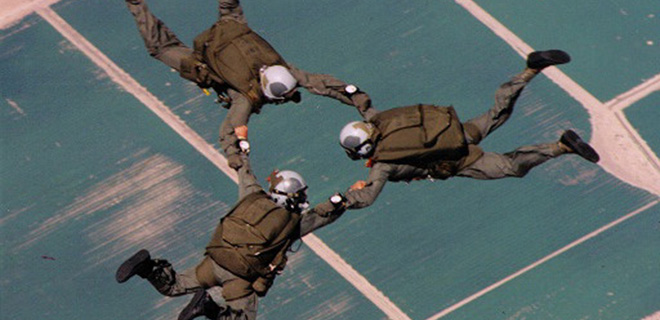
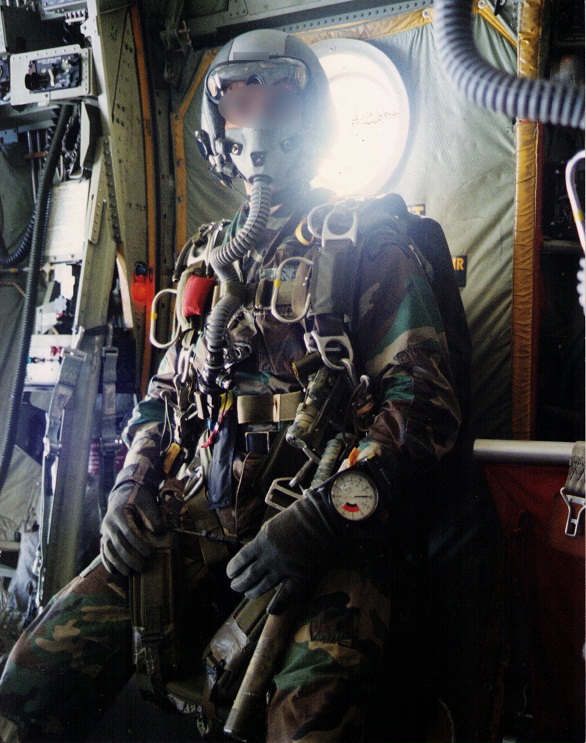
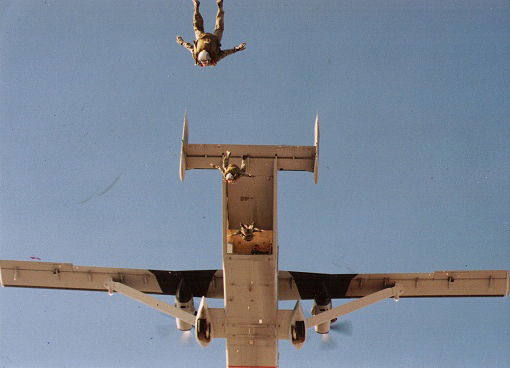
Once selected, the Ranger in question would attend the Recon Training Course, or RTC, to become an Regimental Reconnaissance Detachment team member. The course started at the beginning by teaching how to build hide sites, use radios, and other critical skills. Meanwhile, the NCOs in RRD were pushing to get some missions dropped from the unit’s Mission Essential Task List. For instance, each Recon Team had two slots for combat divers. This seemed like an unnecessary training burden on the teams when they already had many other capabilities to maintain, ones they were much more likely to use, such as HALO, now known as Military Free Fall. Eventually, the combat diver mission was scrapped.
RTC also included a cumulative exercise at the end of the course. The trainers were also lobbying the Regimental headquarters for driving training, including civilian vehicles, and a clothing allowance, since they were wearing civilian clothes more and more often. They also wanted to grow from 18 operators to 24, in order to create an addition Recon Team.
Things were changing fast and RRD found itself slowly becoming a JSOC asset rather than a 75th Ranger Regiment asset.
Many are now aware that JSOC was conducting snatch and grab operations in Bosnia in the late 1990s. What most people are not aware of is that RRD Rangers were also attached to their JSOC counterparts in country. While a full RRD Recon Team never deployed to Bosnia to look for war criminals, they did deploy as singletons. One mission in Bosnia was simple familiarization with the terrain, which saw RRD and JSOC operators driving around the country in 10 day spans simply to become acquainted with what would be their operational environment.
Another change to how RRD operated was that they began bringing Air Force TACPs with them on their recon missions. During an airfield seizure, a TACP could control aircraft, a valuable skill set to have on the ground with them. Previously, TACPs would be assigned to the Ranger Regiment at random, including Air Force guys straight out of the pipeline. This changed, and RRD only worked with TACPs out of 2-1 STS who were more experienced in operations. One of these talented Airmen was Brian Daly, who, sadly, died while working as a Military Free Fall parachute instructor in Yuma, Arizona during a training accident in 1996.
RRD continued to grow in leaps and bounds, their hard work paying off when they were officially bumped up to become a JSOC asset sometime around 2005. The unit has now been re-designated the Regimental Reconnaissance Company or RRC. The information in this article is an important part of Ranger history, but the details are now obsolete from a intelligence standpoint. The details of RRC will have to remain undisclosed for this reason.








COMMENTS