The 2008 scandal involving Major John L. Cockerham revealed a significant corruption case within the U.S. Army's contracting operations in Iraq, where he and his family accepted millions in bribes. Their actions not only enriched themselves but also diverted crucial funds meant for supporting American troops.
Key points from this article:
The investigation into Major John L. Cockerham's contracting practices in Kuwait uncovered a bribery network involving his wife, sister, and niece.
How the Cockerham family's actions siphoned off nearly $10 million from essential supplies for U.S. troops fighting in Iraq, highlighting the risks of corruption in military contracting.
Why the case serves as a critical reminder of the need for accountability and transparency in government programs, especially those supporting military personnel.
Updating summary...
Inside the $10 Million War Profiteering Ring Led by a U.S. Army Major
SOFREP News Team
Speed
1x
Listen
COMMENTS
The Cockerham family’s betrayal of trust during a time of war stands as a stark reminder that corruption can infiltrate even the most sacred duties, turning those entrusted with the nation’s welfare into perpetrators of greed-fueled criminal enterprises.
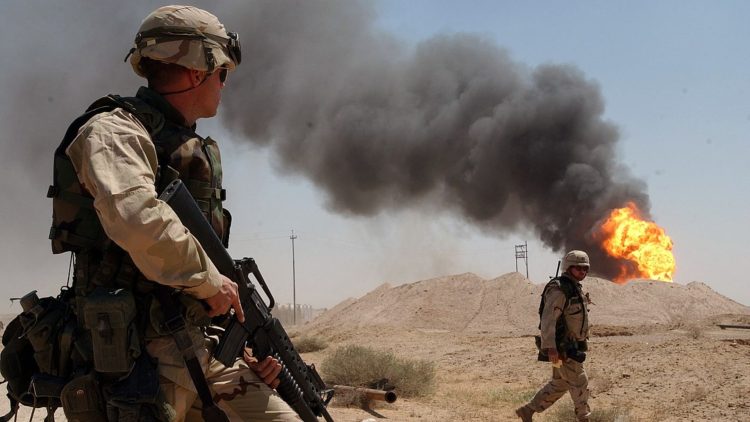
A US Army soldier stands guard duty near a burning oil well in Southern Iraq, 2003. (Wikimedia Commons)
The year 2008 was a rollercoaster of news, from the global financial crisis to Barack Obama’s historic election. Nonetheless, one story that sent shockwaves through the nation involved a betrayal of the highest order. At the heart of the scandal was Major John L. Cockerham, a US Army officer stationed in Kuwait.
Advertisement
The former major’s position as a contracting officer, responsible for awarding contracts for supplies to troops in Kuwait and Iraq between 2004 and 2007, should have been a pillar of integrity. Instead, it became the linchpin of a corrupt enterprise that involved his entire family.
For those who need a refresher, this is what happened.
Billions in Black: Corruption in the Iraq War
As American troops were deployed to battle insurgents on Iraqi soil, a different kind of war was raging behind the scenes: a battle against corruption.
Advertisement
With billions of dollars flowing into contracts for essential supplies such as food, water, shelter, and basic infrastructure, US Army contracting officers stationed in Kuwait, the war effort’s strategic hub, were tasked with overseeing this massive expenditure.
How massive, you might ask? Well, by 2007, a staggering $30 billion (more or less) had already been spent on contracts to support operations in Iraq. That scale of spending, combined with the chaotic conditions on the ground, created an environment ripe for exploitation. A perfect storm of greed indeed and opportunity emerged.
Advertisement
The Investigation Begins
Concerns began to mount about irregularities and potential corruption within the contracting process. In response to these growing suspicions, the Army finally had enough and launched a joint investigation in 2006.
The US Army’s Criminal Investigation Command (CID), the Defense Criminal Investigative Service, the Special Inspector General for Iraq Reconstruction, and the Federal Bureau of Investigation (FBI) have joined forces to investigate and look into the murky world of military contracting.
The Kuwait-based contracting office, which had awarded billions of dollars in contracts, received special attention—including one Major John L. Cockerham.
Advertisement
The Cockerham Family Corruption Case
The investigation into the Iraq War contracts uncovered a sprawling bribery network, and the heart of this mess was Major Cockerham, who was found to have accepted millions of dollars in bribes in exchange for awarding contracts.
Not only that, his wife and sister were both complicit in laundering the illicit funds, and later investigations uncovered his niece’s participation as well. Practically, Cockerham’s entire family was involved and played crucial roles in laundering the ill-gotten gains. The audacity of this family-run criminal enterprise stunned the nation.
The details of the case were as shocking as the crime itself.
Safe deposit boxes overflowing with cash, elaborate cover stories, and a complex web of deceit painted a picture of a family consumed by greed.
The impact of their actions extended far beyond their personal enrichment, as the funds were siphoned away from vital supplies for troops fighting on the front lines.
As the investigation unfolded, the American public was confronted with a stark reality: corruption could infiltrate even the highest levels of government. The Cockerham case served as a stark reminder of the importance of accountability and transparency.
Sentencing and Closure
The ultimate sentencing of the Cockerham family members in December 2009 brought a sense of closure, with John Cockerham sentenced to 210 months (17 and a half years) in prison and ordered to repay nearly $10 million. His wife, Melissa, received a prison sentence of over three years (41 months) and a restitution order of $1.4 million. John’s sister, Carolyn Blake, was handed a nearly six-year prison (70 months) term and a restitution order of $3.1 million. Even their niece, Nyree Pettaway, was not spared, receiving a year and a day (12 months) in prison and a $5 million restitution order.
In the end, the Cockerham affair was a stain on the uniform, a cancer that metastasized through a system meant to serve, not to feed personal greed. It’s a stark reminder of the vulnerability of vast government programs, especially those designed to support our nation’s heroes and their families.
While the Cockerhams faced justice, vigilance and transparency must be the cornerstones of any system entrusted with public funds, particularly those dedicated to our armed forces.
The recent conviction of Janet Yamanaka Mello for a similar crime highlights the ongoing challenge of protecting taxpayer dollars from those who seek to exploit them for personal gain.
—
Disclaimer: SOFREP utilizes AI for image generation and article research. Occasionally, it’s like handing a chimpanzee the keys to your liquor cabinet. It’s not always perfect and if a mistake is made, we own up to it full stop. In a world where information comes at us in tidal waves, it is an important tool that helps us sift through the brass for live rounds.
Advertisement
What readers are saying
Generating a quick summary of the conversation...
This summary is AI-generated. AI can make mistakes and this summary is not a replacement for reading the comments.










COMMENTS