The article explores the development and significance of helicopters during World War II, highlighting key models like the Flettner Fl 282 Kolibri and Sikorsky R-4, which showcased the versatility and potential of rotary-wing aircraft in military operations. These early innovations laid the groundwork for the extensive use of helicopters in both military and civilian applications post-war.
Key points from this article:
The Flettner Fl 282 Kolibri, known as the 'Hummingbird,' was a pioneering German helicopter that played crucial roles in Anti-Submarine Warfare and reconnaissance during WWII.
How the Sikorsky R-4 became the first mass-produced helicopter and was vital for search and rescue missions, particularly in the challenging terrains of the Burma campaign.
Why the innovations in helicopter design during WWII, such as the tandem rotor concept from the Piasecki PV-2, have influenced modern rotary-wing aviation and established a legacy that continues today.
Updating summary...
Helicopters in World War II: How Early Rotary-Wing Aircraft Changed Warfare
SOFREP News Team
Speed
1x
Listen
COMMENTS
WWII helicopters were used for troop transport, casualty evac, airborne command posts, SAR operations, and attacking ground targets.
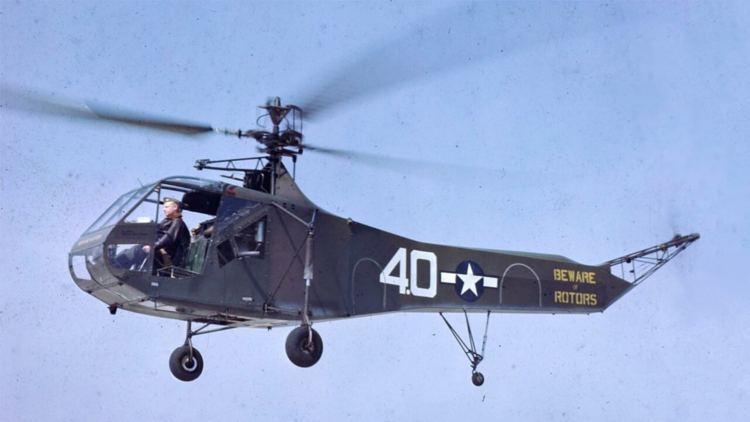
Sikorsky R-4 in a hover circa 1945. (Image source: Wikimedia Commons)
When you think of World War II, helicopters probably aren’t the first thing that comes to mind. Jets, bombers, and even atomic bombs usually steal the spotlight. But while the world watched massive weapons shape the battlefield, a quieter revolution was taking flight. Literally.
Advertisement
Helicopters were still in their infancy, but even the earliest models proved their worth. From rescuing stranded soldiers in dense jungles to scouting enemy positions and lifting heavy cargo, these rotary-wing pioneers hinted at a future where vertical flight would transform warfare and save lives. And while their numbers were small, their impact was enormous, echoing all the way to the skies of today, where helicopters remain indispensable.
It’s a story of innovation, daring pilots, and machines that could hover where planes couldn’t. In many ways, the helicopters of WWII were the first glimpse of the air mobility revolution that defines modern military aviation.
Germany’s “Hummingbird”: The Flettner Fl 282 Kolibri
Germany was among the first to field a practical helicopter. The Flettner Fl 282 Kolibri, or “Hummingbird,” first flew in 1941 and featured an innovative intermeshing rotor system that eliminated the need for a tail rotor, a design still studied by engineers today.
Advertisement
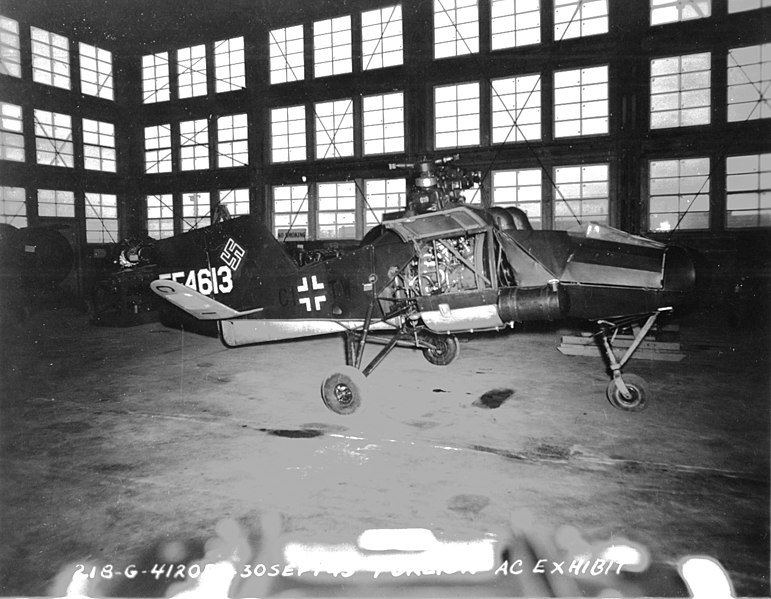
The German helicopter Fletter Fl. 282 “Hummingbird” (Flettner Fl 282 Kolibri) at the US Air Force Base Freeman Field, circa 1945. (Image source: Wikimedia Commons)
Compact and agile, the Kolibri excelled in shipboard operations, particularly for the German Navy. Delivered from 1942, it performed key roles in anti-submarine warfare (ASW) and intelligence, surveillance, and reconnaissance (ISR) missions, guiding destroyers toward submerged Allied submarines and scouting enemy positions on land.
While its production numbers were limited, the Kolibri’s design influenced post-war Soviet helicopters. Meanwhile, Western nations, led by Igor Sikorsky’s designs, adopted the single main rotor with tail rotor layout that remains standard today.
Advertisement
The “Workhorse Dragon”: Focke-Achgelis Fa 223
Another German innovation, the Focke-Achgelis Fa 223 Drache (“Dragon”), demonstrated the potential of helicopters for heavy lifting and multi-role operations. First untethered in 1940, the Fa 223 could transport cargo, conduct reconnaissance, evacuate casualties, and even assist in ASW.
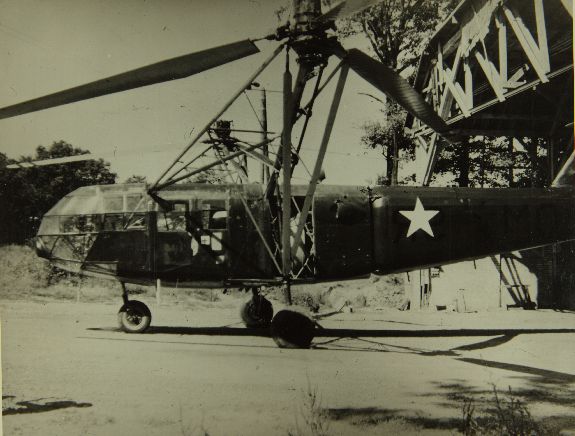
Focke-Achgelis Fa 223 helicopter of the Luftwaffe following capture by the United States Army Air Forces at the end of World War II. (Image source: Wikimedia Commons)
With a payload of nearly 2,830 pounds (1,284 kg), the Drache foreshadowed the modern concept of versatile transport helicopters. Though its deployment was limited by wartime constraints, the Fa 223 set the stage for rotary-wing designs capable of troop transport and supply missions, a role that would become critical in later conflicts like Vietnam and beyond.
Piasecki PV-2: The Humble Beginning of Tandem Rotor Innovation
Not every helicopter of WWII was a combat aircraft. The Piasecki PV-2, powered by a modest 90-horsepower engine, was a prototype that demonstrated the viability of tandem-rotor designs.
Advertisement
Frank Piasecki, a self-taught aviator, personally showcased the PV-2 in 1943, proving its controllability. This innovation directly led to the H-21 Shawnee, the iconic “Flying Banana,” which became a workhorse for troop and cargo transport in the 1960s.
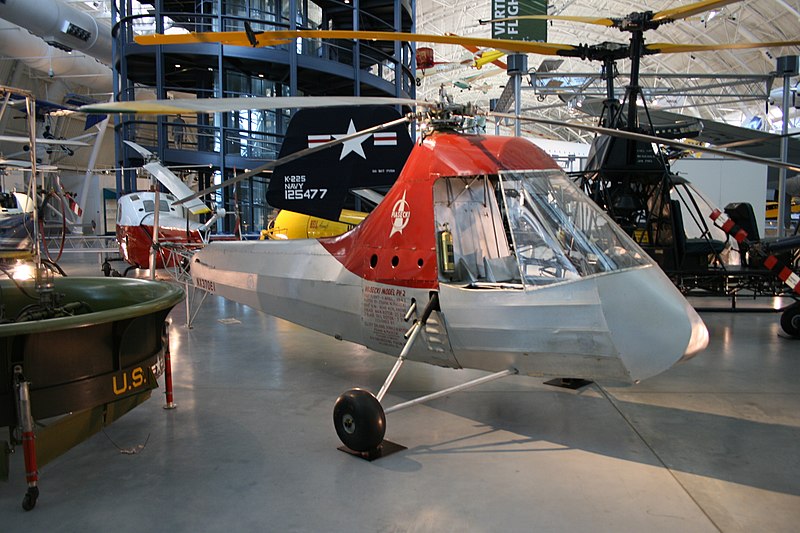
A Piasecki PV-2 on display. (Image source: Wikimedia Commons)
Piasecki’s tandem-rotor concept also paved the way for Boeing’s CH-47 Chinook, a staple of modern military operations. Today, Piasecki’s influence endures in both helicopters and unmanned rotary-wing systems, illustrating how WWII prototypes shaped decades of aviation.
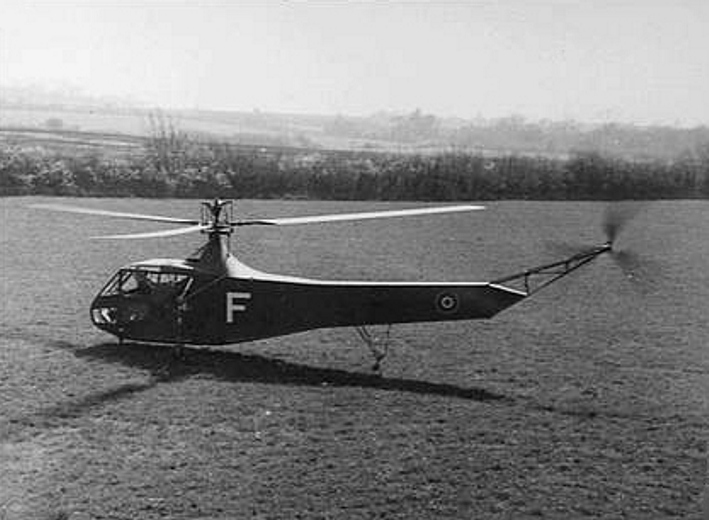
The Sikorsky R-4 holds the distinction of being the first mass-produced helicopter in the world and the only Allied helicopter to see service in WWII. Its two-seat design and three-bladed rotor enabled search and rescue missions in remote and hostile environments, such as the rugged Burma campaign.
A Sikorsky R-4 Hoverfly helicopter assigned to an RAF Fighter Command rotor flying school taking off. (Image source: Wikimedia Commons)
Although not designed for combat, the R-4’s agility saved countless lives and demonstrated the tactical value of helicopters in modern warfare. Sikorsky’s legacy endures, with the company continuing to develop helicopters critical to military, emergency, and civilian aviation in 2026.
From WWII to 2026: The Lasting Impact of Early Helicopters
The helicopters of World War II may have been limited by range, speed, and payload, but their significance cannot be overstated. They introduced capabilities that transformed military strategy, from evacuating wounded soldiers to conducting intelligence missions in areas inaccessible to traditional aircraft.
Today, helicopters remain indispensable. Modern warfare, disaster response, and search-and-rescue operations rely on rotary-wing aircraft more than ever. From stealth drones inspired by rotary technology to advanced troop and cargo transport helicopters, the seeds planted during WWII continue to define the future of aviation.
The humble beginnings of the Kolibri, Fa 223, PV-2, and R-4 are a testament to ingenuity under pressure. A reminder that even amid the world’s deadliest conflict, innovation took flight, shaping a legacy that endures in the skies today.
This article has been reviewed and updated.
Advertisement
What readers are saying
Generating a quick summary of the conversation...
This summary is AI-generated. AI can make mistakes and this summary is not a replacement for reading the comments.










COMMENTS