

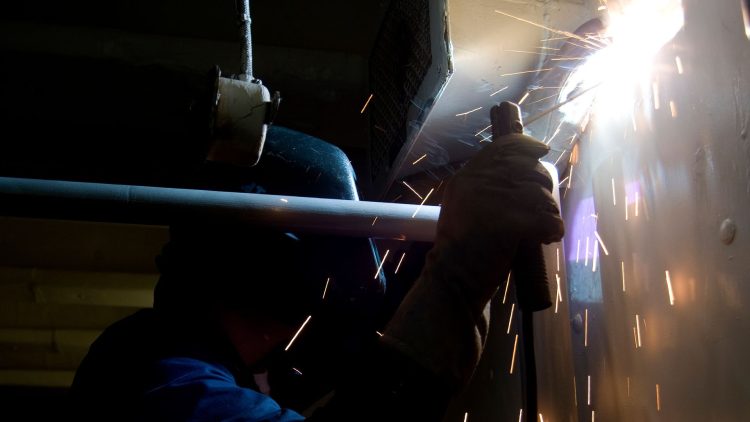

He pointed out that many workers are drawn to the Navy’s mission and the purpose behind their work, but without competitive wages, attracting enough skilled personnel is nearly impossible.
The Navy has already begun to recognize the importance of improving compensation.
The Trump administration is expected to issue an executive order aimed at raising wages for workers in nuclear shipyards, particularly as part of a broader effort to bolster the US shipbuilding industry and ensure national security. Alongside wage increases, experts recommend enhancing benefits and offering tax incentives to make these roles more financially viable and appealing.
Additionally, offering more affordable housing near shipyards could help workers manage the high cost of living in certain regions.
Federated Shipbuilding: A Potential Solution to Labor Shortages
In light of the challenges posed by labor shortages, some experts have proposed alternative solutions, such as the concept of “federated shipbuilding.”
Ron O’Rourke from the Congressional Research Service suggested that the Navy should consider moving some shipbuilding operations to regions with a more readily available labor force, beyond the traditional shipbuilding hubs. By decentralizing construction functions and establishing production facilities in areas of the country less involved in shipbuilding, the Navy could tap into new labor markets and reduce the strain on overburdened shipyards.
However, O’Rourke also noted that while federated shipbuilding could provide access to new labor pools, it would require significant adjustments to ship designs and production processes, potentially complicating management and oversight.
Still, the idea of spreading shipbuilding across more regions could alleviate some of the pressure on current shipyards and provide a more sustainable solution to the workforce shortage.
The National Security Implications
The labor shortage and its impact on shipbuilding are not just a logistical problem for the Navy; they pose serious national security risks.
Shelby Oakley, from the Government Accountability Office (GAO), emphasized that the US Navy’s fleet has not grown since 2003, despite the increasing threats posed by adversaries like China. While China is on track to surpass 400 warships in the near future, the US Navy has only 296 battle-force ships.
If the Navy continues to struggle with shipbuilding delays and cost overruns, it risks falling behind in the global arms race, potentially weakening its ability to project power and defend US interests abroad. The delays in ship construction have been exacerbated by issues such as cost overruns and design instability.
Oakley pointed out that the Navy’s budget and acquisition processes are often misaligned with industry best practices, leading to unpredictable outcomes. These inefficiencies, combined with a shrinking and undertrained workforce, could result in a fleet that is less capable of meeting the needs of a rapidly changing global security landscape.
Watch the replay of the SPF hearing last March 11, 2025, below:
Labor Shortages Must Be Addressed to Secure National Defense
The recent hearing before the HASC made it clear that addressing labor shortages in shipbuilding must be the top priority for the US Navy if it is to meet its shipbuilding and national security goals. As experts have emphasized, raising wages, improving benefits, and creating a more favorable work environment are critical to attracting and retaining skilled workers. Additionally, exploring alternative shipbuilding strategies like federated shipbuilding could help alleviate some of the pressures on traditional shipyards.
With national security at stake and the growing threat from adversaries like China, the US Navy cannot afford to continue struggling with labor shortages and delays in shipbuilding. By investing in its workforce and offering better incentives, the Navy can ensure that it has the skilled personnel needed to meet the demands of the future and maintain its superiority on the global stage.








COMMENTS