Middle East

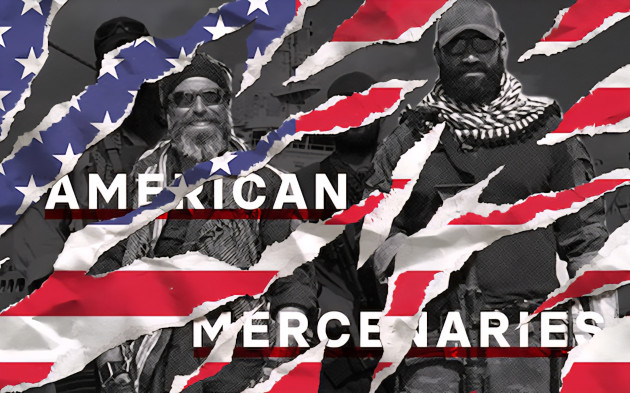
American Mercenaries Linked to UAE Assassination Program in Yemen

The UAE’s reported use of former U.S. special operations contractors to run a targeted assassination campaign in southern Yemen shows how a partner’s “counterterror” fight can slide into deniable contract killing, with shaky oversight and almost no accountability.

Investigations show the United Arab Emirates hired American mercenaries during the Yemen war to conduct targeted assassinations, blurring the line between counterterrorism, proxy warfare, and contract killing with little accountability.

Advertisement

During the height of the Saudi-led coalition’s campaign in Yemen, the United Arab Emirates quietly employed a group of foreign mercenaries to carry out targeted killings in the southern port city of Aden and surrounding areas. According to a BBC Arabic investigation published in 2024, the program began around 2015 and relied heavily on former U.S. Special Forces personnel operating under a private company known as Spear Operations Group.

The unit was reportedly led by Abraham Golan, a former Israeli commando, and included ex–U.S. Green Berets and Navy SEALs. BBC Arabic reported that the team was initially paid roughly $1.5 million by a UAE military officer, Lt. Col. Ahmed al-Mahmoudi, with total payments tied to the program reaching approximately $17 million based on payroll records reviewed by investigators. The contractors were tasked with assassinating individuals identified by Emirati intelligence as threats, including Islamist clerics, political activists, and figures critical of UAE-backed factions.

Multiple former operators told investigators there were no formal rules of engagement, judicial oversight, or capture requirements. Targets were assigned via lists, and missions were conducted using sniper rifles, silenced pistols, drive-by shootings, and motorcycle-based attacks. The killings were extrajudicial by design and took place in densely populated urban environments.

Advertisement

The UAE has denied funding assassination campaigns, maintaining that its operations in Yemen were focused on counterterrorism, particularly against al Qaeda in the Arabian Peninsula. However, BBC Arabic reported that several targets had no publicly documented AQAP ties and were instead associated with political movements opposing Emirati influence in southern Yemen.

The investigation also found that after foreign contractors drew down, Emirati personnel and local proxy forces continued similar operations. Contractors reportedly trained Emirati units and affiliated militias to conduct targeted killings independently. Assassinations of critics tied to the Southern Transitional Council have continued in southern Yemen, often attributed to local cells operating with Emirati backing.

Advertisement

No U.S. prosecutions have followed the revelations. Legal experts cited by multiple outlets have noted potential violations of U.S. law, including statutes governing mercenary activity and foreign political violence, but no cases have been brought forward. The Logan Act has been raised in commentary, though it has historically been rarely enforced.

The disclosures landed as Yemen entered another violent phase. In 2025 and early 2026, the Department of War directed renewed U.S. air and missile strikes against Houthi targets under Operation Rough Rider, with U.S. Central Command focusing on leadership nodes, missile infrastructure, and maritime threats. While no new reporting ties American contractors directly to current assassination campaigns, UAE-backed militias continue to employ Western security contractors in advisory and training roles.

Strategically, the episode underscores how coalition warfare in Yemen devolved into fragmented proxy violence, where state actors outsourced lethal operations to maintain deniability. For Washington, it raises uncomfortable questions about oversight, accountability, and the long-term consequences of allies running parallel wars with American veterans as hired guns.

Advertisement

The Yemen case is a reminder that once targeted killing is privatized, control erodes quickly, and accountability is often the first casualty.

You must become a subscriber or login to view or post comments on this article.