

Addressing Key Challenges
One of the significant challenges they’re tackling with these tests is figuring out how effective these laser weapons are against different threats, from drones to incoming rockets and mortars.
Mingus hammered home the point that it’s not just about how much juice these lasers pack but how much bang they deliver per square centimeter.
The weather’s a wildcard, too, especially with those nasty dust storms in the Middle East.
The Army is hoping these real-world tests will give them a lowdown on how Mother Nature messes with laser power. That’s the kind of stuff you can’t simulate in a lab.
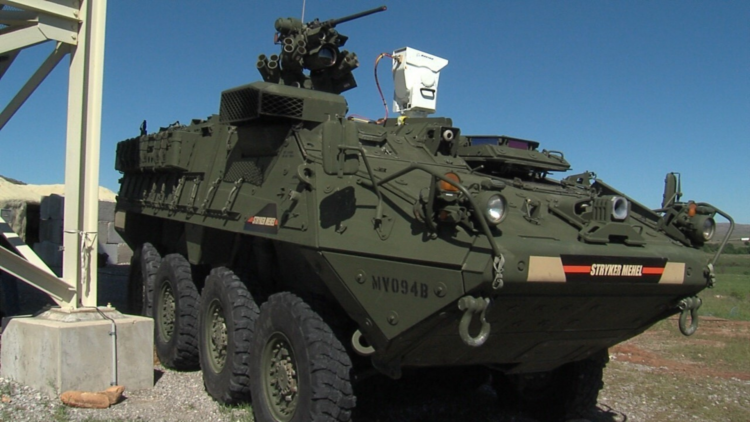
This is Raytheon's High Energy Laser (HEL) fitted to the Stryker DE M-SHORAD. Its 50 kW laser can shoot down Class I, II, and III drones at ranges > 5 km. This means small, medium and large UAS flying at altitudes of up to 30,000 ft. It can perform a C-RAM role against rockets,… pic.twitter.com/Zt8CsBmqvv
— Nicholas Drummond (@nicholadrummond) September 30, 2023
Logistical Concerns and Supply Chain Challenges
But it’s not just about the tech side of things.
The Army’s also sweating over the logistical nightmare of keeping these high-energy weapons running in the heat of battle.
Sure, these tests won’t exactly replicate what soldiers face on the ground, but they’re a solid first step in figuring out the kinks.
Advancing Laser Power: From Prototype to Field Testing
The US Army’s been tinkering with Stryker-mounted laser prototypes since the mid-to-late 2010s, aiming to slap some serious firepower onto combat vehicles to take out drones, rockets, and other nasty surprises.
Exact start dates are fuzzy, but by 2021, it seems they were making headway.
Reports suggest they’d cleared enough hurdles to start testing these bad boys out in the real world by early 2024, and this is how they find themselves in the Middle East to see how they hold up in the grit and grime of actual combat zones. It’s all about figuring out if these lasers are worth their salt for future battles.
Implications for Future Defense Strategies
With drones buzzing around and the need for cheaper defense solutions, there’s a real push to get these laser prototypes up and running.
If they pan out, they could save a bundle compared to traditional interceptors, giving commanders a whole new bag of tricks to tackle threats.
As the Army dives into this journey of innovation and trial runs, the results of these real-world tests could reshape how we do military business, not just in the Middle East but everywhere else, too.








COMMENTS