

A Tight Balance
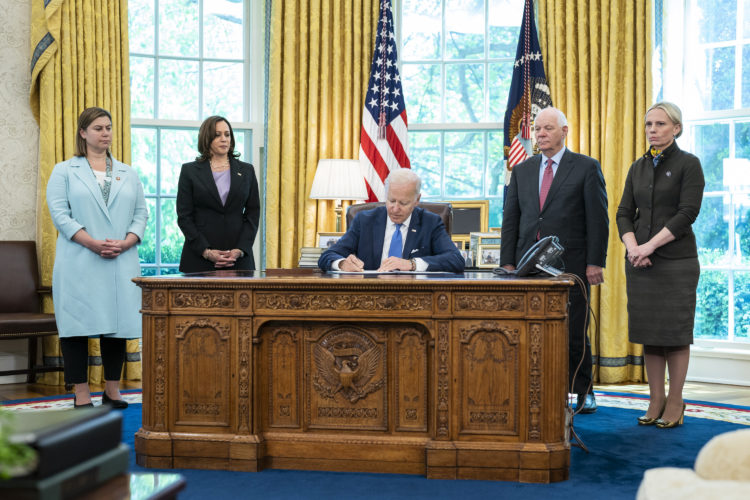
Reviving an 81-year-old war support policy is a significant escalation from the US as it tries to draw its limits and avoid a full-scale war with Russia. Recent news outlined the continued and exponentially growing support by Washington for Kyiv.
However, the White House continues to walk on a political minefield that will make it appear that the US is fighting a proxy war in Ukraine. Administration insiders said that Biden had chastised some of his top officials after news of US intelligence allegedly helping Ukrainians kill Russian troops.
Added to the mixed messaging the White House has said that one of its goals is to so degrade and deplete the Russian military that it will never be able to engage in aggression against a neighbor again. This is in contrast to the stated goals of Ukraine’s President Zelensky who simply wants Russian forces out of Ukrainian territory.
SOFREP Editor-in-Chief Sean Spoonts wrote about how the Biden Administration had tried to walk back a recent story from The New York Times claiming that the United States provided intelligence to Ukraine to kill Russian generals. Almost immediately after the story had gone public, National Security Spokesperson Adrienne Watson said that the intelligence given to Ukraine was not intended to kill high-ranking Russian generals. She also said that the US “self-prohibits” providing information to Ukraine about high-ranking Russian leaders.
Spoonts actually explained the situation with a historical twist to the whole intelligence world where the US and the Soviet Union had a gentlemen’s agreement not to kill each other’s spies, called the “Moscow Rules.”
“This agreement was informally known as the Moscow Rules, and under these rules, the US and USSR agreed not to attack each other physically and not do certain things, like counterfeiting each other’s money and interfering in each other’s internal politics (Yeah, I know). In all those years, the CIA and, by extension, our other intelligence agencies have not killed any Russian agents, dissidents, political opponents, or U.S. Traitors. Russia has pretty much followed the rules as well.”
Added to this was a Presidential Order dating back to the Ford administration in the 1970s about the US not engaging in the “assassination” of the leaders of foreign countries. By giving Ukraine information in order to specifically target high-ranking military officers our intelligence agencies may have been in violation of that directive which has been amended by preceding administrations but maintained.
In the case of a single general or colonel killed by Ukraine, US claims about not providing specific intelligence on their location or movements would be plausible, but not when there have been dozens killed in just 2 months.
Furthermore, according to Russian Policy Specialist and President of the Center for European Policy Analysis Alina Polyakova, there has been this “constant balancing effect” that the administration has been trying to do between supporting Ukraine and making sure it can defend itself militarily and more so, being concerned about military escalation against Russia.
“It’s increasingly untenable to maintain this kind of hand-wringing,” she noted. “It’s probably more effective to say this is what our policy is, and we will deal and manage the potential escalation responses we see from the Kremlin.”
Some veteran officials have agreed with Biden’s strategy to take caution from excessively poking at Vladimir Putin after he has continuously threatened to use tactical nukes.
“Putin wants us to make it a proxy war,” former Russia adviser who is now with the Brookings Institution Fiona Hill said. “Putin is still telling people outside Europe this is just a repeat of the Cold War, nothing to look at here. This isn’t a proxy war. It’s a colonial land grab.”
Former Ambassador to Russia, Michael A. McFaul, has also warned that there is a clear difference between providing aid for Ukraine and publicly flaunting that US intelligence was used to kill Russian troops.
“Yes, Putin knows that we are providing intelligence to Ukraine,” he said. “But saying it out loud helps his public narrative that Russia is fighting the U.S. and NATO in Ukraine, not just the Ukrainians. That doesn’t serve our interests.”








.jpg)
COMMENTS