

- Week 1: Aptitude/pre-selection. Candidates complete 2 x 8 mile speed marches, a 10 mile speed march, and a two-miler.
- Week 2: Navigation. This phase features four DS-led cross-country marches across the Brecon Beacons and four test marches, culminating in Endurance, a 40-miler.
- Week 3: SOP Phase. Candidates get a grounding in Pathfinders standard operating procedures, such as basic patrol skills and the construction of concealed observation posts.
- Week 4: Range Phase. This live-fire phase takes place in the Sennybridge Training Area (SENTA) and focuses on contact drills, including man-down drills. Candidates also receive a grounding in demolitions.
- Week 5: Final exercise. Here, the candidates, working in four- to six-man teams, plan and execute typical reconnaissance missions. Selection culminates with the candidates being ‘captured’ and put through mock interrogations in order to test their resistance to questioning.
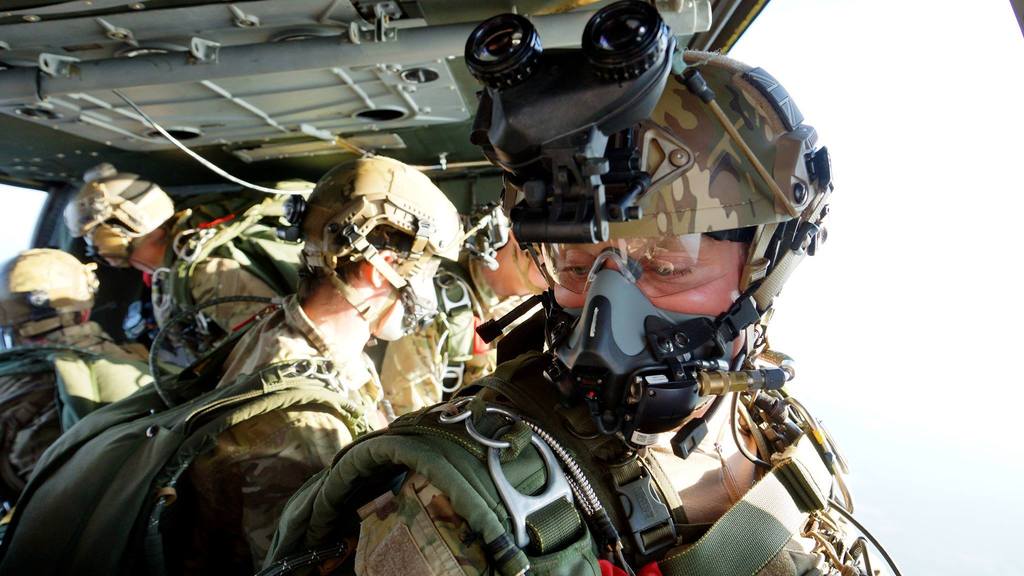
Those who successfully finish Pathfinder selection push on to intensive coursework in weapons, radios, and other patrol techniques. Pathfinders qualify as high-altitude parachutists by completing a HALO/HAHO training course (Military Freefall Course).
Pathfinder Operations
- Sierra Leone, 2000
During Operation Palliser the Pathfinder Platoon engaged RUF troops at Lungi Loi, in which several enemy soldiers were killed. It was during the Pathfinder’s engagements in Sierra Leone that shortcomings with the SA80 A1 assault rifles became evident. - Iraq, 2003
During Operation Telic the Pathfinders drove into southern Iraq on WMIK Land Rovers and carried out reconnaissance and offensive operations ahead of the main invasion force. - Afghanistan, 2001-2011
The Pathfinder Platoon has carried out a number of tours in Afghanistan. They were in Kabul in 2001, then spearheaded the British deployment into Helmand Province in 2006. They have since deployed as part of 16 Air Assault Brigade to Afghanistan in 2008 and 2010/2011.








COMMENTS