


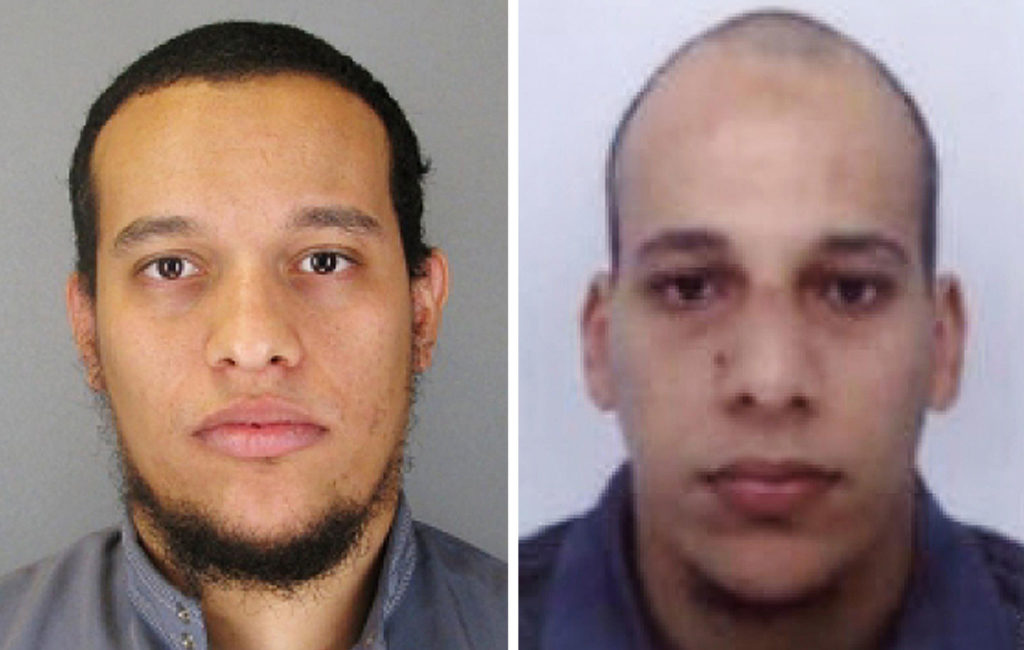
Among the list of 14 suspects, three will be noticeably absent: Hayat Boumeddiene, Mohamed Belhoucine, and his brother Mehdi Belhoucine. The Belhoucine brothers are believed to have fled France days before the 2015 attacks. According to France24, both brothers joined ISIS and fought and died in Iraq or Syria in 2016. The third, Hayat Boumeddiene, was Coulibaly’s partner. He is believed to have joined ISIS and is still at large.
Of the 11 suspects in custody, one man, Ali Riza Polat, 35, a French citizen of Turkish origin, is the most high profile. Polat is suspected of being the link between Coulibaly and the Kouachi brothers and Coulibaly’s “right-hand man” according to investigators. The charges leveled at the suspects, including Polat, complicity in terrorism charges, are punishable by life sentences, according to France24.
Je Suis Charlie and Laïcité
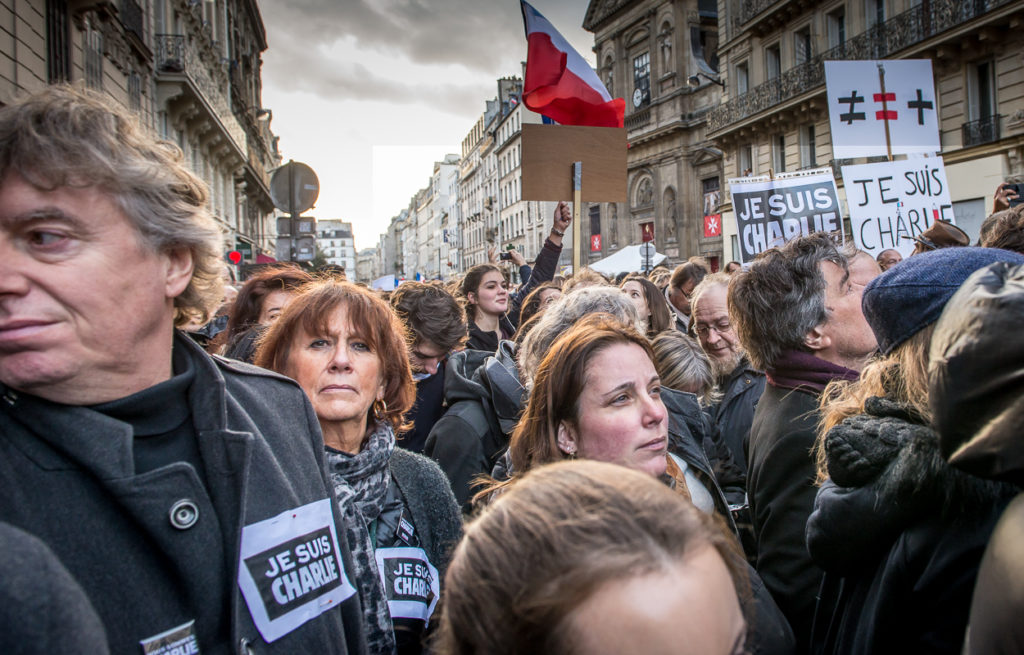
The trial will likely open a valve for the French people who, in 2015, had amassed in support of the murdered journalists. This lead to the Je Suis Charlie (I am Charlie) movement which swept across the globe. The movement, which sparked a national and international outcry in favor of freedom of speech and press, also points inwardly at the heart of French culture.
In France, as in the United States, there is a division of Church and State. Though the division is at times blurry as can be seen from the following: All churches, temples, and synagogues built before 1905 are property of the state and are tended to via municipal and national coffers. All religious feasts are French National holidays. Finally, the government pays the salaries of teachers in religious private schools.
France is underpinned by the notion of Laïcité, or simply, secularism.
Laïcité took on its contemporary shape in 1965 when the Roman Catholic Church accepted the notion of religious freedom under the Declaration on Human Dignity passed by the Vatican II Council. Prior to this, the Vatican required national governments to impose the moral guidelines of the Church on their citizens. In France, Laïcité countered the moral power of the priesthood over the French people. In essence, Laïcité represents the right to not just the freedom of religion, but from religious coercion.
But Laïcité is far from perfect. Some see it as rabid secularism that oversteps its intended purpose, a kind of hammer that views any religious expression as a violation of Laïcité. This notion came to head in the late 1980s through a widespread domestic debate about the wearing of the hijab or headscarf. According to staunch readings of Laïcité, the wearing of a headscarf in a public space — like a school, for example — violated the right of the others’ in that space to be free from coercion.
The debate eventually led to a blurring of political lines in France whereby French republicans, typically in favor of intervention by the secular republic in the quest for preserving freedom from religious coercion, were pitted against the liberals, who in turn vied for the liberty of the individual to practice their religious freedoms. In 2004, the French government issued a ban on headscarves in public spaces. In 2011, France became the first European country to ban the full-face veil, or niqqab, in public spaces.
Post-9/11
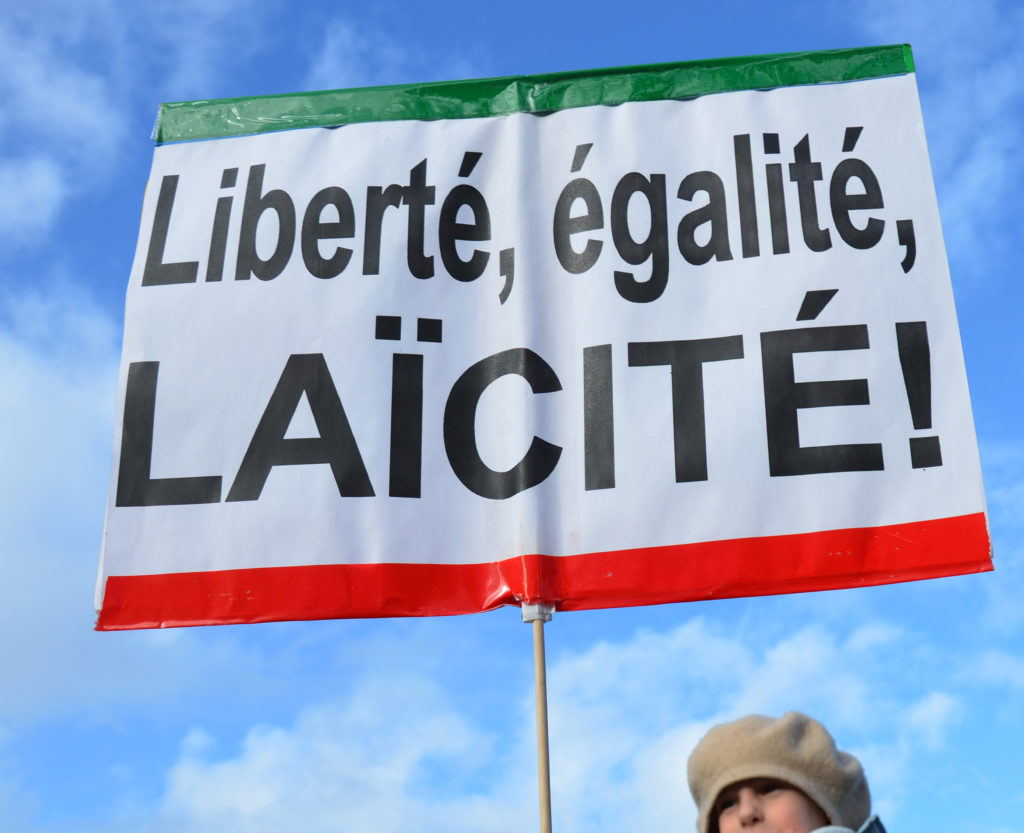
This battle over the hijab has since become a sociopolitical vortex, pulling into it questions of freedom of expression, speech, and press. Likewise, questions of Frenchness have arisen leading to battles over France’s policy of minority assimilation (foreigners seeking French citizenship must adopt French customs and language) and a rising tide of Islamophobia. It has also underscored France’s colonial past in the Middle East and North Africa, highlighting the social strife surrounding immigration from those regions, stirring prejudices against Franco-Arab communities, and widening social gaps along racial, ethnic, and religious lines.
In the post-9/11 world, Laïcité has become a talisman in the fight against radical Islam. Through its lens, a common Frenchness is clarified. In so doing the threats of radicalization and extremism become markers of a dangerous other. Je Suis Charlie was not just a message of support and solidarity, but one of unity in the fight against radical Islam. The sentiment is mirrored by the words uttered by France2 reporter Nicole Bacharan on the evening of September 11th, 2001: “Ce soir, nous sommes tous Américains” or “Tonight, we are all Americans.” Her words seemed to echo John F. Kennedy’s famous “Ich bin ein Berliner.”
Charlie Hebdo: “We Will Never Lie Down”
On Wednesday, French President Emmanuel Macron said that he would neither condemn nor condone the publication of the cartoons by Charlie Hebdo. In a press conference while on a trip to Lebanon, Macron said that it was not his place to pass judgment citing France’s freedom of expression.
“It’s never the place of a president of the Republic to pass judgment on the editorial choice of a journalist or newsroom, never. Because we have freedom of the press,” Macron said.
He went on to say that it was incumbent on the French people to show civility and respect, and to avoid a “dialogue of hate.”
Meanwhile, the editorial staff of Charlie Hebdo is unwavering in what publishing the contentious drawings represents. “We will never lie down. We will never give up,” director Laurent “Riss” Sourisseau wrote in a note that accompanied the cartoons in the latest edition.
“The hatred that struck us is still there and, since 2015, it has taken the time to mutate, to change its appearance, to go unnoticed and to quietly continue its ruthless crusade,” he added.








COMMENTS