

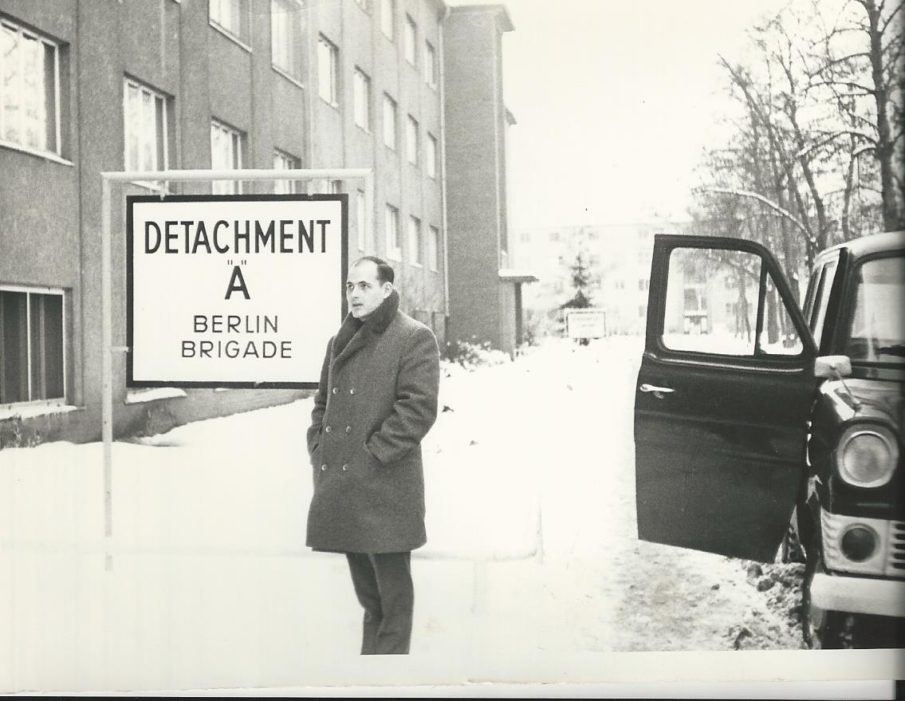
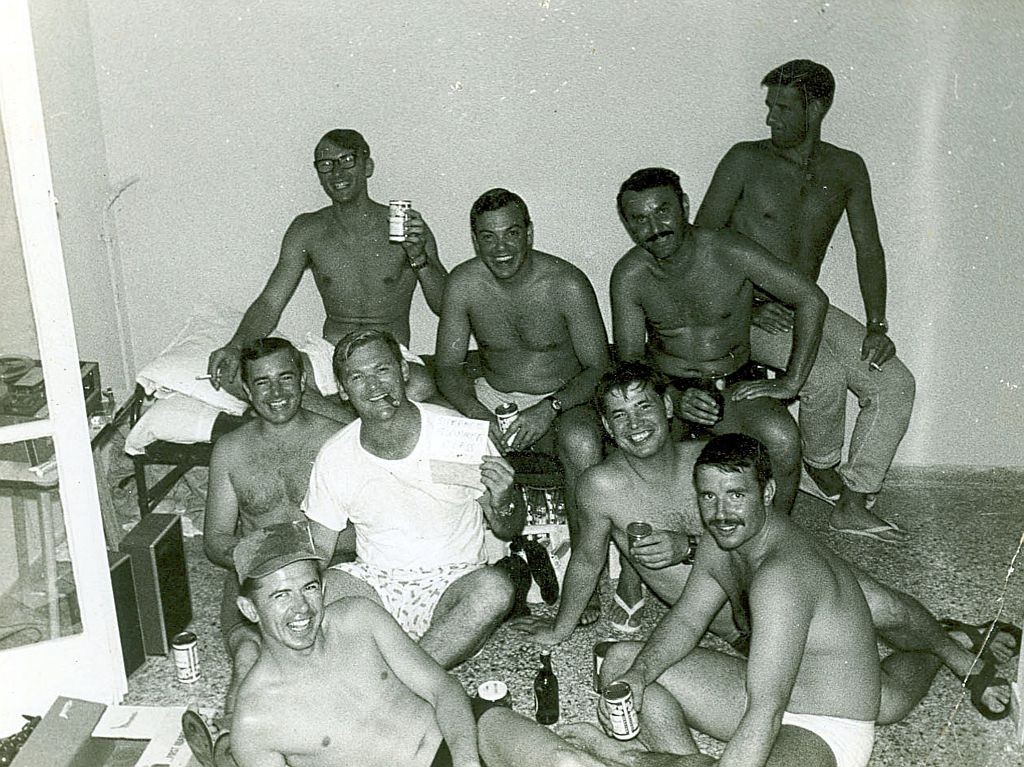
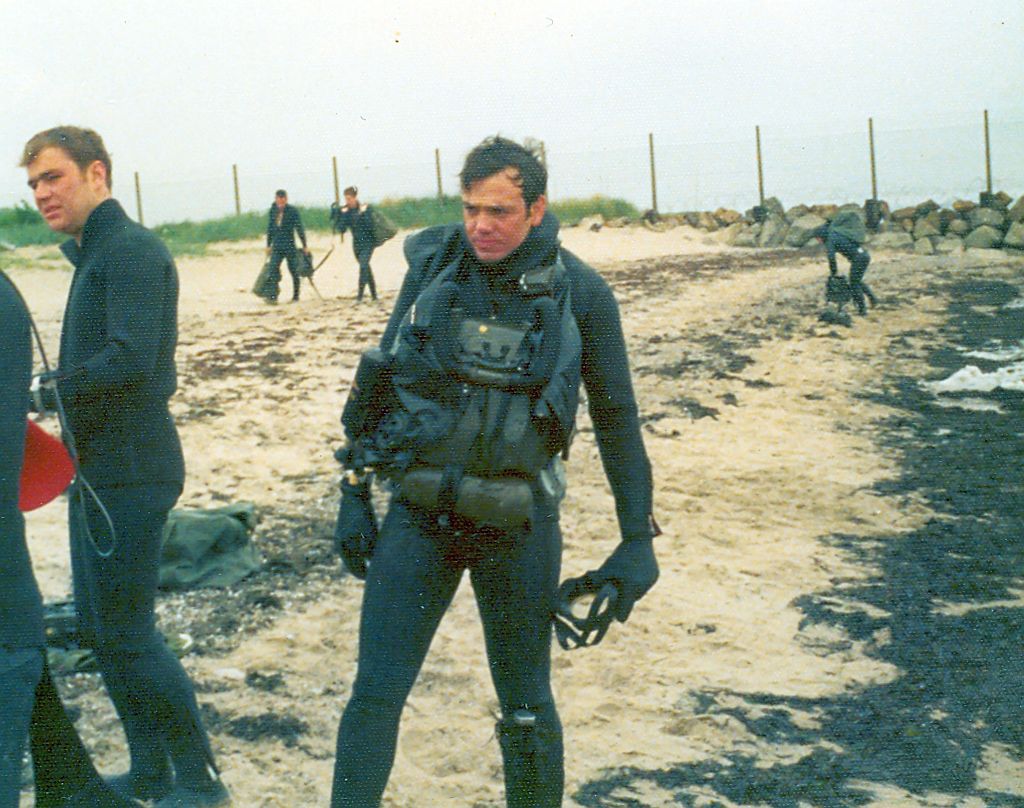
Due to how easy it was to be exposed, and the extremely politically sensitive situation in Berlin during the Cold War, there was no room for error by the men of Detachment A. Those who screwed up had to be sent packing home. One incident occurred when two Det A members were caught smuggling East Germans into West Germany for profit. They made a pretty penny at it too, at least until US Army intelligence caught on to their act.
Another precarious situation unfolded when three Det A members were rolled up in the British sector of Berlin. In 1974, a training mission was devised for Det A to test local infrastructure security.
“But just as we pulled our little red Fiat out of its hiding place in the woods – two VW busses full of the Berlin Polizei came up upon us and began to chase us,” Staff Sergeant Bob Mitchell said. The three Det A soldiers got trapped in a cul-de-sac next to the British Officers Housing complex, and engaged in mock firefight with blanks against the Germans, but the Americans were overwhelmed and captured. The British Provost Martial witnessed the entire episode and believed that the Americans were British officers and that the black-clad German policemen were members of the IRA. Heavily armed British Military Police showed up but by some miracle did not kill anyone, soon realizing that it was just a training mission.
“The Provost Marshall was so pissed that he had us all arrested and taken to the Olympic Stadium to be put in jail,” Mitchell said. “Eventually, the Commanding Officer who was a 3-Star General, of Berlin had to officially apologize to the Brits so that we could be released.” The incident also hit the local media, describing the sabotage training and subsequent simulated firefight. One newspaper joked, “for the first time in war history the British have ended a battle between Germans and Americans.”
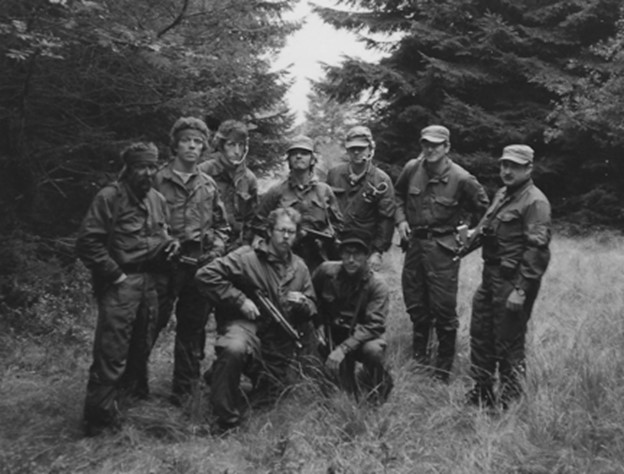
At times Det A was also tasked by the CIA to dig up old caches in Germany left over from World War II. They discovered weapons, food, and ammunition, as well as medical supplies that needed to be replaced since they were well over their expiration date. Some caches could not be accessed because the Germans had built gas stations or other buildings over them, where they remain to this day. In other instances, Det A would bury caches at the direction of other parties. “It was a ruse,” Wild said describing one technique used. “We would erect tents, usually a GP medium, put up barbwire and telephone lines making it look like it was a company headquarters. We would stay there for a few days making it look like it was a exercise but we were digging a hole under the tent to bury the cache and after we were done it would look just the same as when we got there.”
Under the Four Powers Agreement, there were not be any elite troops stationed in Berlin, but of course the British SAS, US Special Forces, the Soviet Spetsnaz were all present. “It was known within our circles but officially we were not there,” Charest commented. Ironically, the Spetsnaz element in East Germany probably had the same mission as Det A, to act as a stay behind unit to conduct sabotage operations if NATO ever decided to charge across the steppes towards Moscow.
The Four Powers Agreement also stipulated that Russian and American troops could cross into each other’s territory, under supervision and in uniform. Det A members did this regularly, wearing class A uniforms with conventional Army shoulder sleeve insignia. Wild said that during the late 1950’s, “almost everyday someone from the detachment went to East Germany from Checkpoint Charlie in a staff car driven by a MP and accompanied by a staff officer,” with a very specific route to drive from which they could not deviate from.
By the 1970’s, Det A members could get out in East Germany and walk around while in uniform. Since the dollar had such a great exchange rate in East Germany, the Special Forces soldiers would take the opportunity to eat a gourmet meal for just a couple bucks.
When asked about the infamous East German Stasi police, Warner Farr laughed and said, “we used to have lunch with them. There was a restaurant in East Berlin called Ganymed which was next to a canal…it was renowned for being the Stasi place.” On one visit the Stasi sat at a table next to the Special Forces men, loudly complaining that the Americans would come to East Berlin and consume all of the good food and wine. One of the Det A team leaders named Wolfgang Gartner stood up, turned around, clicked his heels and said, “gentlemen, let me introduce myself. My name is Wolfgang Gartner, I was born three blocks from here and I will eat here any time I damn well please.”
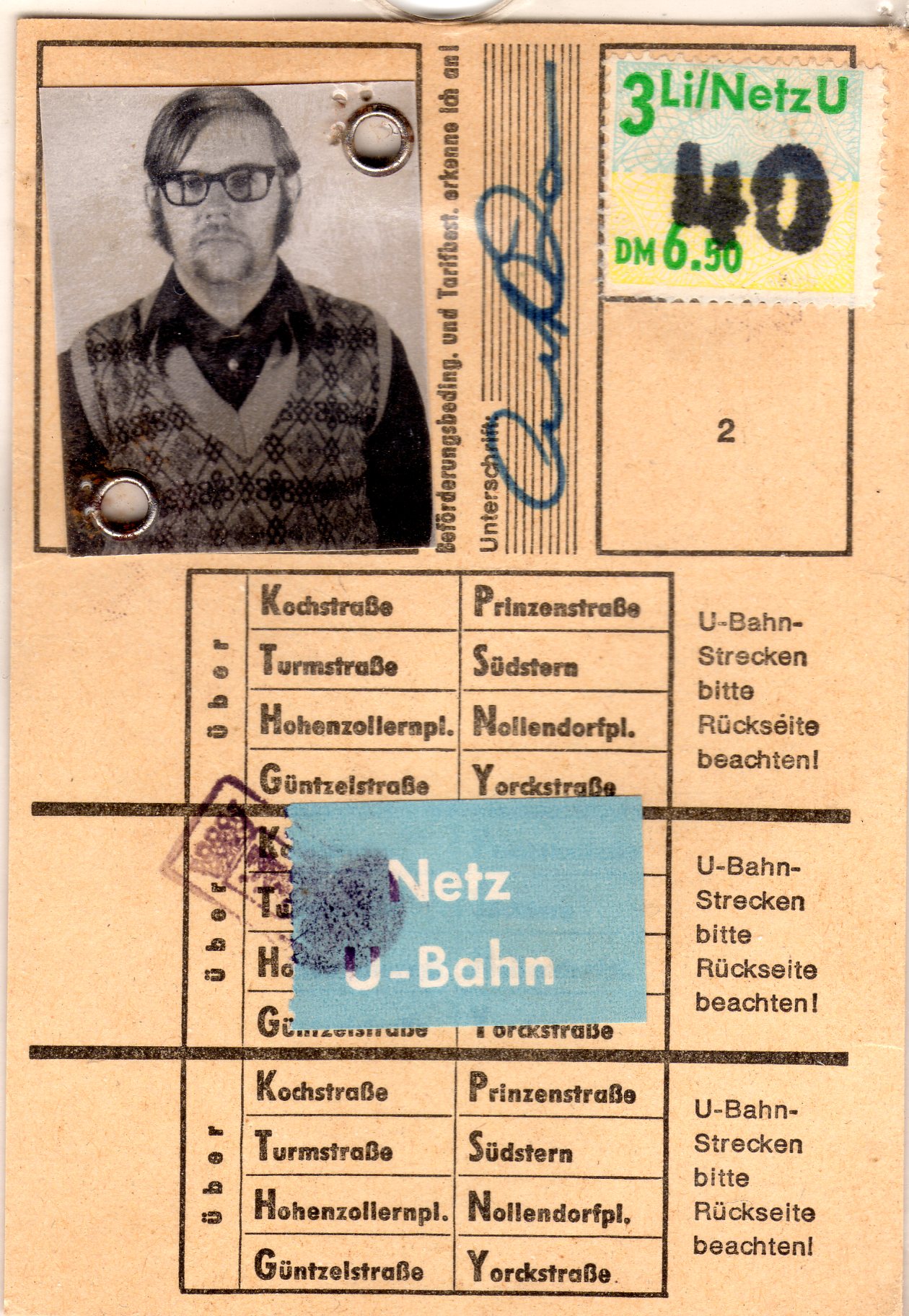
While in East Berlin, the Green Berets cased their targets, knowing that they were being watched by the Stasi and Russian KGB. A few Det A members even infiltrated into East Berlin wearing civilian clothes using the public transportation system, seeing how far they could push their limitations but this activity was never sanctioned by their command. In East Germany they were usually followed and under surveillance, the soldiers having to act as if everything was normal and behave like they were just GI’s making a run over to East Berlin to take advantage of the low exchange rate to buy goods that would be expensive on the other side of the wall. Back in West Germany, there were enemy agents watching them parachute onto drop zones for training, keeping watch over Andrews barracks, and occasionally tailing them around the city.
The men of Det A were highly trained professionals, ready to carry out what would most likely be a suicide mission in the opening hours of World War Three.
However, Det A was not always so highly motivated, as the unit also faced some dark times due to conventional Army officers who did not understand the Special Forces mission of unconventional warfare. A Colonel in the Berlin Brigade ordered Det A to train his men on basic Infantry skills, taking them away from their unconventional warfare mission.
Now the Det A team members were walking around the base in uniform with fresh haircuts. The reindeer games continued until the Det A’s Sergeant Major, Jeff Raker, went and talked to his counterpart in the conventional Army. He built rapport and explained that by having Det A train Infantry privates, that they were undermining their own NCO’s who are the ones responsible for training their own soldiers. With that in mind, the Army let Det A get back to their urban unconventional warfare mission.
Coming in part 3, Det A goes to war in Iran as a part of Operation Eagle Claw!








COMMENTS