

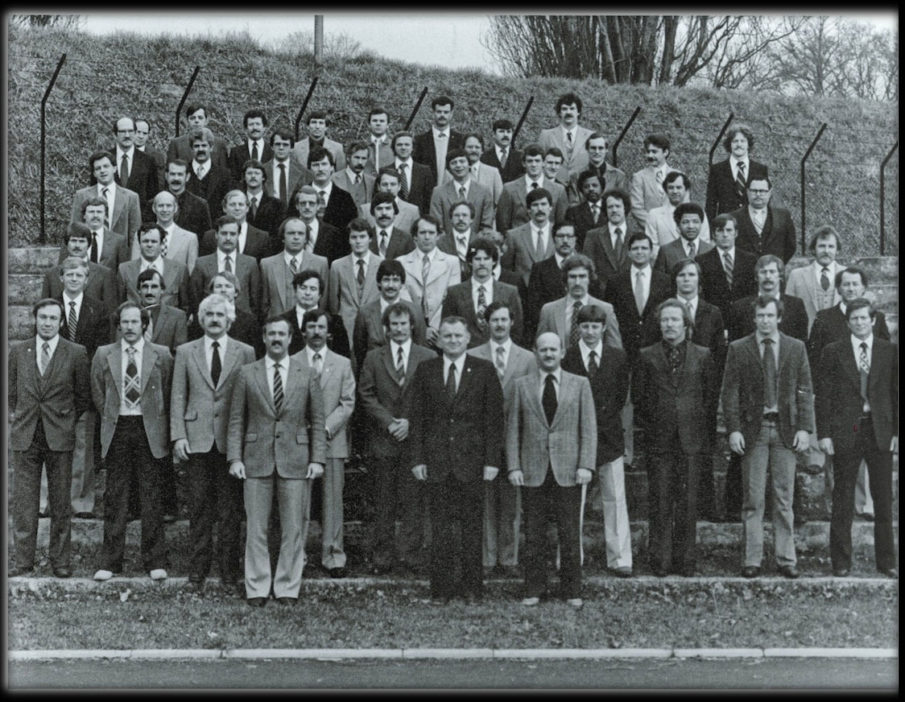
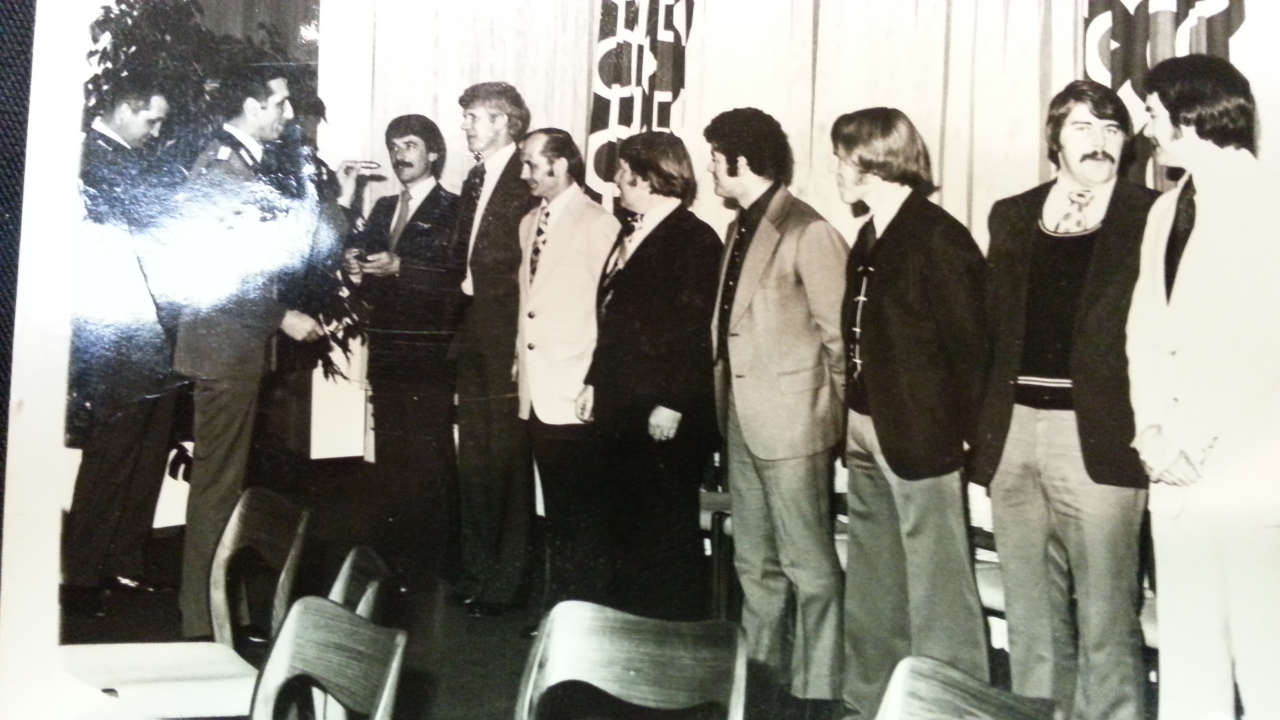
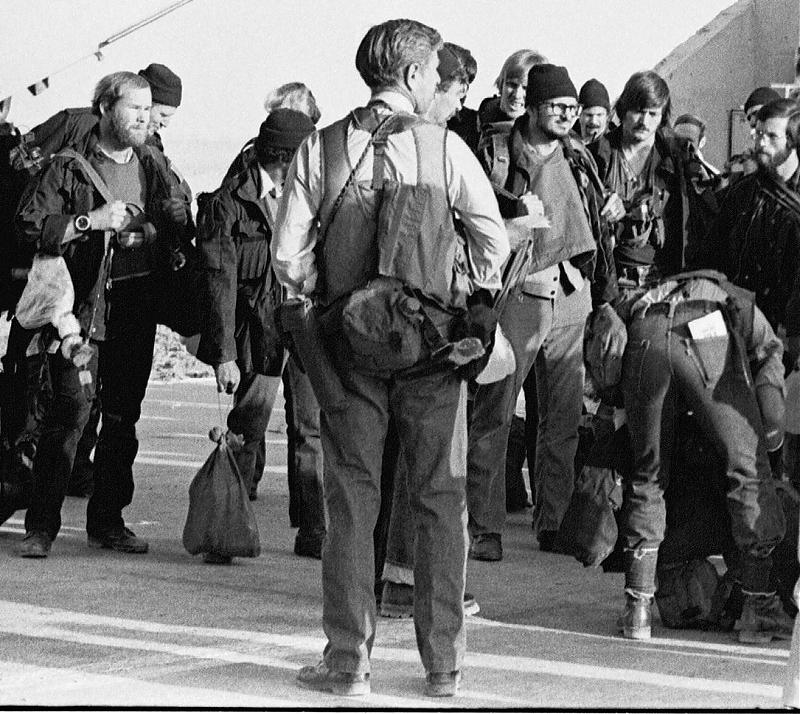
One of the two Det A members in Tehran had even, “gained access to the interior of the MFA building where the three American diplomats were detained” and discovered that there was a much larger security presence than they expected. For this reason, the Det A assault force had to be increased to 10-14 men. Under the leadership of Colonel Oleshevic, this was accomplished and a new Concept of the Operation was drafted (Lenahan, 98).
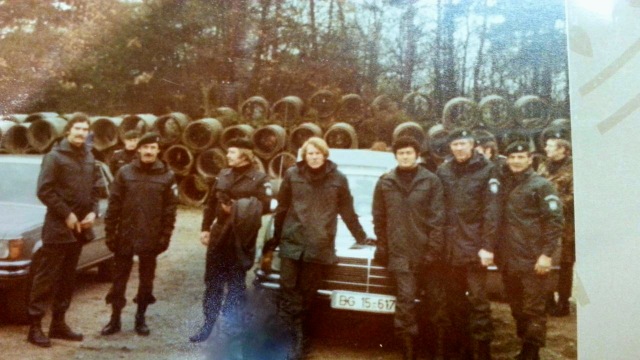
Meanwhile, the Pentagon has identified a suitable staging area for the rescue mission inside Iran, which became known as Desert One. However, planners needed someone to walk the terrain, needing someone, “knowledgeable, experienced, and competent” in the skills of “taking soil core samples, calibrating penetrometer readings, navigating, and taking measurements at night” as well as “installing landing instrumentation devices” (Lenahan, 72).
On March 30th, “the field survey team of Desert One was conducted by Major John Carney, a USAF Special Operations Combat Controller Team (CCT) leader. He was delivered to the site in a small civilian STOL-type aircraft operated by the CIA” (Lenahan, 95).
With the air reconnaissance and soil sample missions complete, Delta Force wrapped up their mission rehearsals in the United States was flown to Wadi Kena and then to Masirah on April 20th in conjunction with the eight man team from Detachment A that would take down the Ministry of Foreign Affairs building. Before departing to Desert One, Major Lewis “Bucky” Burruss, Delta’s B-Squadron commander, led the men as they sung “God Bless America” just before boarding their aircraft.
Delta Force and Det A landed at Desert One, located in the Dasht-e-Kavir salt desert of central Iran, on the night of April 24th with the last of six aircraft setting down at midnight. Now they had to wait for their helicopters to arrive from the USS Nimitz on station in the Gulf of Oman to take them on the next leg of their journey en route to the US embassy and MFA. Rangers tasked to pull security at Desert One came from Charlie Company, 1st Battalion, 75th Ranger Regiment and rode dirt bikes to help them get around the large staging area, where one soon shot a tanker truck driving down a nearby road with a LAW rocket launcher.
The helicopters were delayed several hours because of a sandstorm and a few of them were seriously damaged during the flight. Due to time delays and mechanical malfunctions, Colonel Beckwith made the difficult decision to scrub the mission. Around 2:40AM the men were preparing to abort and pull out of desert one when Major Schaefer’s helicopter crashed into one of the EC-130 airplanes. “A blue fireball ballooned into the night,” the ground force commander wrote (Beckwith, 279).
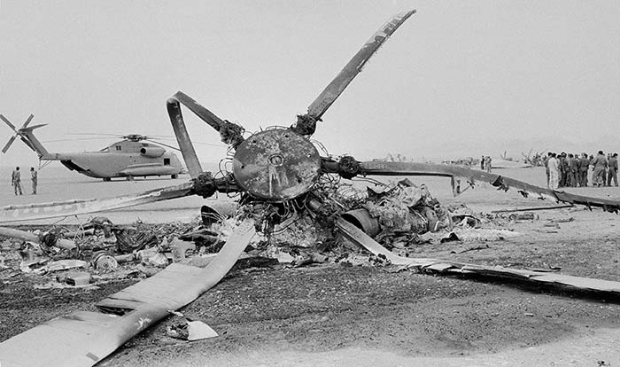
One of the Det A sergeants was out pulling security on the outer perimeter with Delta’s intelligence officer, approximately a mile away from where the airplanes were parked when he witnessed the explosion off in the distance. Jumping on the back of a dirt bike with a Ranger driving, the Det A member linked up with one of his team mates from Berlin back at the crash site. He then told the Ranger to take the dirt bike back to get Delta intel officer, but for some reason that didn’t happen. Using IV bags that the Det A men took with them on the mission for medical emergencies, they began treating members of the air crew who had been critically injured.
Looking up, one of the Green Beret’s assigned to Det A suddenly realized that one of the C-130’s was turning around and about to take off without any passengers onboard. He jumped out in front of the nose of the aircraft, holding his Walther MPK sub-machine gun, and waving to get the pilot’s attention. “I was ready to shoot those motherfuckers,” he said, not relishing the idea of being left behind. The plane ended up having 70 or 80 soldiers on board when it finally took off.
After the failure of Operation Eagle Claw and Storm Cloud, the task force went right into planning a follow up mission to rescue the hostages. It was widely believed that President Ronald Reagan would authorize the mission as soon as he was inaugurated and President Carter stepped down. The second attempt would be called Operation Snow Bird.
Detachment A soldiers were still tasked with taking down the MFA building in Tehran. This time mission rehearsals were carried out by Det A at Camp Rudder where the Florida Phase of Ranger School takes place. With new helicopters assigned to the mission, there could only be one pilot. The co-pilot would be too heavy a load for the helicopter to bear along with the assaulters due to fuel consumption issues. Just in case the pilot ended up getting shot, the Det A members were trained to fly the helicopter safely to the ground. “We all got some stick time,” Sergeant Major Jeff Raker recalled with a smile.
Just hours after Reagan was inaugurated, Iran released the remaining American hostages held in Iran, ending the standoff. Back in Berlin, Detachment A continued to conduct their unconventional warfare and counter-terrorism missions, however the later was beginning to have a detrimental effect on the unit’s operational security. The disaster at Desert One had put a spotlight on America’s counter-terrorism units and an article appearing in Newsweek exposed Detachment A’s existence. For this reason, Intelligence and Security Command (INSCOM) made the decision to disband the unit and start fresh with a new one.
This was the dire impact of the counter-terrorism mission, particularly when mixed with clandestine espionage activities. The kinetic aspects of counter-terrorism raised the profile of Det A, leading to its exposure in the press. For a unit like Delta Force this wasn’t as big a deal since they were a Direct Action focused unit at Fort Bragg but for a clandestine unit in Berlin, the press exposure was a disaster.
Coming up in part 4, Det A gets disbanded but is replaced by another clandestine Special Forces unit in Berlin!








COMMENTS