

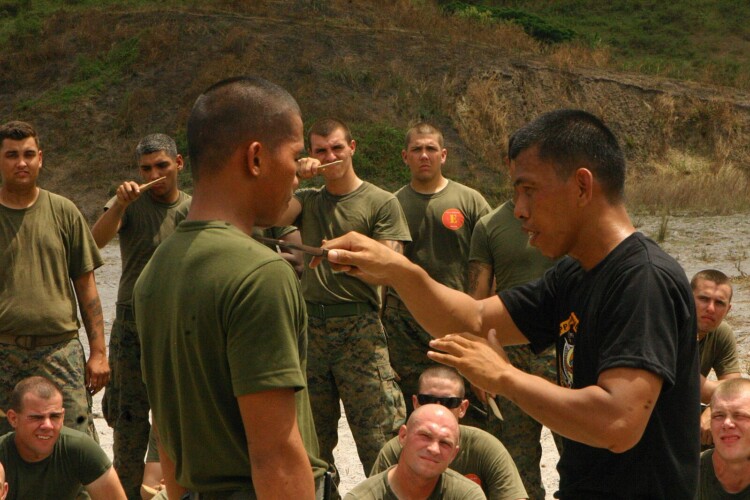
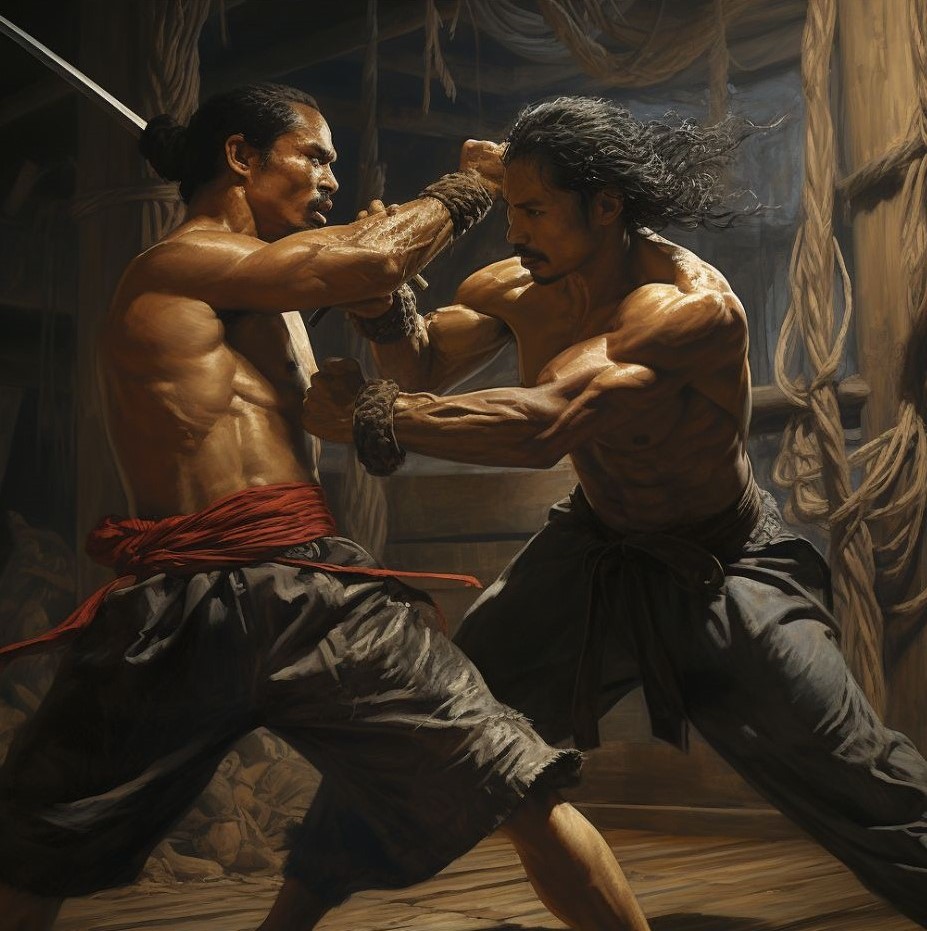
Imagine you’re trying to conquer a land where the locals train to defend themselves with swords, knives, sticks, and bare hands. It wasn’t a walk in the park. So the Spanish did what they thought was best – they banned the practice of Kali.
When Filipino Ingenuity Kicks In
But the Filipinos weren’t about to let their centuries-old martial art die out. They came up with a clever way to keep it alive. They started disguising their Kali training as folk dances. To the Spanish, it looked like they were having a good time, but they were practicing their fighting techniques.
They also shifted the focus of Kali from edged weapons to sticks, which were less likely to arouse suspicion from the Spanish authorities. It’s why Kali, also known as Eskrima or Arnis, is famous today for its stick fighting techniques.
Despite the Spanish efforts to suppress it, Kali survived, carried forward by the Filipinos who practiced it secretly and passed it down from generation to generation. When Spanish rule ended in 1898, so did the ban on the practice of Kali.
Kali’s Influence on the Western World
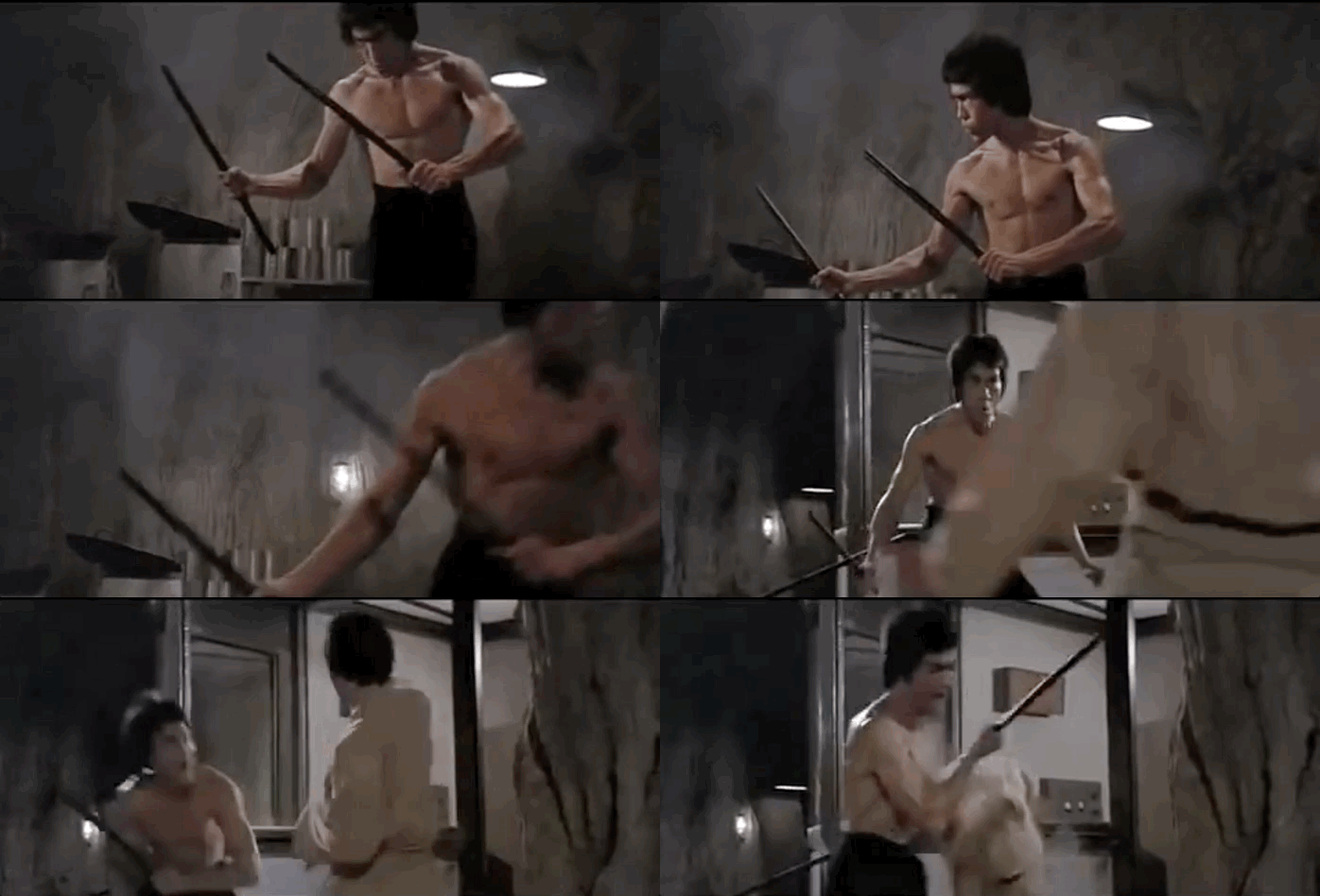
Many Hollywood action films with fist-flying, bone-cracking fight scenes owe a nod to Kali. You’d think it was all fancy choreography and special effects, but it’s a lot more than that.
Kali is also about using what’s readily available. Anything can be a weapon – a stick, a knife, even just your two hands. Now, that’s something Hollywood can work with. It adds a dose of realism to the mayhem.
Look at the “Bourne” movies or that scene in “Taken” where Liam Neeson is busting heads left and right. That isn’t just fancy footwork; that’s Kali in action.
Filipino Martial Arts Beyond Hollywood
Kali has likewise entered military and law enforcement training in the Western world. They recognize the practicality of it – the adaptability, the focus on disarming opponents, the efficiency of movement. It’s all about survival, and that’s a universal language.
Now imagine you’re a cop. You’ve got your standard issue gear – baton, handcuffs, flashlight. Kali shows you how to use these things for their intended purpose and as practical defensive or offensive tools.
But Kali isn’t just about the weapons. It’s also got a strong emphasis on footwork and body positioning. It’s all about keeping yourself in a safe spot while putting your opponent off balance. That’s a handy trick for law enforcement, especially when subduing a suspect without causing unnecessary harm.
The Legacy of Kali and Filipino Martial Arts
The story of Kali, it’s one for the ages. Born in the jungles of the Philippines, a fighting system designed to keep you alive in a world where every day was a survival challenge. From there, it grew into an art form, a cultural symbol, a dance, a sport, and a means to resolve disputes.
Fast forward a few centuries, and you see it popping up in Hollywood blockbusters, military training programs, and police departments around the globe. It isn’t just a martial art; it’s a testament to human adaptability and resourcefulness.
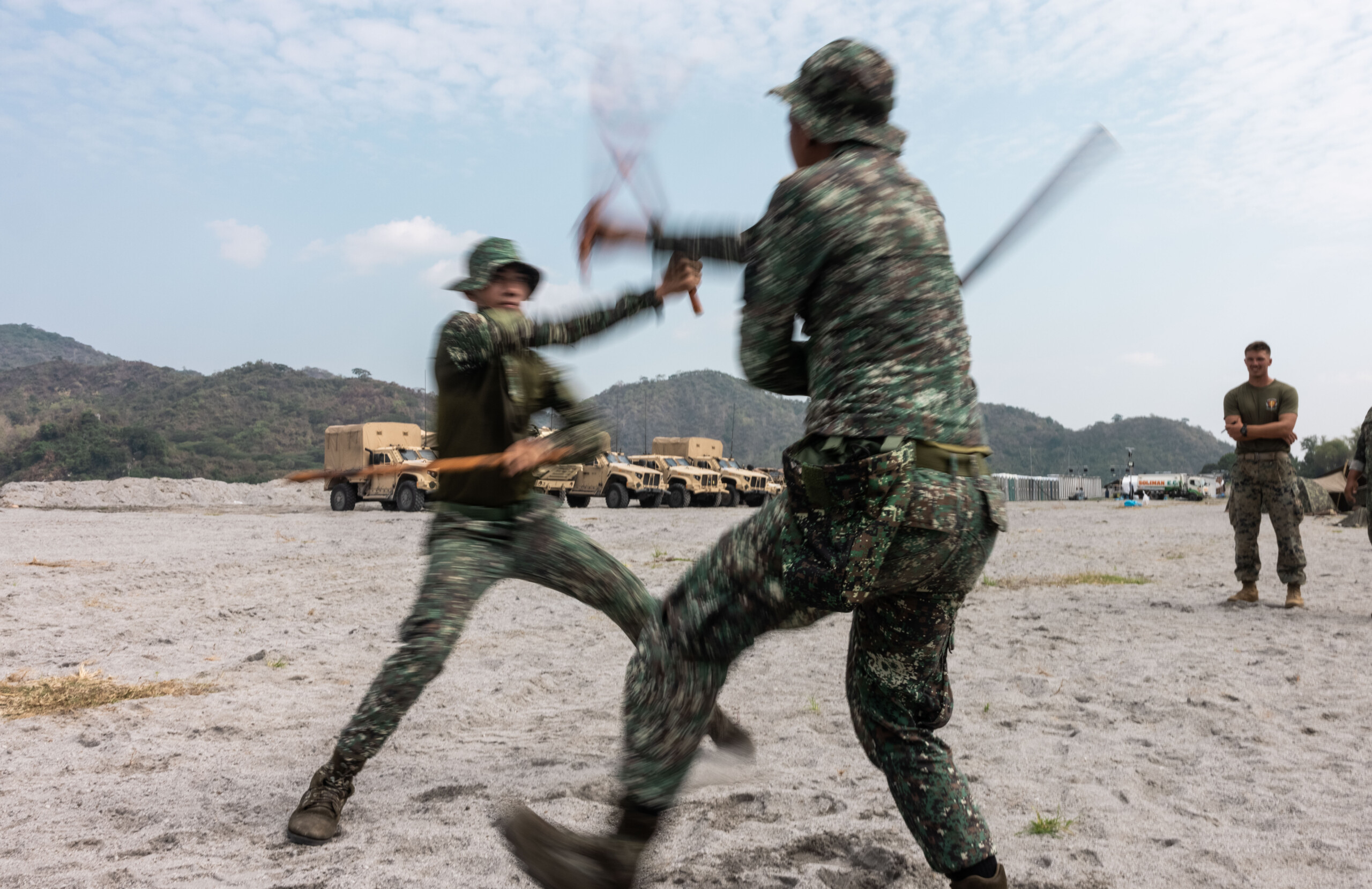
What started as a tool for survival has become a legacy carried on by countless practitioners worldwide. It’s more than just fighting; it’s about knowing how to move, adapt, and survive, no matter what life throws at you.
That’s Kali. It’s been around for thousands of years, and it’s not going anywhere anytime soon.








COMMENTS