

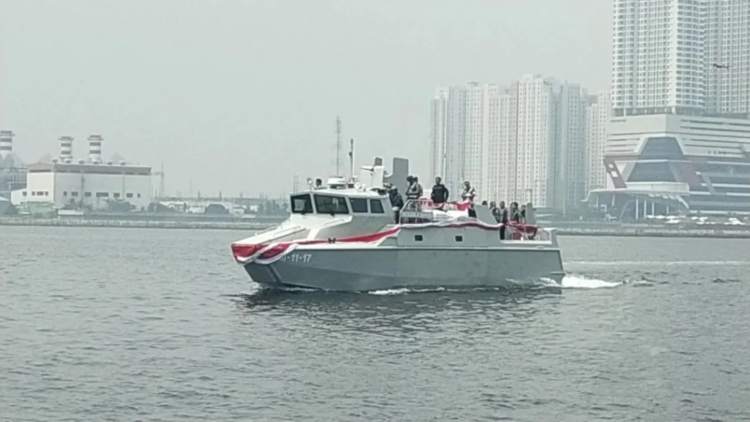
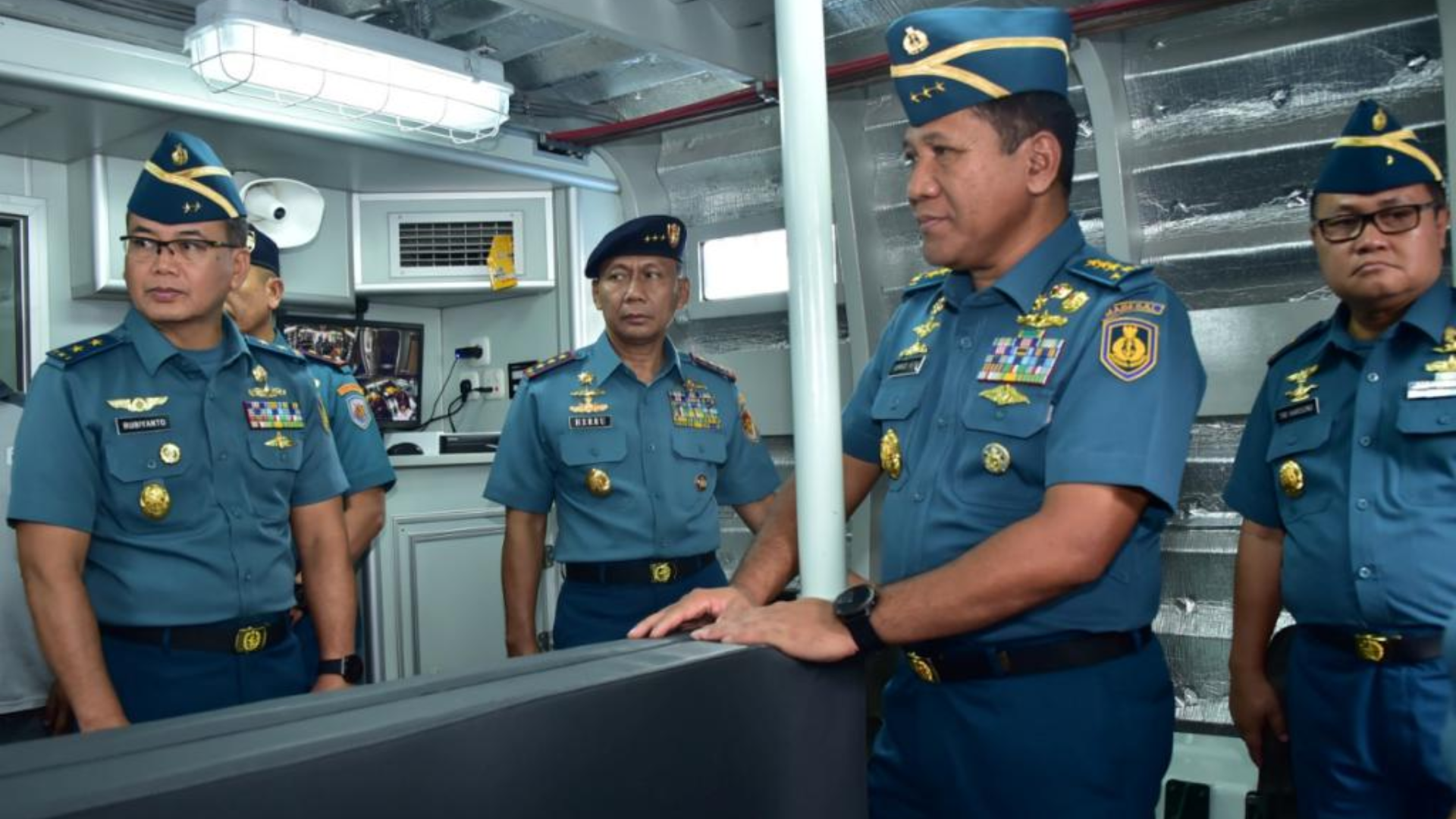
These attributes are crucial for effectively responding to security threats and patrolling regions that traditional naval vessels cannot easily access.
Fun fact: The new vessel, Patkamla Yapero, holds a special connection to the region it will serve. The name “Yapero” is derived from an island located in the Eastern Mimika District of Mimika Regency in Papua. Naming the vessel after a local island not only highlights Indonesia’s rich cultural diversity but also signifies the vessel’s connection to the very waters it is designed to protect.
Enhanced Armament and Crew Capacity
The Patkamla Yapero is equipped with a 12.7mm caliber machine gun and two 7.62mm caliber machine guns.
These armaments provide the boat with the defensive capabilities needed to tackle potential threats, maintain security, and safeguard its operational areas.
Furthermore, the vessel’s seven-person crew ensures that it can be operated efficiently during missions. Its ability to carry up to 30 troops further extends its utility, making it suitable for amphibious landing operations and humanitarian missions.
Local Manufacturing: A Step Toward Self-Reliance
One of the most notable aspects of the Patkamla Yapero and its counterparts is their local manufacturing.
Indonesia is committed to bolstering its domestic defense industry, and the production of these SMCBs on home soil is a testament to this commitment.
Indonesian Navy Enhances Its Fleet with Special Mission Combat Boat (SMCB) https://t.co/9hbi27TZH5
— Tango III's Military News (@IiiTango) October 27, 2023
This endeavor not only showcases Indonesia’s growing self-reliance in defense production but also contributes to the nation’s economic development and job creation.
The government’s emphasis on developing a robust defense industry has broader implications for national security and self-sufficiency.
Countering Illicit Activities
The Patkamla Yapero and similar SMCBs are expected to play a pivotal role in countering transnational organized crime, smuggling, drug trafficking, and human trafficking in Indonesia’s smaller water bodies.
These issues have long plagued the country’s coastal regions and smaller islands, and the SMCBs are specifically tailored to address these challenges.
By effectively patrolling these areas, the Indonesian Navy can significantly disrupt the operations of criminal organizations involved in illicit activities.
Regional Impact in Southeast Asia
Indonesia’s efforts to enhance its maritime security capabilities extend beyond national borders.
The archipelago nation plays a crucial role in regional stability, particularly in Southeast Asia.
By effectively addressing security challenges within its territorial waters, Indonesia contributes to the broader security of the region.
The illicit activities that occur in Indonesia’s small island groups and narrow waterways are often connected to more significant regional concerns, including terrorism and transnational crime.
A more capable and versatile Navy can help mitigate these risks and maintain regional stability.
Expansion Plans
The commissioning of the Patkamla Yapero is just the beginning of a broader plan to strengthen the Indonesian Navy’s patrol capabilities.
A total of eleven SMCBs are scheduled to be added to the fleet, emphasizing the importance of enhancing security in river channels, narrow straits, and coastal areas.
These additions will significantly bolster the Navy’s capacity to patrol and secure its territorial waters effectively.
~
The commissioning of the SMCB Patkamla Yapero by the Indonesian Navy represents a significant step forward in enhancing the country’s maritime security capabilities.
With its versatile design, local manufacturing, and focus on countering illicit activities in shallow waters, the Patkamla Yapero is well-equipped to navigate and secure Indonesia’s challenging waterways.
Its role in safeguarding the country’s territorial waters and contributing to regional stability underscores the importance of a strong and adaptable naval presence in Southeast Asia. As Indonesia continues to expand its patrol capabilities with additional SMCBs, the nation’s commitment to its own security and the stability of the region is evident.








COMMENTS