

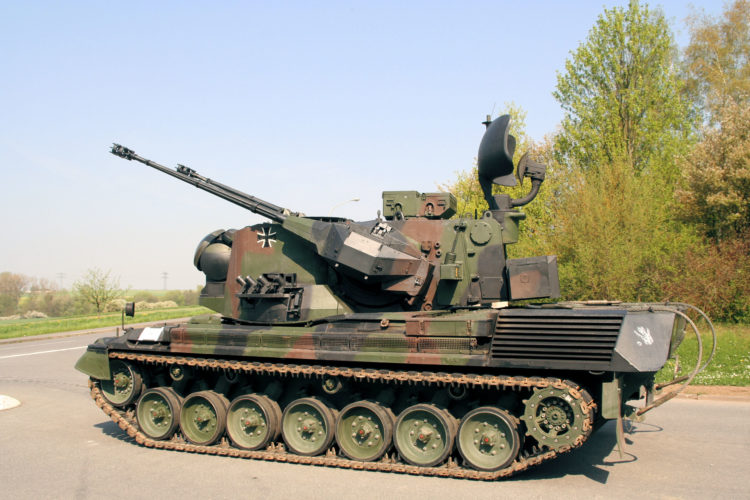
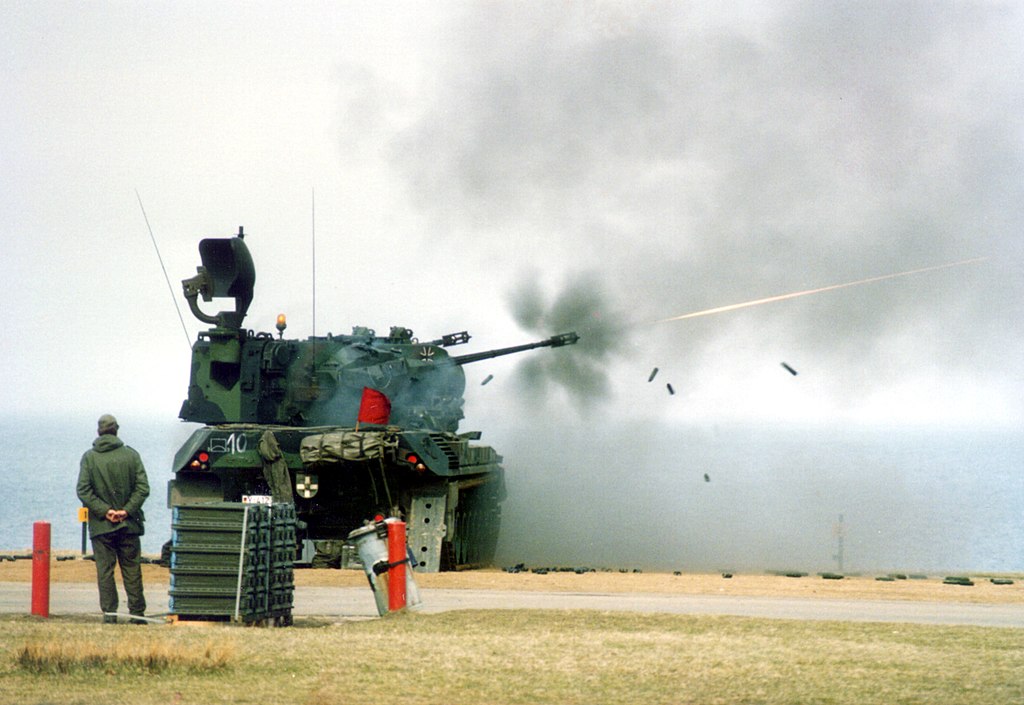
However, there is a kick. The Swiss produced the ammunition for the Gepard, and they have blocked the transfer of ammunition used in the Gepard’s 35mm guns. The Swiss government holds control over the export of the ammunition for the 35mm as it was stated in the original export agreement that they held veto power over any transfers.
They did this possibly because of their longstanding neutral foreign policy. The Swiss State Secretariat for Economic Affairs (SECO) confirmed the usage of the veto as it received two requests from Germany to transfer the ammunition, one for the 35mm ammunition and one for the 12.7mm ammunition.
“Both inquiries by Germany as to whether the ammunition received from Switzerland may be transferred to Ukraine were answered in the negative with reference to Swiss neutrality and the mandatory rejection criteria of Swiss war material legislation,” SECO said.
Swiss neutrality is somewhat porous however. Recent media reports claim that Swiss weapons like submachine guns, sniper rifles, and rocket-propelled grenade launchers have been sold to both Russia and Ukraine in the past in the amount of some 5.9 million swiss franks.
A Major Policy Shift from Germany
This comes after weeks of confusion on Germany’s stance on the Russian invasion of Ukraine, where many observers said that they were purposely not donating heavy weaponry to avoid the potential negative diplomatic relations with Russia.
SOFREP has followed Germany’s various stances on the war in Ukraine in previous reports. Scholz and his party, the Social Democratic Party of Germany, has been a staunch advocate of rapprochement with Russia after World War II and has not been sending weapons to active war zones.
Furthermore, Germany has been reliant on Russia for the majority of its oil as characterized by their cooperation with the Nord Stream 2 gas pipeline, which is owned by Gazprom. Russia is responsible for more than 50% of Germany’s annual consumption of natural gas, which would present a problem if they took a hardline stance against Russia. However, he was finally pressured to put a halt to the certification process largely due to pressure from the US. Politically, it would affect Scholz’s approval rates as their party advocated for cheaper gas. With rising gas prices due to the war, Germany’s low-income workers would likely be affected the most.
“In recent years, the German government has repeatedly decided not to supply lethal weapons. There are reasons for this, which are of course also based on all the developments of recent years and decades,” Scholz explained.
At first, they tried to donate 5,000 helmets to Ukraine last January, which was largely met with laughter and anger from Ukraine and the international community. Kyiv’s mayor, Vitali Klitschko, stated that the donation left him speechless as he thought it was a joke.
Eventually, Germany did donate 1,000 anti-tank weapons, 500 Stinger SAMs, 2,700 Strela anti-aircraft missiles, machine guns, grenades, and mines. Along with these slow policy u-turns, they approved the transfer of 56 Pbv-501s from the Czech Republic and weapons from Estonia.
However, they were still lukewarm to the idea of them sending heavy weaponry to Ukraine. This manifested in their laggard action and decision on Rheinmetall’s proposal of supplying Ukraine with 50 Leopard 1 tanks as proposed by Rheinmetall’s chief executive Armin Papperger.
Scholz, in response to the criticism, said that they simply did not want to “rush ahead” of their allies and that Germany did not want to commit a “grave mistake” by taking a “special role” in the Russian war against Ukraine.
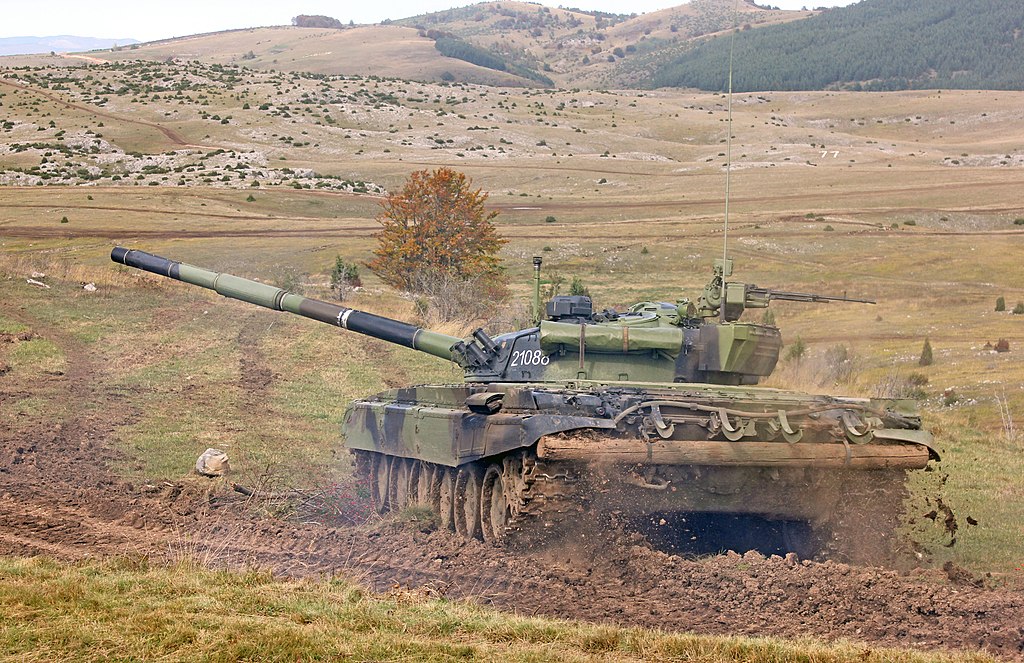
Due to international pressure and criticism, Germany would support Slovenia in their transfer of 30 to 40 units of M-84 tanks to Ukraine. Germany would supply Slovenia with German tanks and Marder and Fuchs APCs as replacements. More so, they also requested Leopard 2 tanks.
It did not help that it was recently discovered that the French and the Germans, along with eight more European countries, had been exploiting a loophole in the Russian 2014 arms embargo. The media revealed that the French exported $163.30 million worth of military equipment to Russia. Germany, on the other hand, sent “dual-use equipment” to Russia worth $131.07 million after Russia promised they were going to use it only for civilian use. These two countries were found to be Europe’s top arms exporters to Russia, with France holding nearly a billion Euros in sales contracts to Russia and Germany holding about 500 million Euros in contracts for sale.
Some part of the reluctance of both France and Germany to donate heavy weapons to Ukraine may be tied to losing these arms sales agreements to Russia.
French President Emmanuel Macron, who was equally as guilty as Germany for selling weapons to Russia, supported Germany’s hesitance to send heavy weaponry to Russia.
“This is a debate that goes to the heart of Germany’s political life, it’s a sovereign choice that belongs to Germany, and we respect it,” Macron said while emphasizing that they had the same strategy as German Chancellor Olaf Scholz.
“We have the same strategy as the chancellor, which is to say that we will aid the Ukrainians as much as possible but must be careful never to become parties to the conflict.”










COMMENTS