

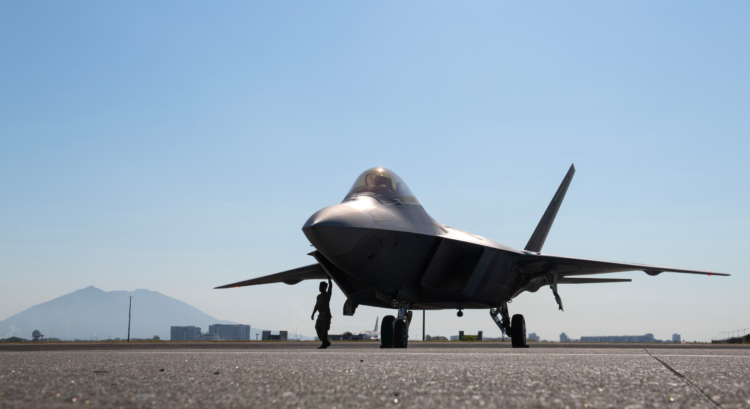
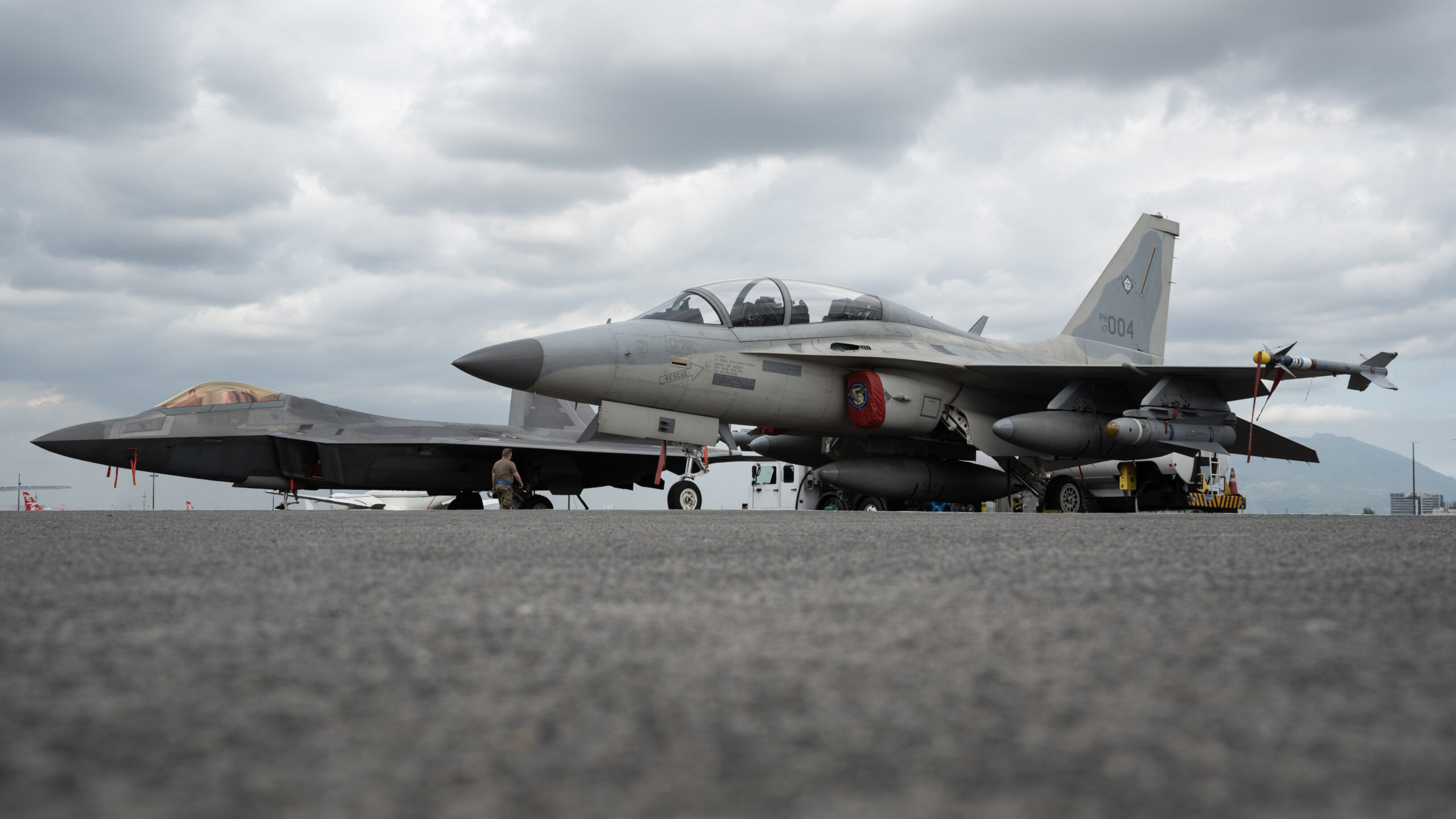
“With any operation there are always multiple roles and responsibilities to make the mission happen,” UAF Captain Joe Baumann, a Raptor pilot assigned to the 525th Fighter Squadron, stated. “With the FA-50’s capability for precision strike and the Raptor’s ability to establish air dominance, we make a lethal combo to support one another on multiple mission sets.”
The synchronized flight was divided into two parts: 1) participating aircraft conducted a low flyover to acquaint the American pilots with the Philippine topography, and 2) an F-22 air combat maneuvering demonstration as the FA-50s observed. Day two wraps up with a simulation of air-to-air refueling with the Stratotanker over the South China Sea.
“This was a unique opportunity to demonstrate the power and importance of being able to refuel in the air to extend the combat capabilities of our airframe and to show just how capable and maneuverable the Raptor is in a basic fighter maneuver engagement,” Schroeder explained.
Despite being the first time the F-22s visited the archipelago, the American Air Force via the Pacific Air Force and PAF have previously engaged in multiple military exercises through bilateral training. The Southeast Asian country has long been a significant non-NATO ally of the United States, and drills like these help promote interoperability and stability in the region.
Expanding Military Cooperation in Taiwan’s Southern Flank
Although negotiations have been made and signed through EDCA, which allows the US to add four more base locations in the Philippines, the latter has yet to grant a permanent US military presence.
Moreover, these bases aim to “promote peace and security in the region” by allowing US forces to respond more quickly to environmental and humanitarian disasters and other shared challenges.
While this may appear promising progress for the US to reinstate its military presence in the Philippines, the latter’s obvious hesitation of triggering China as a repercussion to allowing American troops back in the archipelago remains uncertain. In the case of a Chinese invasion of Taiwan, the Philippines plays a critical role in providing a major southern flank for US forces.
Days after the successful expansion of EDCA, China sent the Philippines a warning over giving the US access to military bases, saying the agreement “will seriously harm Philippine national interest and endanger regional peace and stability” and would be dragged into “geopolitical strife.”
The Chinese embassy issued the warning in response to US Ambassador to the Philippines MaryKay Carlson, who told reporters that the expanded access was meant to allow US forces to respond quickly to humanitarian needs in the region. Beijing then accused Washington of masking its true intentions: to surround and contain the country.
“Whereas the US claims that such cooperation is intended to help the disaster relief efforts of the Philippines and some Americans even tout the EDCA sites as driver of local economy,” the Chinese embassy statement said, “it is plain and simple that those moves are part of the US efforts to encirle [sic] and contain China through its military alliance with this country.”








COMMENTS