

This creates a powerful deterrent effect that can help protect Finland from potential threats or invasions.
Additionally, as part of NATO, Finland now has access to advanced military technology, such as air surveillance systems and sophisticated military training programs. This means their armed forces are now better equipped to handle national defense needs.
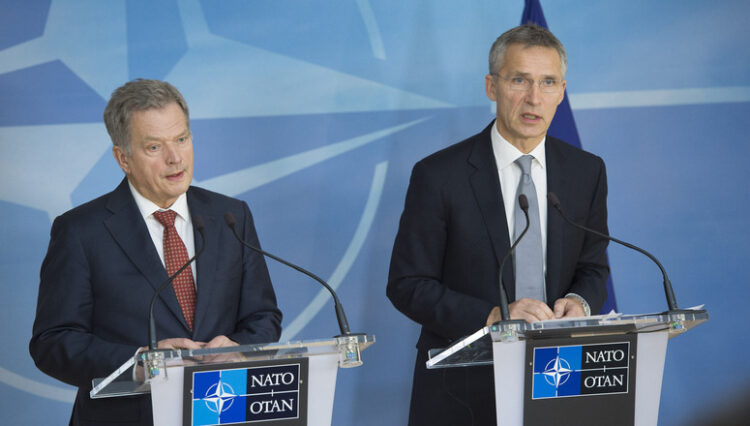
“The Finnish Defense Forces are facing new demands and challenges to which we must respond,” stated the Finnish president.
“At the same time, it is clear that Finland’s most significant contribution to NATO’s collective deterrence and defense is built on the security and defense of our territory. In this respect, the Finnish concept of comprehensive security retains its value. But we no longer do this work alone.”
Finland’s NATO Membership Is a Move for European Security
Finland’s membership signals a significant shift in European security, allowing NATO more clout in expanding its operations across Europe.
Analysts observe that this move sends a strong signal to Moscow that NATO is committed to defending its members and is ready to respond to any act of aggression by the Kremlin.
Apart from creating security and stability in Europe, especially for NATO’s member-states, Finland’s NATO alliance inclusion also encourages other non-aligned states in Europe, including Sweden and other countries, to consider joining the organization.
Stoltenberg earlier expressed optimism that NATO is stronger with Finland as an ally with its competent Finnish Defense Forces and “second to none resilience,” yet also emphasizing that Finland is safer with its alliance with NATO.
The Finnish Institute of International Relations research shared that the Nordic country’s memory of the Soviet Union’s invasion of Finland from 1939 to 1940 is why Finland “never stopped preparing for a possible war.”
According to Finland’s official policy, a wartime military force of 280,000 personnel is a sufficient deterrent. The army is made up of highly mobile field units supported by local defense units.
Finland’s defense budget for 2022 was estimated to be €5.8 billion, and Finnish voluntary overseas service is extremely popular as troops serve in UN, NATO, and EU missions worldwide.
The Nordic country has the most artillery capability in Western Europe, with 700 howitzers, 700 heavy mortars, and 100 multiple rocket launchers. Recent statistics show that Finnish troops’ willingness to defend the homeland against a superior enemy is 83%, one of the highest rates in Europe.
A Historical Era of Non-Military Alignment In Finland Ends
Stoltenberg earlier mentioned that Russian President Vladimir Putin’s Ukraine invasion with the declared goal of Europe and that “he is getting exactly the opposite… There will be more NATO in Europe.”
Niinisto, however, pointed out that Finland’s membership is “not targetted against anyone.” He stressed that the Nordic country’s alliance with NATO member-states does not change the foundation or objectives of Finland’s foreign and security policy.
“Finland is a stable and predictable Nordic country that seeks peaceful resolution of disputes. The principles and values that are important to finland will continue to guide our foreign policy also in the future. (Our country’s) NATO membership does not change everything, but being an ally requires Finland to adopt new ways of thinking and some changes in legislation as well. A lot has already been done. For years, we have developed our NATO compatibility. There’s still considerable work ahead to integrate Finland’s defense as part of NATO’s common defense.”
The Implications Of Finland’s NATO Move For Russia
Moscow has already expressed displeasure with Finland’s decision to join NATO with a stern warning of “countermeasures.”
While these so-called countermeasures remain unclear, and how Russia will respond in the long term, this move by NATO will likely further inflame tensions between Russia and the alliance.
In addition, it could also have far-reaching implications for Russian foreign policy, mainly if other non-aligned states follow suit and join NATO.
Kremlin spokesperson Dmitry Peskov labeled Finland’s NATO plunge “encroachment on our security and Russia’s national interests” and said Moscow would be vigilant for future NATO military deployments.
Peskov told guests at a private party this week that Russia’s war in Ukraine will last “a very, very long time” amidst Moscow’s failure to accomplish anticipated gains in the embattled country.
Earlier reports observed that Russian officials are reframing the armed conflict as an “ideological battle of survival” against the West,
The Kremlin issued new statements that it is bolstering Russian troops near Finland if NATO sends foreign forces to the Nordic country.








COMMENTS