

“So far, U.S. strikes have been more robust than even the ‘shock-and-awe,’ bombing campaign of the First and Second Gulf Wars…Trump and the U.S. military are looking for an elusive, knockout punch…Iran’s Kharg Island…part of a potential, U.S. plan for dominance…Taking the island ‘would cut off Iran’s oil lifeline,’ which the regime badly needs…SEAL Team Six and a force of Marines could definitely take the island…(but) even a successful mission against the island would prolong the war.” — Brent M. Eastwood, PhD., for 19FortyFive, March 12, 2026.
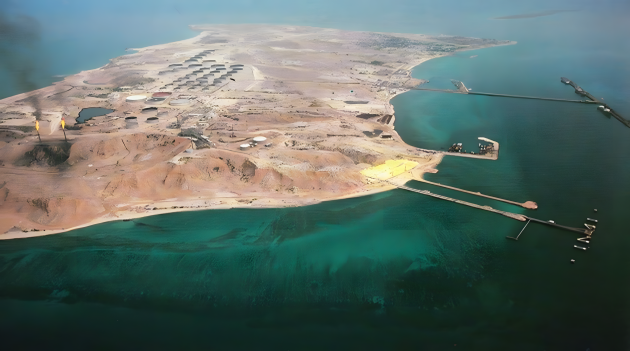
On Friday, March 13, 2026, the U.S. Central Command (CENTCOM) carried out a major, precision-bombing raid against Iran’s strategic Kharg Island, a coral outcropping in the Persian Gulf, 19 miles offshore from Ramleh, Iran. The island is only five miles long by 2.7 miles wide, with a total area of just 7.7 square miles, and a population of about 8,400 people. It provides an absolutely vital seaport for the export of 90 percent of Iran’s oil products, including crude oil, fertilizers, liquid gas, and other products, passing through the terminal on Kharg Island, which is able to load 10 supertankers at once, in addition to storage capacity for up to 30 million barrels of oil.
Kharg Island was developed into an oil terminal in 1969, with three major terminals established by 1975. Since the 1979 Islamic Revolution, Iran has continued to build up facilities on the island, with the terminal facilities there operated by the National Iranian Oil Company. Access to the island has been strictly limited, and it is guarded by the Islamic Revolutionary Guard Corps (IRGC), leading to its nickname of “Forbidden Island.”
CENTCOM stated that “U.S. forces successfully struck more than 90 Iranian military targets on Kharg Island, while preserving the oil infrastructure.” The strike destroyed naval mine storage facilities, missile storage bunkers, and multiple other military sites. President Donald Trump had threatened to strike the oil infrastructure there, unless the Iranians stopped attacking vessels in the Strait of Hormuz.
He added that, “for reasons of decency,” he had “chosen not to wipe out the oil infrastructure on the island,” and noted that CENTCOM had “executed one of the most powerful bombing raids in the history of the Middle East, and totally obliterated every military target in Iran’s crown jewel, Kharg Island.”
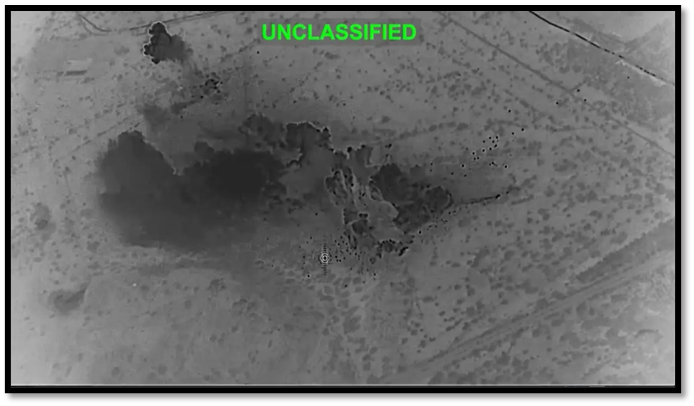
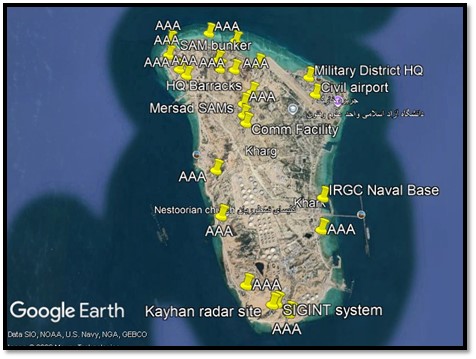
The vital island has been heavily fortified with military defenses, including long-range radar, surface-to-air missile (SAM) batteries, antiaircraft artillery (AAA), IRGC naval vessels, anti-ship missile sites, and various command centers and weapons storage bunkers. In fact, totally unclassified Google Earth satellite imagery dated February 6, 2026, just over three weeks before the current war began, when compared with readily available order-of-battle data, reveals substantial defenses for the small but strategic island,
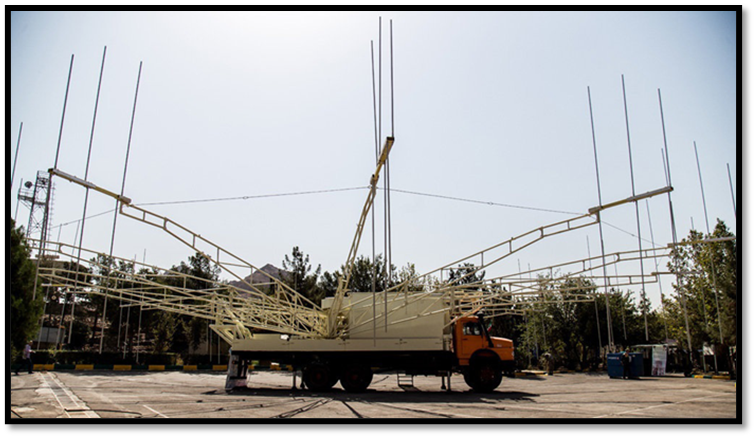
Near the southern tip of the island was reportedly a brand-new, Keyhan 2025 mobile, over-the-horizon (OTH), early warning radar system with folding antennas, having an estimated detection range against large aircraft of up to 1,865 miles!
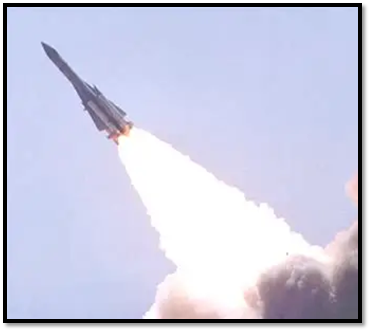
Kharg Island was formerly defended by an SA-5B Gammon (S-200) long-range (158 miles), SAM battery in the past, but these massive missiles are bulky, problematic, difficult to maintain, and outmoded by newer technology. Iran had 10 batteries of SA-5s in service recently, and U.S. military forces stuck one launcher near the Bushehr Nuclear Power Plant on March 11, 2026. Iran is gradually replacing their SA-5s with the Sayyad-2/3 (“Hunter-2/3”) missile, a reverse-engineered copy of the American RIM-66 Standard SM-2 missile, with a range of up to 93 miles.
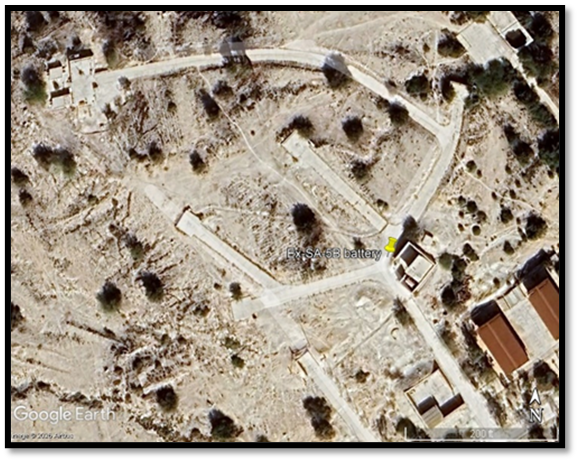
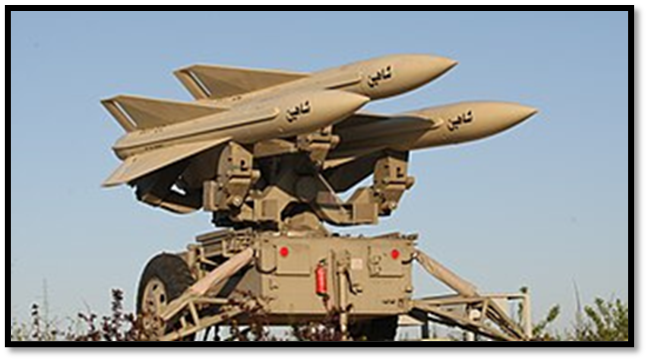
Most recently, the primary air defense system on the island was the Mersad (“Ambush”) missile site, just south of the abandoned SA-5B battery, in the north-central area of the island. It was developed in 2010 as an improved copy of the American MIM-23B I-HAWK missile system, using Iranian-made Shahin (“Falcon”) missiles, with an effective range of 30 miles, better than the 22 miles of an I-HAWK. Its Kavosh fire control radar has a detection range of 93 miles, but there is a newer, Hafez radar with a range of 155 miles and the ability to track up to 100 targets at a time.
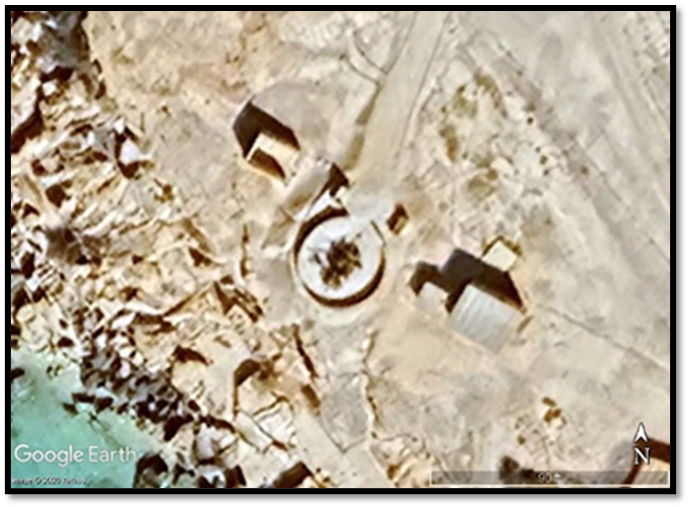
Kharg Island was also defended by at least 16 AAA gun batteries, including eight Samavat gun systems, Iranian copies of the towed, Swiss Oerlikon GDF-002 antiaircraft autocannon, with twin 35mm barrels, firing in normal bursts of 28 rounds. These are supported by the Super Fledermaus (“Super Bat”) radar and fire control system, with a range of 9.3 miles, or the newer Oerlikon Contraves Skyguard radar, with a range of 12.4 miles. The Samavat guns have an effective, firing range of 2.5 miles. Iran has produced 92 batteries of these AAA weapons so far.
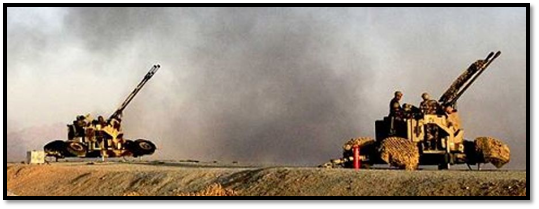
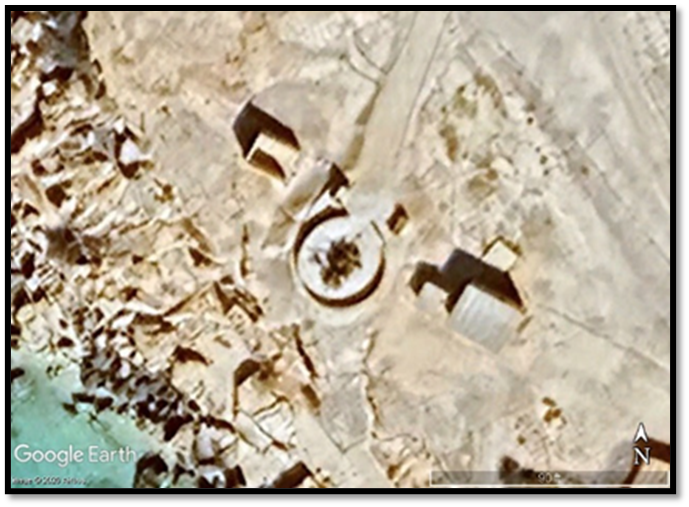
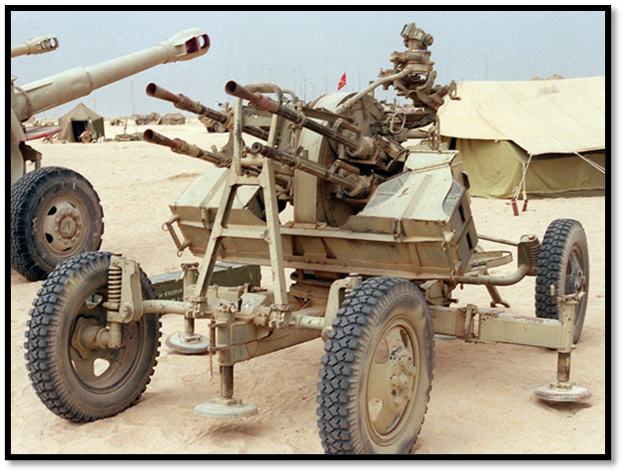
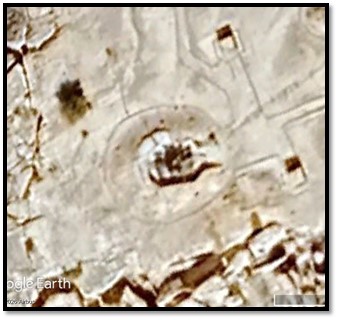
In addition, Kharg Island was recently defended by eight batteries of ZPU-2/4 AAA heavy machine guns in 14.5x114mm, with either two or four barrels, and an effective firing range of .87 mile.
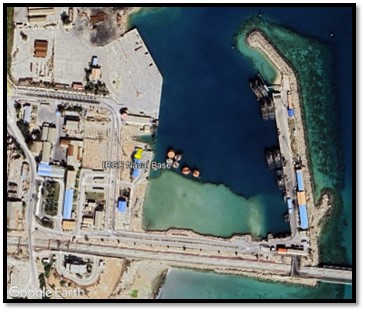
In addition, the island houses an IRGC naval base, with seven patrol boats visible in February 2026, Google Earth imagery, plus three small speedboats.
Furthermore, Kharg Island was supported by a military district headquarters in the east, a headquarters barracks in the north-central region, a communications facility near the missile site, a signals intelligence system in the south, missile storage bunkers, anti-ship missiles, and numerous other facilities, all of which have apparently been knocked out, rendering Iranian defenses useless.
U.S. media reports that the USS Tripoli amphibious assault ship, carrying up to 5,000 Marines, sailors, and Navy SEALs, is now en route to the Persian Gulf, adding to speculation that CENTCOM may intend to seize Kharg Island with American boots on the ground, despite stated assertions otherwise. The Tripoli also carries a wide variety of helicopters, MV-22B Osprey tiltrotor aircraft, AV-8B Harrier II jump-jets, and a squadron (approximately 10) of U.S. Marine Corps F-35B Lightning II stealth fighters.
Dr. Brent M. Eastwood noted for 19FortyFive on March 12, 2026, that, “Trump and the U.S. military are looking for an elusive, knockout punch…Taking the island ‘would cut off Iran’s oil lifeline,’ which the regime badly needs…SEAL Team Six and a force of Marines could definitely take the island…(but) even a successful mission against the island would prolong the war.”
Striking all military targets on Kharg Island effectively neutralizes Iranian defenses at this strategic oil terminal, without damaging the actual oil production, transfer, and storage elements, at least not yet, so that the flow of oil may resume once the current war is over. Laid bare and defenseless, this was a critical warning to the Iranian regime about the intensity and precision of American airpower, while opening the way for a potential seizure of the island on land, should that become necessary.








COMMENTS