
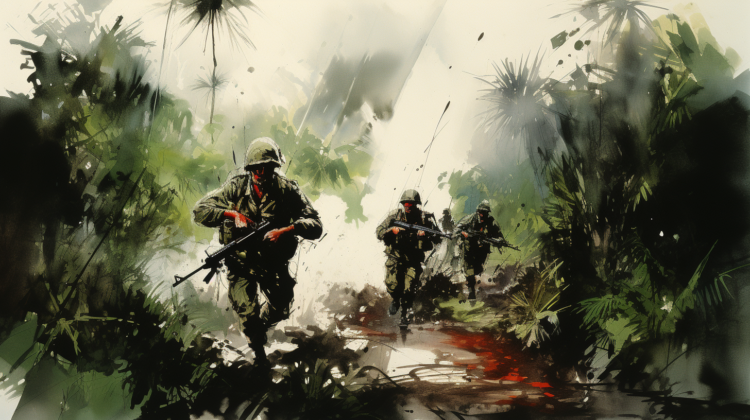
The intensive course concluded with a rigorous 72-hour exercise where the participants experienced an ambush, requiring them to regroup, form tracking teams, and employ the acquired skills to apprehend the adversary.
The response to the training was overwhelmingly positive, with team members commending its practicality and foundational importance for Special Operations Forces (SOF) units preparing for deployment in similar terrains.
Having undergone the training with two different squads, a CSO reiterated its invaluable nature, advocating for its adoption by every company with the potential for jungle deployment.
The diversity of the participating Marine Raiders’ backgrounds contributed significantly to the learning environment. Representing various fields and specialties, the members brought unique perspectives and insights into the training, fostering mutual learning and enhancing the collective skills of the squad. This synergy was particularly evident during collaborative exercises, where the Raiders exchanged knowledge and developed innovative solutions to overcome jungle-related challenges.
The training also placed a strong emphasis on environmental adaptation and survival techniques, equipping the Marine Raiders with knowledge on sourcing food and water, identifying potential hazards, and ensuring sustainability in the hostile and unpredictable jungle terrain. This aspect of the program not only added another layer to their survival skills but also fortified their self-reliance and ability to endure in remote settings.
Mental Toughness
Cody Carroll further highlighted the importance of mental toughness in overcoming the psychological challenges posed by jungle environments. The isolation, unfamiliar sounds, and the density of the vegetation can be disorienting and intimidating, he explained, necessitating a robust mindset and unwavering focus. The course incorporated mental resilience exercises to help the participants acclimate to such scenarios, enhancing their ability to make critical decisions under pressure.
The TTOS instructors also emphasized the significance of community engagement and building rapport with local populations during deployment. Understanding cultural nuances, respecting traditions, and fostering positive relationships were identified as crucial elements in enhancing the mission’s success and ensuring the safety of both the Raiders and the communities they interact with.
In reflection, the Marine Raiders expressed a deep appreciation for the comprehensive nature of the training. They acknowledged that the skills and knowledge acquired were not only essential for jungle deployments but also adaptable and beneficial across various operational contexts. This adaptability, they agreed, is what makes the training program an indispensable asset in preparing Special Operations Forces for the evolving demands of modern warfare.








COMMENTS