

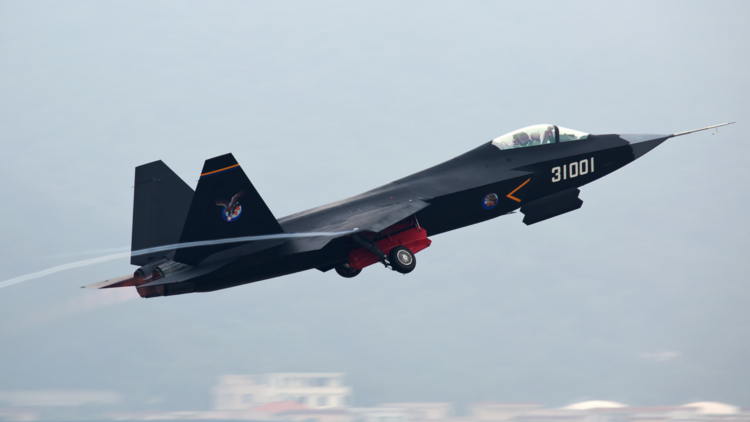
It’s a move that’s got the rumor mills churning, with every defense pundit and armchair general weighing in on the grand strategy at play.
A Tangled Web of Fighters
Dive deeper into the fray, and you’ll find a plot thickening faster than day-old coffee.
The Gyrfalcon’s arrival throws a spanner in the works of Pakistan’s fling with Turkey’s Kaan, a liaison that was all set to redefine the nation’s aerial might.
Now, it’s a love triangle with no clear end, a strategic tango that’s got more twists and turns than a mountain road in the Hindu Kush.
Skepticism in the Pakistani Ranks
Not everyone’s toasting to this new dawn, though.
Voices from the trenches, seasoned warriors who’ve seen their share of sky battles, are piping up with words of caution.
They speak of the headaches that come with juggling a circus of different fighters, the Herculean task of training pilots to dance with multiple partners, and the stark reality of an economy that’s more roller coaster than runway.
“Firstly, induction of too many types of fighters is not helpful from the training and maintenance aspects,” Kaiser Tufail, a defense analyst and ex-Pakistan Air Force pilot, told Defense News. “Secondly, the country’s economic scenario is rather grim, and spending needs to be curtailed drastically.”
“The need for stealthy platforms can be met by [unmanned aerial vehicles], which are excellent platforms for tactical support operations over the battlefield.”
But wait, there’s more.
In a world teetering on the edge of tomorrow, some are casting their eyes toward the horizon, where unmanned birds of prey circle silently.
Drones, those tireless sentinels of the sky, might just be the ace up the sleeve, the answer to prayers whispered in the heat of desert battles and mountain skirmishes.
The TF-X Enigma
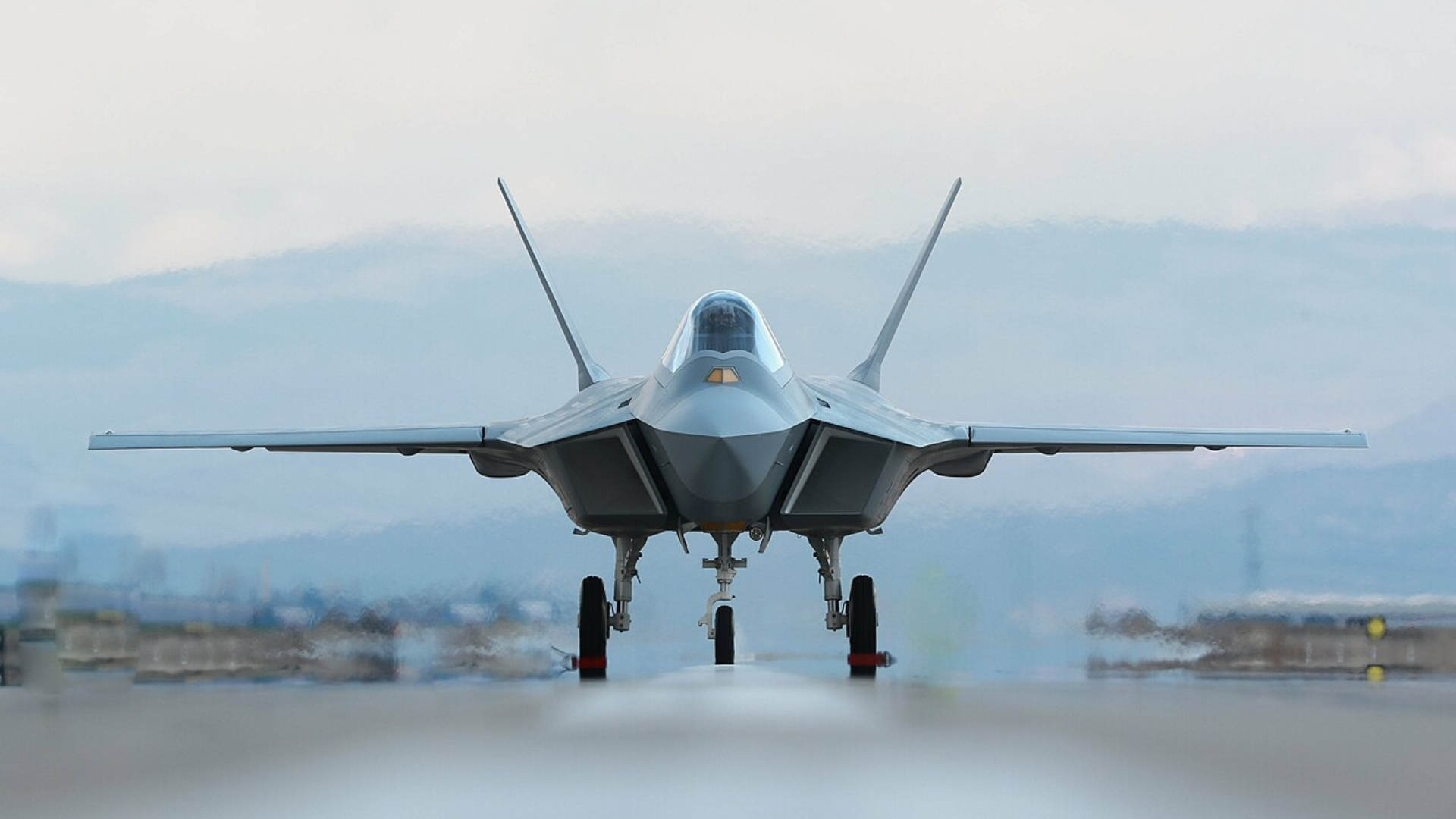
As if this saga needed another layer, there’s the TF-X, Pakistan’s joint dream with Turkey, a project that’s as ambitious as it is enigmatic.
Turkish Aerospace Industries (TAI) has previously laid it out clearly: they’re gearing up to roll out the TF-X prototype in 2023, with its first date with the skies slated for 2026.
It’s a dance toward a future where man and machine meld in a ballet of aerial artistry, a vision of a fleet that’s as fifth-generation as they come, ready to roll out by the time our kids are the ones calling the shots sometime in the late 2040s.
Navigating the Unknown
So here we stand, at the crossroads of history and the future, watching as Pakistan charts its course through the stormy skies of military might and international intrigue.
It’s a journey fraught with uncertainties, a path laden with questions as heavy as a bomber’s payload.
Will the Gyrfalcon be the predator it promises to be, or will it falter in the shadow of greater birds of prey? Can Pakistan balance the books while rewriting the playbook of aerial warfare?
Only time will tell; until then, the world watches, waits, and wonders.
In the end, it’s not just about the jets, the drones, or the flashy tech.
It’s about a nation’s relentless pursuit of its place in the sun, a quest to rise, to soar, and to claim its spot in the great blue yonder.
As we watch this drama unfold, let’s not forget that in the high-stakes game of skies and stars, the bravest are often the ones who dare to dream.








COMMENTS