

“We’ll bring our unique decision aids along with many partner components to allow for increased efficiency and effectiveness in a complex attack, while decreasing the manpower burden to operate the system,” said Ferraro in a press release.
NASAMS Experiment
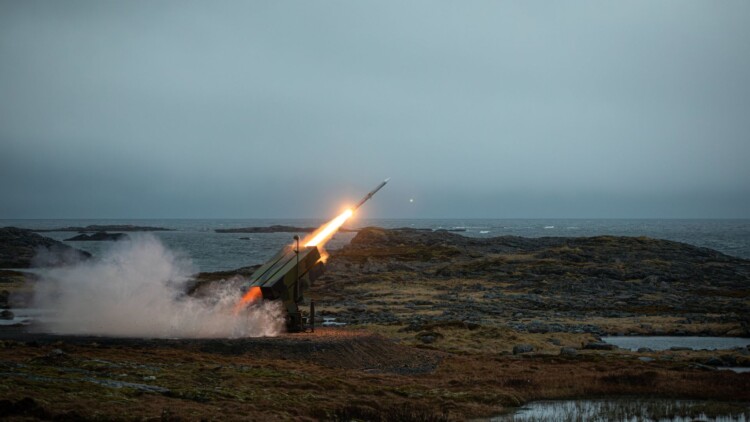
Raytheon’s involvement in this groundbreaking project, in partnership with Norwegian company Kongsberg Defense and Aerospace, follows a successful showcase of an Air Base Air Defense solution in Andoya, Norway, in collaboration with the Air Force Research Lab in 2022.
The lessons learned from last year’s successful experiment have served as instrumental in shaping the development of the BC3 software prototype moving forward.
During this period, command and control software was tested on a National Advanced Surface-to-Air Missile System (NASAMS), capable of firing various types of missiles to engage targets at short, medium, or long range.
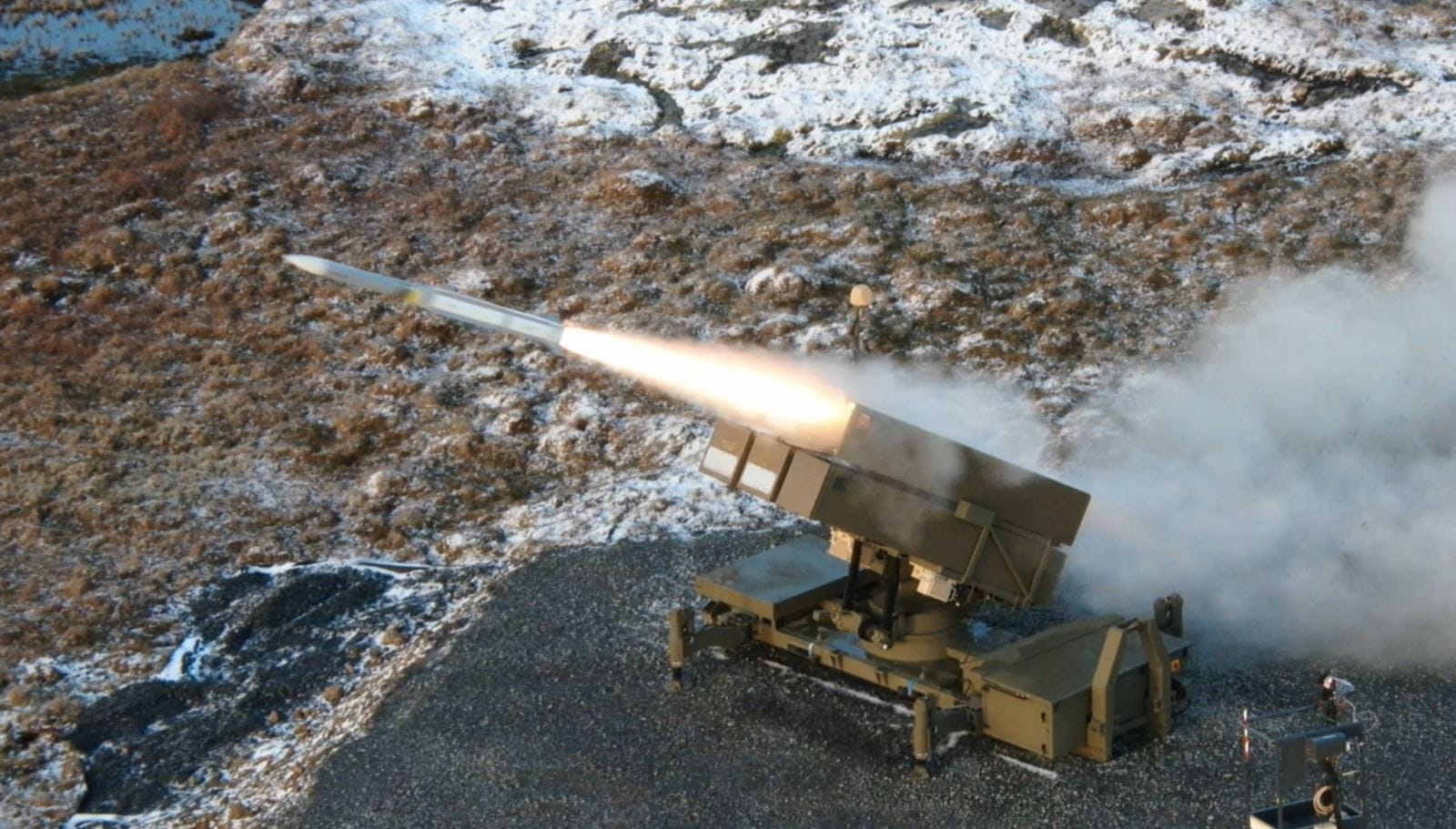
The successful test involved US Army radars feeding targeting information into Raytheon’s BC3.
During the test, the BC3 software demonstrated its capability to connect sensors and weapons systems seamlessly in response to real-time threat analysis before relaying recommended defense options at a Kongsberg Fire Distribution Center for decision-making. As a result, the operator on the receiving end had the ability to close the kill chain by selecting and firing the most effective missile from the NASAMS multi-missile canister launcher.
One of the most remarkable features of this system is its open architecture, which enables it to integrate with future sensors and weapons seamlessly.
Although the test conducted last year primarily involved AIM-9X and AMRAAM missiles, the Air Force is actively exploring electronic warfare and directed energy solutions to counter the rising threat posed by large numbers of small drones. These alternatives offer a lower per-shot cost compared to the AIM-9 or AMRAAM, which can cost hundreds of thousands of dollars each.
Moving Forward
The recent press release reaffirmed Raytheon’s commitment to building upon the valuable insights from the NASAMS experiment.
The company is dedicated to refining its BC3 software further, ensuring that it remains at the forefront of air-based defense technology. This dedication to continuous improvement reflects the dynamic nature of modern air defense systems, which must constantly adapt to new challenges and evolving threats.
Thus, the $39 million contract awarded by the US Air Force marks a significant step forward in bolstering the nation’s air-base defense capabilities.
~
Through the development of the promising Battle Management Command and Control (BC3) software prototype powered by artificial intelligence and machine learning, Raytheon aims to provide the US Air Force with a cutting-edge solution that can effectively analyze targeting data, assess threats, and recommend defense options.
This initiative will play a pivotal role in safeguarding smaller air bases, particularly across the Pacific, and will be a crucial component of the nation’s defense strategy.
As technology continues to advance, Raytheon’s commitment to adaptability and innovation ensures that the BC3 software remains a formidable asset in the ever-evolving landscape of air-base defense.








COMMENTS