
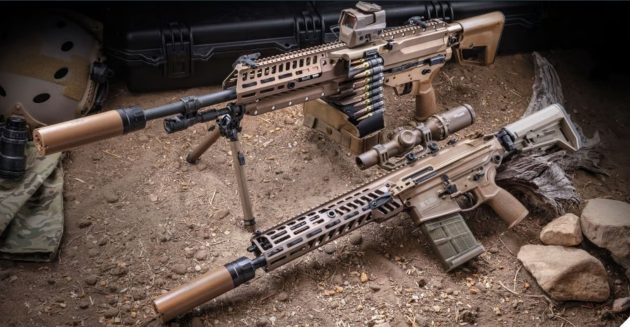
Two Weapons, One Mission Set
In a modern gunfight, a squad wins by putting the right kind of fire in the right place fast, and keeping it there. That takes more than marksmanship. It takes a rifle and an automatic rifle that function as a matched set, built around the same ballistic logic and the same downrange expectations. That is the intent behind the U.S. Army’s Next Generation Squad Weapon program, which fields a paired rifle and automatic rifle designed to complement each other at the squad level, unified by a common cartridge and a shared fire-control approach.
The NGSW Program in Plain Terms
The Next Generation Squad Weapon effort was launched to modernize close combat lethality by replacing legacy squad weapons with a new family built around the Army’s 6.8×51mm 6.8 Common Cartridge. From the outset, the objective was not to field a single replacement weapon in isolation. The goal was a cohesive system that gives squads a consistent ballistic foundation while extending effective range and improving performance against contemporary threats.
As the program matured, the Army focused initial fielding within the Close Combat Force. In May 2025, the Army announced the Type Classification Standard for both the M7 rifle and the M250 automatic rifle. That designation confirms the systems meet Army requirements for safety, operational performance, and sustainment while continuing fielding across close combat formations.
How SIG Sauer Was Chosen
On April 19, 2022, the U.S. Army awarded SIG Sauer a 10-year, firm-fixed-price follow-on production contract for two Next Generation Squad Weapon variants and the 6.8 Common Cartridge family of ammunition. The award followed an extended competitive prototyping and evaluation process that included technical testing and Soldier assessments across multiple phases.
The decision marked a shift from development into scalable production. With that award, SIG Sauer assumed responsibility for delivering the weapon portion of the Army’s next-generation squad-level capability, moving the program beyond prototypes and toward sustained fielding.
The Army reinforced its system-level approach through parallel modernization efforts. In a separate contract, the service selected the XM157 Next Generation Squad Weapons–Fire Control optic to pair with both weapons, supporting an integrated approach to lethality rather than disconnected upgrades applied after the fact.
M7: The Rifle That Sets the Tone
The M7, previously designated XM7 and earlier XM5, is the Army-adopted variant of the SIG MCX-SPEAR chambered in 6.8×51mm, commercially associated with .277 SIG Fury. Within the NGSW concept, the M7 serves as the squad’s magazine-fed rifle, designed to deliver increased reach and terminal performance compared to legacy 5.56mm carbines while remaining suitable for close combat operations.
The M7 was developed as part of a paired capability rather than a standalone platform. Its role is to provide individual Soldiers with a rifle that aligns directly with the squad’s automatic weapon in cartridge, ballistic profile, and fire-control integration. That alignment reduces complexity and promotes consistency in training and employment, particularly when squads transition between individual and crew-served fires during contact.
M250: The Automatic Rifle That Carries the Squad’s Volume
If the M7 sets the tone, the M250 carries the tempo.
The M250, previously designated XM250, is the Army’s belt-fed automatic rifle developed under the NGSW program to replace the M249 Squad Automatic Weapon. In the squad-level fight, it serves as the sustained-fire platform designed to suppress, fix, and create opportunities for maneuver.
What defines the M250 within the NGSW framework is not simply its belt-fed configuration, but its commonality with the rifle. Chambered in the same 6.8×51mm cartridge as the M7, the M250 is part of a deliberate pairing intended to unify ballistic performance and simplify how squads plan, train, and fight. Riflemen and gunners are now operating from the same ballistic baseline, supported by the same fire-control logic.
The Army’s May 2025 Type Classification Standard milestone covered the M250 alongside the M7, reinforcing confidence in the paired approach for close combat formations.
One Cartridge, One Cohesive Pair
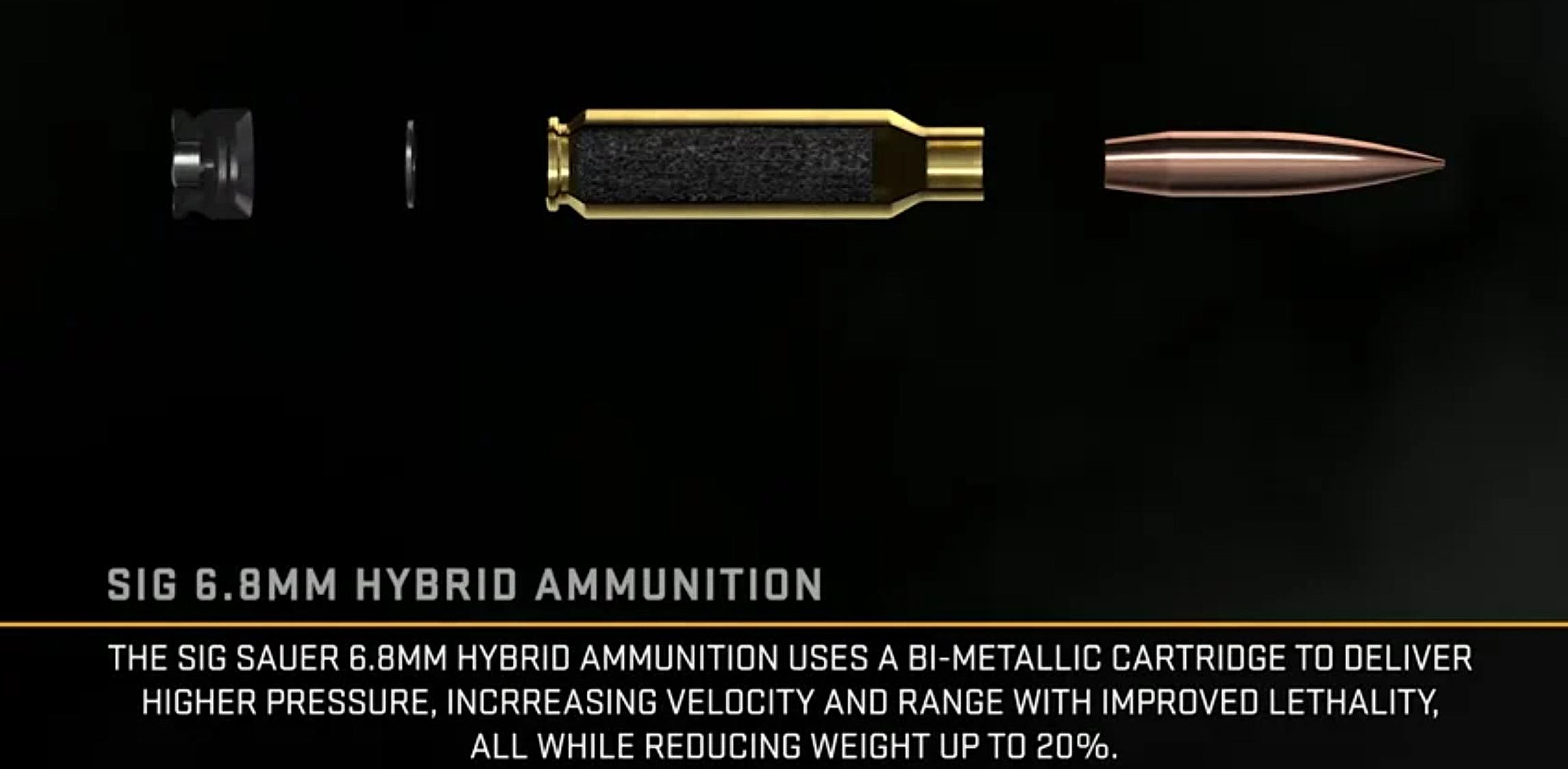
The cartridge is the connective tissue that makes “two weapons, one mission set” more than a slogan. The 6.8×51mm 6.8 Common Cartridge underpins the entire NGSW concept, providing a shared ballistic foundation for both the rifle and the automatic rifle. The commercial .277 SIG Fury is closely associated with this development and reflects SIG Sauer’s work on high-pressure cartridge design within a short-action footprint.
Paired with the XM157 fire-control optic, the weapons are intended to give squads consistent ballistic solutions across platforms. The result is a reduction in friction when transitioning between roles and an improvement in hit probability across the squad.
Conclusion: The Squad-Level Endgame
The Next Generation Squad Weapon program is a bet on cohesion. It reflects the Army’s view that squads are more effective when their core weapons are designed as a unified capability rather than assembled from separate procurement lines. By delivering the M7 and M250 as a matched rifle and automatic rifle pairing, SIG Sauer has played a central role in shaping that approach.
Two weapons, one mission set, and one clear intent: provide close combat squads with a paired capability that feels unified in training, unified in employment, and unified where it matters most, downrange.








COMMENTS