When military families line up by the hundreds for groceries while paychecks stall and aid gets snarled, that is a gut punch to readiness and a broken promise to those who serve.
Read the full article for more on:
Important insights and detailed analysis
Expert commentary on current events
Breaking developments and updates
Updating summary...
SOF Pic of the Day: “Will Control for Food” – Hunger in the Ranks
Guy D. McCardle
Speed
1x
Listen
COMMENTS
When military families line up by the hundreds for groceries while paychecks stall and aid gets snarled, that is a gut punch to readiness and a broken promise to those who serve.
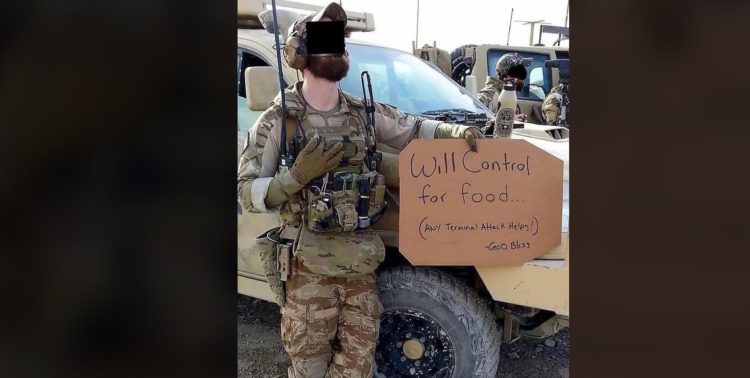
A tongue in cheek JTAC holding a sign highlights a hard truth: too many military families still struggle to put food on the table. Image Source: Reddit
I know our JTAC holding a sign is a tongue-in-cheek photograph, but there is nothing funny about food insecurity in the US armed forces.
Advertisement
If you ask me, it shouldn’t even be a thing…but it is. All too real.
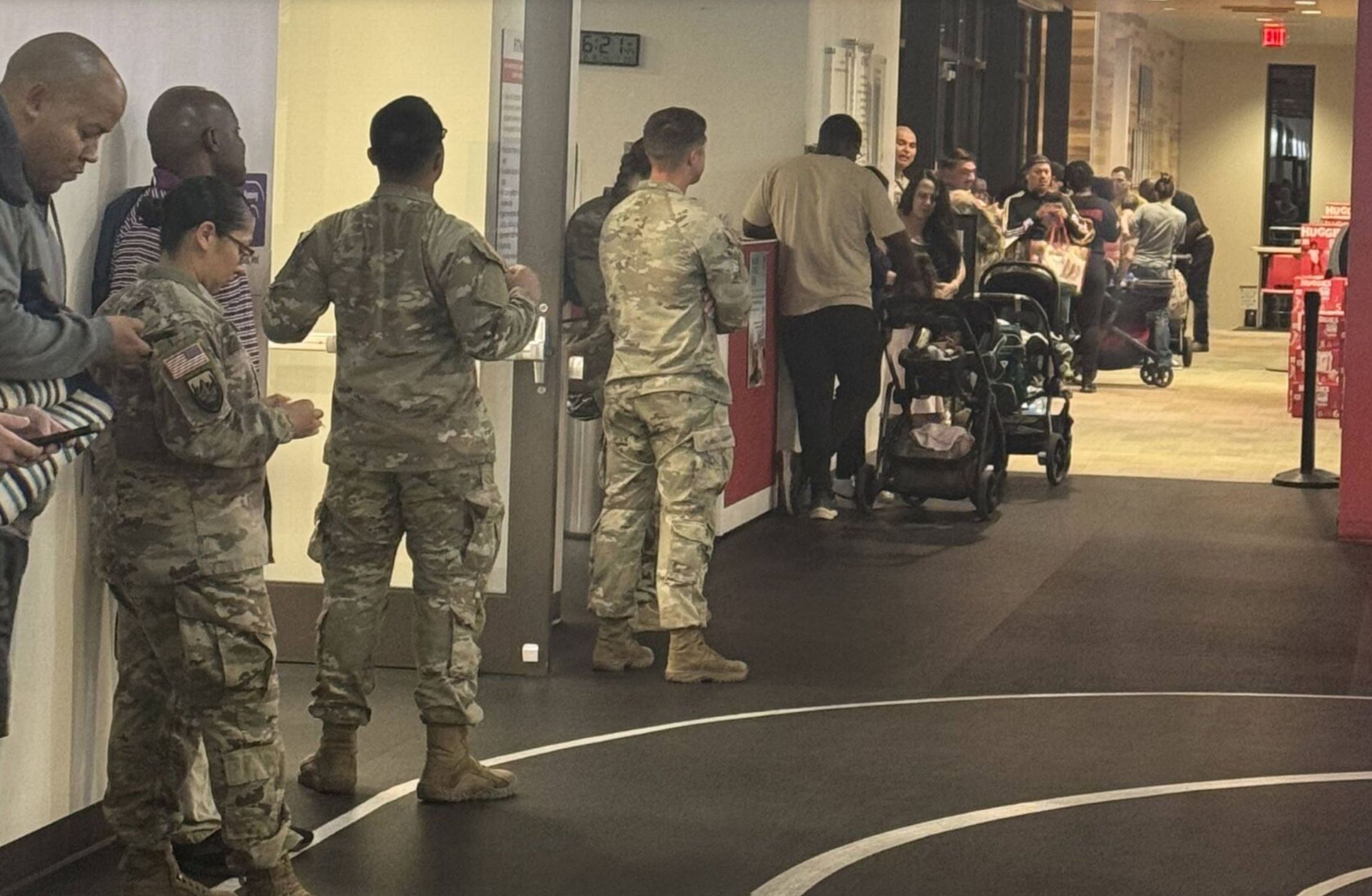
Soldiers and their families stand in line for food distribution at an Armed Services YMCA in Harker Heights Texas, near Fort Hood. This particular event drew almost 700 people in need. Image Credit: Armed Services YMCA
Directly above, we see a less humorous image of Fort Hood families standing in line for food at a local YMCA. The image is just days old. Organizers of the food distribution event, held every Thursday, tell KDH News that the organization is stepping up its efforts to help local military families in need. The most recent food distribution saw a 34% spike in attendees.
Food Insecurity in the US Military
Food insecurity is a significant issue within the US military population, with around 25% of active-duty service members stating they don’t have enough food to feed their families. This is more than double the rate seen in the demographically similar civilian population (10.1%). This means these military members sometimes do not have reliable access to enough nutritious food for an active, healthy life. About 10.5% of military personnel report very low food security, the most severe form, compared to 3.6% in civilians.
Advertisement
Key facts include:
Approximately 125,000 active-duty service members and their families face food insecurity.
Lower-ranking enlisted members, often earning less than $40,000 annually, are particularly vulnerable due to limited incomes and high living costs aroundcertain military bases.
Frequent relocations, employment barriers for military spouses, and financial commitments exacerbate food insecurity risk.
Food insecurity affects military readiness, cognitive function, and health, and leads to decreased levels of personal and unit effectiveness.
Despite these challenges, less than 2% of active-duty military households receive SNAP (Supplemental Nutrition Assistance Program) benefits, partly due to housing allowances being counted as income, which reduces eligibility.
Food insecurity is recognized as a key social determinant of health in the military, with efforts underway within the Department of Defense to identify needs and connect service members with resources to address this issue. However, the elevated rates compared to civilians underscore a continuing challenge for military families to secure adequate nutrition while serving.
Advertisement
Defining “Food Insecurity”
Just what is “food insecurity” in the US? Well, it is most certainly NOT the financial inability to make a second trip through the Mickey D’s drive-through on a Saturday night. I say this as a man who has himself had to wait in line for food support. Take my word for it, it is a humbling experience.
Food insecurity is defined by the United States Department of Agriculture (USDA) as “the limited or uncertain availability of nutritionally adequate and safe foods, or limited or uncertain ability to acquire acceptable foods in socially acceptable ways.” This definition not only includes insufficient amounts of food but also reflects reduced quality, variety, or desirability of diet, sometimes without necessarily reducing the amount of food intake. Food insecurity is assessed at the household level and considers circumstances over the past year or month.
There are different levels of food insecurity:
Advertisement
Low food security involves reduced diet quality and variety but usually no significant reduction in food intake.
Very low food security is more severe, involving disrupted eating patterns and reduced food intake due to economic or resource constraints.
Food insecurity may lead to negative health outcomes as it limits consistent access to adequate food necessary for an active, healthy life.
How the Government Shutdown Hurts our Military Families
The recent government shutdown in October 2025 is significantly impacting food insecurity among troops and their families. About 1.3 million active-duty military personnel are currently unpaid due to the shutdown, causing many military families to seek food assistance as financial anxiety grows. Food pantries near military bases, like at Fort Hood in Texas, have reported unprecedented demand, with some seeing a 34% increase in families seeking help.
The shutdown delays or disrupts federal food assistance programs like SNAP and WIC, which are crucial for many military families, especially enlisted personnel who are already vulnerable to food insecurity. Although essential military operations continue, support services and paychecks may be delayed if the shutdown persists beyond several weeks, exacerbating the hardship.
During past shutdowns, food banks experienced surges in demand as military and federal families faced uncertainty in income. The current shutdown comes amid already historically high levels of food insecurity due to inflation and economic pressures, making the situation especially dire. Programs intended to protect military families from hunger are under strain, and local food banks and community organizations are bracing for or seeing increased demand for emergency food assistance.
In summary, the government shutdown is causing unpaid wages for military members, increased demand for food aid among military families, and threats to federal nutrition program funding — all worsening food insecurity in the troops’ community.
To me, that’s just flat-out un-American.
Advertisement
What readers are saying
Generating a quick summary of the conversation...
This summary is AI-generated. AI can make mistakes and this summary is not a replacement for reading the comments.










COMMENTS