

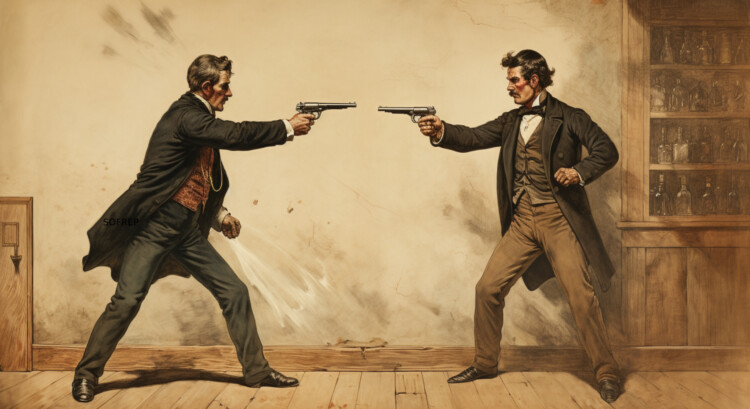
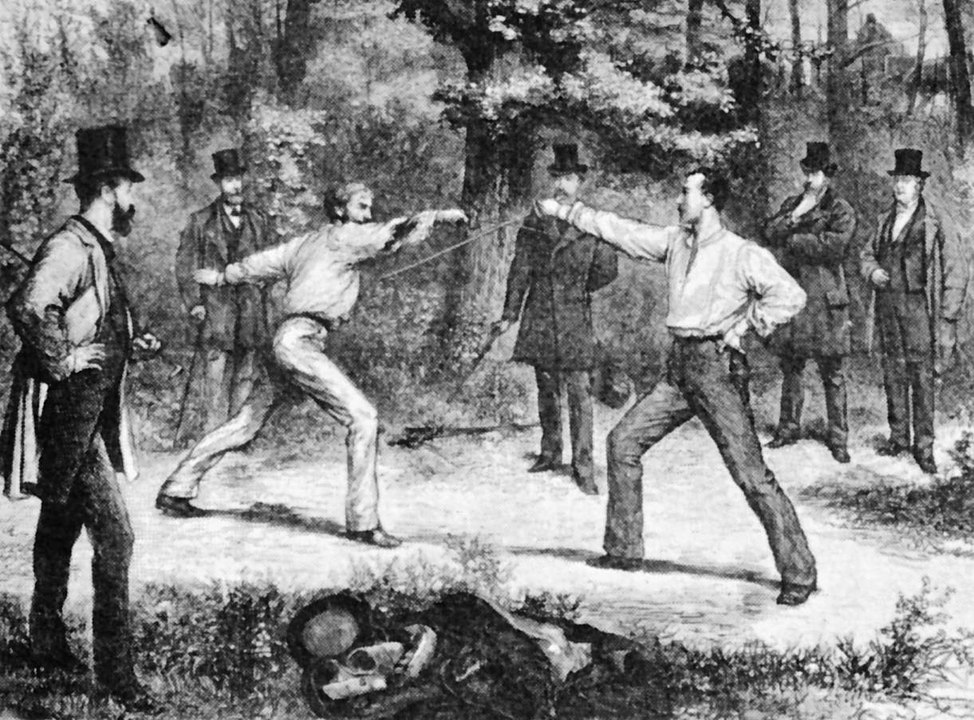
Choice of Weapons: The participants and their seconds would agree on the weapons to use. Common options included pistols, swords, and occasionally other weapons like rapiers. The choice of weapon held symbolic significance, reflecting the combatants’ intent and skill.
Secrecy and Discretion: The impending duel was to be kept secret, known only to the involved parties and their chosen seconds. This added an air of mystery and heightened the gravity of the situation.
Negotiation and Apology: Before the duel took place, efforts were often made by the seconds to negotiate a peaceful resolution, and an apology from the offending party was seen as a way to avoid the duel altogether.
Time and Place: The duel had to take place at a predetermined time and location, often in a secluded area outside of town. This ensured privacy and minimized the chances of interference.
Distance and Range: For pistol duels, a specific distance was established between the participants. This distance was agreed upon by the seconds and was meant to be fair to both parties. Typically, the distance was measured in paces.
Positioning: Duelists and their seconds had assigned positions. The seconds would oversee proceedings and ensure fairness, while the duelists would stand facing each other.
Count and Fire: The duelists would be instructed to stand still, take aim, and, upon a signal, fire their weapons. In pistol duels, this often involved taking one or more steps before firing. Sword duels followed a similar ritual, with specific instructions on the manner of attack and defense.
Interruptions and Outcomes: If one of the participants was injured, satisfaction was generally considered achieved, and the duel would be stopped. In some cases, if the party at fault was not injured, the injured party might demand another round of combat to restore honor.
Apologies and Reconciliation: Surviving a duel was often seen as a sign of honor having been satisfied, and parties involved might offer apologies or make amends after the fight.
Witnesses: The duel was typically witnessed by the seconds, who ensured the proceedings were fair and unbiased. These witnesses could vouch for the events that occurred during the fight.
It’s important to note that while the Code Duello provided a structured framework for dueling, the actual outcomes could vary. Many duels ended without bloodshed, as the primary goal was often to prove one’s courage and willingness to defend honor rather than to kill an opponent.
Famous Duels and Their Legacies
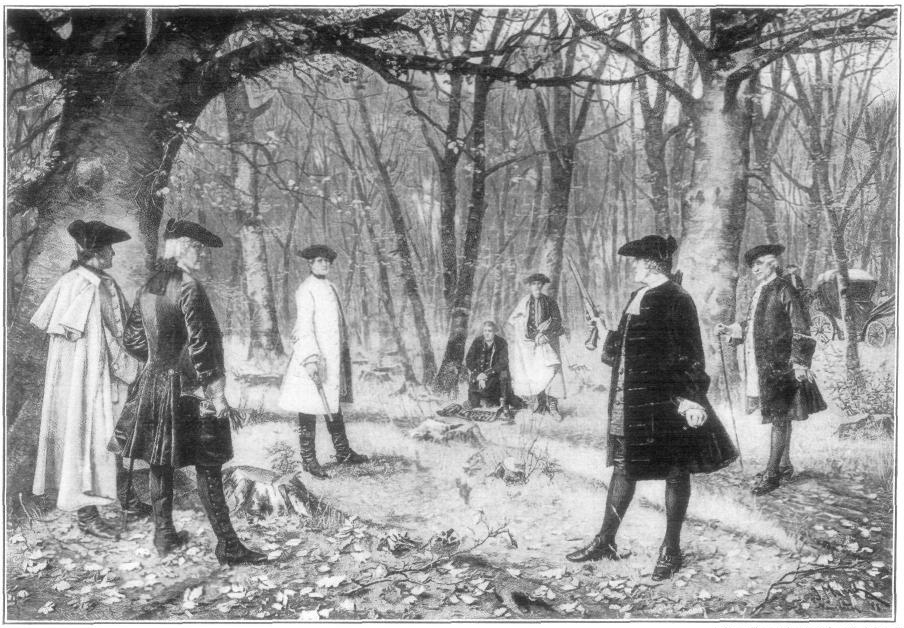
The annals of history are replete with accounts of duels that left an indelible mark on American society. The infamous duel between Alexander Hamilton and Aaron Burr in 1804, resulting in Hamilton’s tragic death, remains a chilling reminder of the lengths men would go to defend their honor. Similarly, the duel between Andrew Jackson and Charles Dickinson showcased the fierce determination and personal stakes involved.
Legacy and Evolution
As America continued to evolve, so too did attitudes toward dueling. The 1800s saw a gradual decline in the practice as societal norms shifted and legal measures were enacted to discourage these deadly encounters. The Civil War further redirected the nation’s focus, leaving little room for the dueling culture of the past.
In the end, the rules of dueling in 1800s America were more than a series of guidelines; they were a reflection of a society wrestling with its identity, honor, and the complex interplay between personal valor and social norms. While dueling may seem a relic of a bygone era, the echoes of its code of honor continue to resonate in the modern world – a testament to the enduring quest for integrity and the lengths to which individuals will go to defend their honor.
~
With measured steps, the duelists began to move, each pace a testament to the gravity of the moment—a calculated advance toward the brink of life and death. The seconds, eyes trained on their charges, ensured the proceedings adhered to the revered Code Duello, a dance as old as chivalry itself.
As the predetermined distance was reached, the duelists came to a halt. The seconds exchanged somber nods, a silent agreement that the time had come to fulfill the obligations of honor. Gloves were removed, hands that had once clasped in camaraderie now unclenched, ready to embrace the cold steel of their instruments of fate.
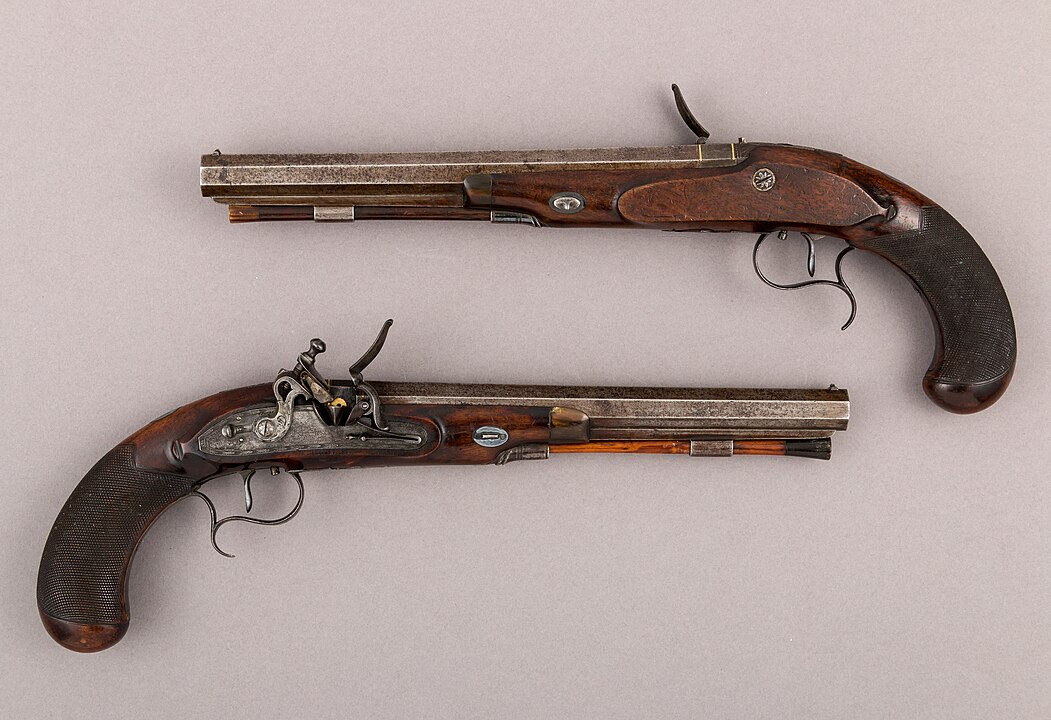
A pair of polished dueling pistols gleamed in the dappled sunlight, held steady by the gloved hands of the seconds. The participants took their positions, their hearts pounding in rhythm with the moment’s intensity. An aura of solemnity enveloped the clearing, a sanctuary where disputes could only be resolved by the stark reality of the danger.
The seconds raised their arms, and the air was pierced by a single command, “Present!” The duelists obeyed, extending their pistols toward the other, eyes locked, hands steady despite the turmoil within. A tense silence followed, a heartbeat suspended in time.
“Fire!”








COMMENTS