

By the time we reached the Marquesas Islands, my dad and I were arguing over some questions of correct seamanship. Eight hundred miles later, when we reached Tahiti, the friction between us had gotten so bad that it was clear one of us had to go. It was his boat, so the one who went was me.
The next day I was standing on an island in the South Pacific saying, “Shit, this is for real.” When the family boat set sail from Tahiti, I was no longer on it.
I probably could have stayed. Let us both cool down, wait a day and go back, say I was sorry and that I really wanted to rejoin the crew — that is, the family — and stay aboard. I could’ve done that. Thought about it. But didn’t do it.
I left behind everything I’d brought with me, which was pretty much everything I owned: all my dive gear (which I’d bought with my own money), a spear gun, a knife collection, a ton of books. All my worldly possessions. My parents helped me find a crew that was headed to Hawaii (and by “crew” I mean a young couple with their three-year-old son on a 40-foot catamaran) that would take me on. For the next two weeks my hosts and I made our way north, bound for Hilo on the open water. Here I was, just turned 16 alone on the Pacific. My childhood home behind me and gone forever. The first few nights I cried myself to sleep. I was terrified.
When I eventually reached California, I had to face all the challenges of being a teenager on my own. I had to learn how to do all those things I’d always taken for granted, even tasks as simple as shopping and making dinner for myself, and keeping my own laundry together. When I got my driver’s license, I didn’t even know how to put gas in the car. As scary as it had been to face the Pacific ocean in a catamaran, in many ways things were even scarier now.
And it was all because of those two words my dad had said.
“We’re going.”
My resentment burned like a blast furnace. Funny thing, though. Yes, I was furious at my dad, and yes, I was scared. Yet at the same time, the strength and power of his three-word decision was undeniable. Looking back, I realize now that as angry as I was, I also drew strength from his example.
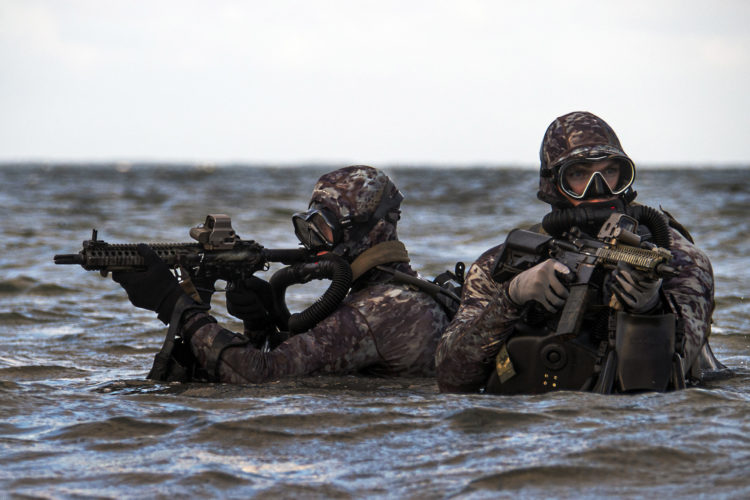
Years later I learned about the great Irish explorer Ernest Shackleton, who was sometimes criticized by his contemporaries for being restless and eccentric. Yet others were impressed with his keen mind and unusual leadership style. Shackleton didn’t care for authoritarian hierarchies; he liked to form a personal bond with every member of his crew, man to man. In selecting crewmembers, he cared less about people’s technical qualifications and more about their character. And character, to Shackleton, lay, more than anywhere else, in the capacity to be firmly resolute. I think he would have made a good Navy SEAL.
In 1914, Shackleton began preparing for one of the most ambitious trans-Antarctic expeditions ever mounted. As legend has it, to recruit suitable applicants for his new crew, he placed this ad in the newspaper:
“Men wanted for hazardous journey. Low wages, bitter cold, long hours of complete darkness. Safe return doubtful. Honor and recognition in event of success.”
Do you suppose the people who answered that ad were afraid? Of course they were. They weren’t idiots. They knew that when he wrote “Safe return doubtful,” he wasn’t kidding. But their sense of adventure outweighed their fear. To a man, I have no doubt, they all read that ad and had the same thought. They all thought the exact same words my father spoke to me:
We’re going.
Now it’s time for you to get going.
If you like what you’ve read here, consider checking out the book I wrote, Mastering Fear. It deals with the notion of decision, as well as many other lessons from my time and training as a Navy SEAL.








COMMENTS