

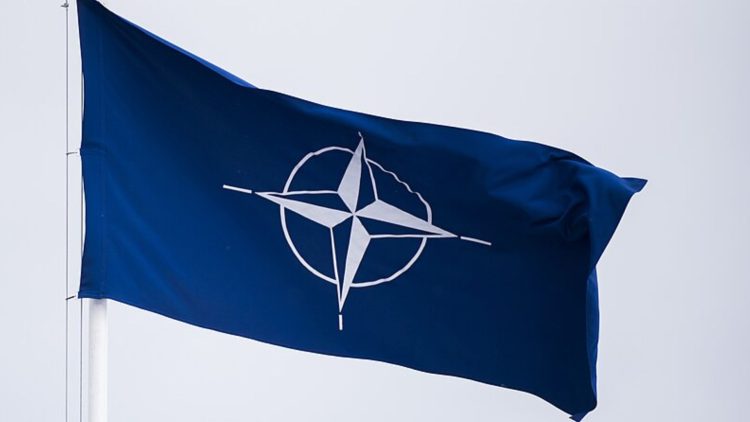
His lack of confidence in the alliance was clear—yet it’s worth remembering that NATO has always honored its commitments when the US was attacked. It seems his skepticism overlooks this longstanding history of mutual support.
French President Emmanuel Macron quickly responded, reminding the world of the centuries-old relationship between France and the United States, tracing back to the Marquis de Lafayette’s support during the American Revolution.
Macron’s words were a reminder that, historically, the US and NATO members have always stood by each other, even in the most challenging times.
A Focus on Defense Spending: The Trump Doctrine
One of Trump’s main criticisms of NATO has been the defense spending disparity. He has consistently argued that the US carries too much of the financial burden for the alliance, expecting European members to contribute more to military funding.
Trump has often framed this as a “common sense” approach—if countries don’t meet the target of two percent of their gross domestic product (GDP) on defense, they shouldn’t expect US protection.
This position aligns with his broader philosophy on foreign policy: America First.
Trump reiterated this point on Thursday, saying, “If they don’t pay, I’m not going to defend them.” For him, it’s simple: financial contributions should directly correlate with military support. This argument, however, is more nuanced.
While it’s true that the US contributes more to NATO’s defense spending than any other country, NATO has made significant strides in recent years to meet spending targets.
In fact, last year, NATO’s Secretary-General Jens Stoltenberg noted that a record 23 of NATO’s 32 member countries had met the defense spending goal.
Trump, ever the dealmaker, took credit for these increases, attributing them to his pressure on European nations to step up.
Is NATO’s Future at Risk?
Trump’s comments reflect a broader question about NATO’s future: is the alliance still relevant in the modern world?
NATO was originally formed to counter the Soviet threat during the Cold War, but today, its purpose and cohesion seem less certain, especially as the world faces new geopolitical challenges.
With Trump’s more transactional approach to international relations, the US’s commitment to NATO appears less certain, raising questions about what the future holds for the alliance.
At the same time, Trump’s focus on military spending—while often criticized as blunt and one-sided—does highlight a valid issue.
NATO countries must meet their financial commitments if they want to maintain the strength and credibility of the alliance.
However, the idea that NATO would abandon the US in its time of need seems far-fetched given the history of cooperation.
Mr. Trump’s comments are certainly a bold challenge to NATO’s longstanding structure, but they also reflect the broader shift in US foreign policy. Whether or not NATO’s defense guarantee continues to be seen as “ironclad” remains to be seen, but one thing is clear: the debate over the alliance’s role in the 21st century is far from over.
In Conclusion
Trump’s skepticism about NATO isn’t new, but his recent comments on the potential for abandoning the alliance’s defense commitments have reinvigorated concerns about the future of US involvement. While the US has contributed significantly to NATO’s military spending, other countries have increasingly met their obligations, and NATO’s history of mutual defense guarantees cannot be overlooked.
As the geopolitical landscape continues to evolve, so too will the discussions surrounding NATO’s role in ensuring global security. It’s a conversation that will undoubtedly continue to shape US foreign policy for years to come.
This article includes reporting from the Associated Press.








COMMENTS