


SOFREP has closely followed this phenomenon in detail since the start of the war last February 24th. We have reported on several pieces of vital evidence that the Russians have used untrained conscripts to fight their war, mostly with flimsy military equipment and old Mosin-Nagant rifles, which are older than most of our readers.
More so, mounting evidence that Russian soldiers are threatened and coerced to fight in Ukraine by serving them with potential criminal charges if they decide not to fight.
SOFREP reported on a story wherein Russian contract soldiers were told that they would be stationed somewhere in Russia, then were sent to Ukraine without knowing they were already in Ukraine. This story also gave us an insight into the realities the Russian soldiers faced. They did not have food (not really surprising at this point) and had to forage for something to eat – with some Russians allegedly eating stray dogs to feed themselves.
“We have no idea who we’re fighting against or fighting for or how we’re doing it. I don’t want to criticize the army. I don’t know if they had a commanding officer with them; they aren’t allowed to disclose this over the phone. But I concluded they had been abandoned,” a mother of a Russian contract soldier said.
What Does the Geneva Convention Say About Killing Civilians?
Plain and simple, you can’t attack civilians.
Apparently, the Russians do not know how to read as the Geneva convention clearly outlines what you can and can’t do in a war. Even wars have policies and rules to follow, so Russia possibly decided to call it a special military operation to keep them out of the bounds of the Geneva convention? If that was their plan, then it clearly didn’t work.
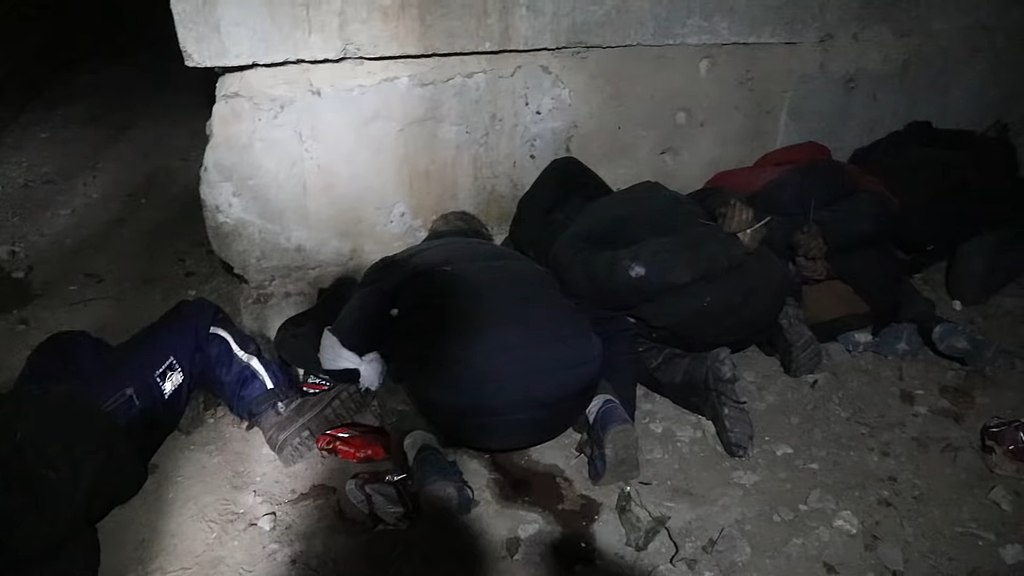
Russian soldiers executing 8 Ukrainian men in Bucha.
War crimes similar to those committed by Moscow during the Second World War. pic.twitter.com/CTACTXhort
— Visegrád 24 (@visegrad24) June 5, 2022
We have war rules for a purpose. Apparently, the Russians missed out on the part where it says you should not attack civilians, specifically the Fourth Geneva Convention that outlines the protection of civilian persons in times of war.
“Non-combatants, members of armed forces who have laid down their arms, and combatants who are hors de combat (out of the fight) due to wounds, detention, or any other cause shall in all circumstances be treated humanely, with the following prohibitions:
(a) violence to life and person, in particular murder of all kinds, mutilation, cruel treatment and torture;
(b) taking of hostages;
(c) outrages upon personal dignity, in particular humiliating and degrading treatment;
(d) the passing of sentences and the carrying out of executions without previous judgment pronounced by a regularly constituted court, affording all the judicial guarantees which are recognized as indispensable by civilized peoples.”
More so, the Geneva convention also bans forced transfers and deportations of civilians by the “occupying power” into their territory and cannot also move their citizens to the occupied territories. Forced deportations through “filtration camps” have also been reported to be done by the Russian forces, with over 1.55 million Ukrainians being forced into Russia.
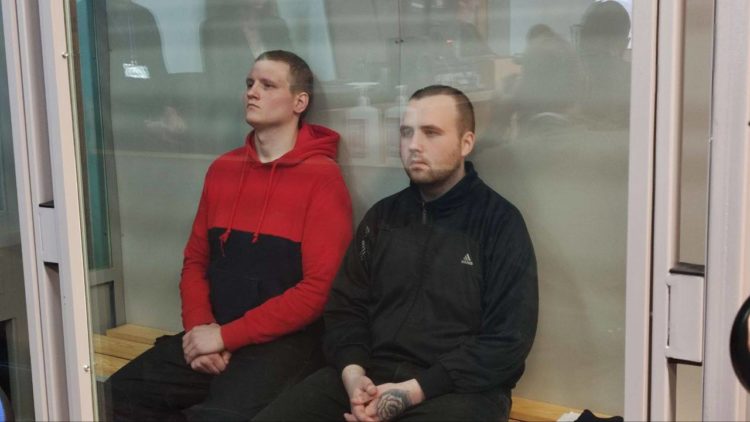
Many fear that these war crimes will become tit-for-tat as the Ukrainians continue to charge Russian soldiers with war crimes, and the Russians also charge Ukrainian POWs with war crimes.
The difference, however, is that the Russian justice system is highly biased and politicized. We are not saying that the Ukrainians are not susceptible to bias. However, it has been reported that they are being assisted by former international criminal court judges, making their justice system more reliable than the Russians. To be fair, the Ukrainians are prosecuting the Russians very fast, which indicates that they are somewhat moved by their emotions by holding individual Russian soldiers for the broader conflict, questioning the adequacy of the defense.
These trials of Russian soldiers for war crimes also serve several other purposes.
First, they demonstrate that Ukraine has a functioning government with courts of law.
Second, the recent life sentence handed down rather than summary execution is a public demonstration of Ukraine’s restraint in meting out justice to its aggressors, especially conscript privates who tend to be very young.
Finally, both Russia and Ukraine are holding POWs, there have been several exchanges so far. Those tried for crimes and imprisoned have a higher relative value in exchange than ordinary POWs do. Russia has recently said they will put two UK nationals captured fighting for Ukrain on trial as criminals. These war crime trials of Russian soldiers will create bargaining chips of equal value in a future exchange of prisoners between the two countries.









COMMENTS