

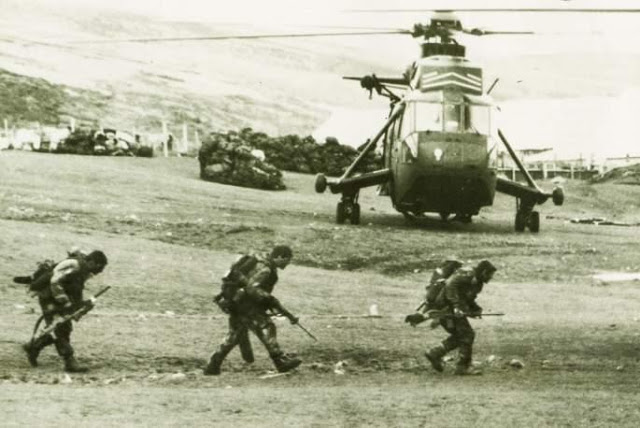
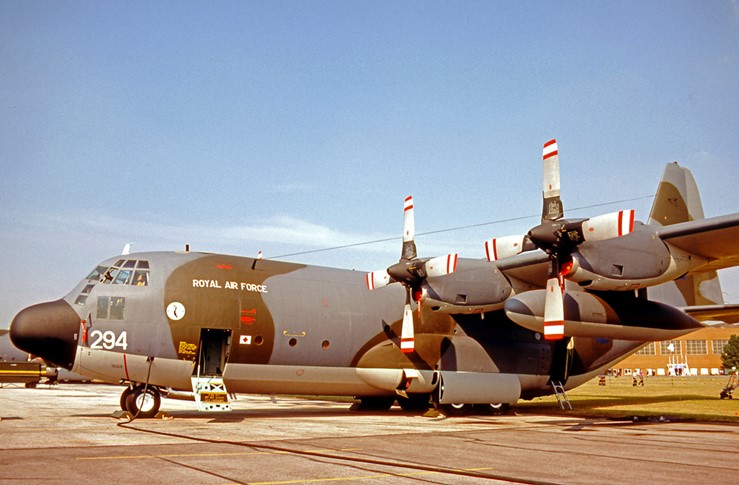
Hoping that the airbase’s radar didn’t spot them, the two aircraft would land, and the troopers, mounted on pink panther jeeps and motorcycles, would storm their targets. For the fifteen minutes that the operation was planned to take, the C-130’s engines would keep running, waiting for the return of the SAS.
In the, quite logical, likelihood that the Argentine defenders shot at and destroyed the vulnerable aircraft, the surviving SAS troopers and crewmembers would, separately, make their way to Chile by foot– with the whole Argentinian garrison in hot pursuit. All of these at night. And based upon a 1937 topographic map.
It is no wonder, therefore, that since its initial inception Operation Mikado had been received somewhat negatively by the SAS rank and file. While rehearsing for the operation at Ascension Island, the seventy troopers of B Squadron that would perform the raid had rebranded it as Operation Certain Death.
And the discontent transcended the ranks.
Raising logical concerns about the feasibility and practicality of the mission—losing a whole SAS Squadron plus two invaluable C-130s and their aircrews for a mission without prior reconnaissance—the commanding officer of B Squadron was sacked by Brigadier de la Billière, the SAS Director, and replaced with a more ‘optimistic’ officer; the senior enlisted NCO of the Squadron quit.
Despite all the detailed planning and the different contingencies examined, no one seemed to acknowledge the fact that killing unarmed pilots was against the Geneva convention. Moreover, by attacking Argentina mainland, the British were risking losing the ever-essential media and diplomatic war that had been raging with almost equal ferocity since the beginning of the Argentinian invasion of 2 April.
After being on stand-by for too many times, the troopers of B Squadron were informed, on 3 June, about the final cancellation of Operation Mikado. Reason had prevailed.
Many people, from within and outside the SAS, believed that the main motive behind Hereford’s insistence for Operation Mikado to take place was the preserve the “SAS myth” of audacious and dashing operations.
Since its early days fighting the Germans and Italians in the vast deserts of North Africa, the regiment had achieved some remarkable feats of valor. For such a unique organization, reputation was everything—the televised raid on the Iranian embassy two years earlier hadn’t been beneficial for some egos.
And with every new success the influence that the Regiment exerted upon the political and military higher echelons soared.
“People sitting back in England, thought that we walked on water, that we were invincible,” says Alan Bell, who served with D Squadron during the conflict. But such an attitude caused widespread resentment from within the military. The elitist attitude that they quite often showed—unlike their SBS brethren—didn’t win them many fans.
Brigadier Ian Gardiner, who as a Royal Marines Captain commanded an X-Ray Company of 45 Royal Marines during the war pointed that, “the SBS were conversant with the many complexities of amphibious and littoral operations [but] the SAS were not. It also seemed that they were not open to expert advice on cold weather warfare. Moreover, they were used to communicating only with their HQ in the U.K. These factors contributed to the near-disastrous start of the South Georgia operation.”
Yet, many in the SAS have attributed this accusation of elitism to the mysterious nature of their profession. In an interview with NEWSREP, Alan Bell, an SAS officer who fought in the war, said that the cause for any resentment from within the military was because, “it was the first time the SAS had worked with conventional forces. They didn’t know how to use us. We did the best we could, but the conventional people didn’t know how to use us. And if you add in the equation our relaxed grooming standards and fancy gear, that’s what you get.”
The fact that there wasn’t a debrief within the SAS after the war was also striking. “Because of the many mistakes made during the campaign,” explains Alan Bell, “the higher echelons of the SAS decided that we wouldn’t have an official debrief. No one likes to parade his failures. A lot of things went wrong. But a lot of things went also right. We were very surprised by this and asked questions for months. Yet, the response was always the same: no debrief will take place.”
One may say that the SAS were arrogant. One may even say that they were scornful of other’s advice. One, however, cannot say that they didn’t perform to the best of their ability. And not just them. Along with their SBS brethren, the SAS managed to further expand the celebrated reputation of British special forces.
A reputation that is still respected worldwide.
A reputation that their modern successors have worked hard to maintain in the mountains and deserts of the Middle East.








COMMENTS