
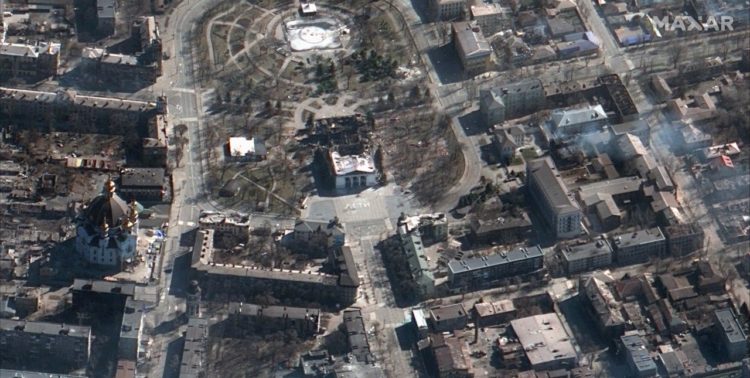
Andryushchenko rejected the surrender offer from Russia via a Facebook post saying that he did not need until Monday morning to come up with a reply, cursing Russians after it had subjected his city to massive and relentless bombings which had destroyed about 80% of all infrastructure, 30% of which could not be repaired anymore.
“There can be no talk of any surrender, laying down of arms. We have already informed the Russian side about this,” Vereshchuk said to Ukrainian Pravda. “I wrote: ‘Instead of wasting time on eight pages of letters, just open the corridor.'”
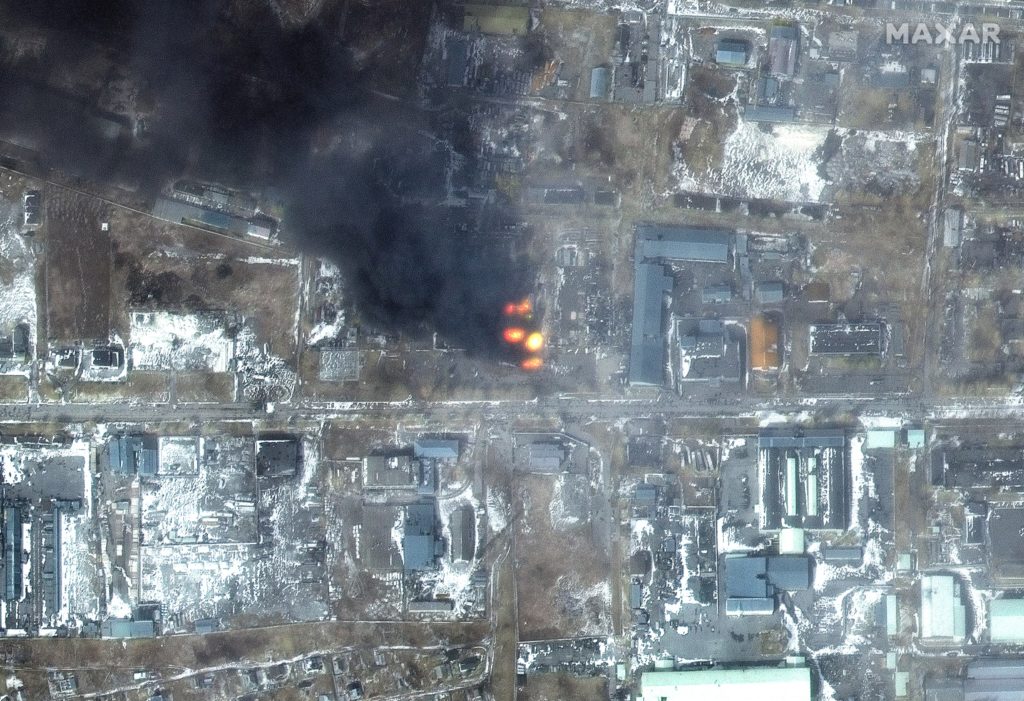
Some 400,000 people are still trapped within the city for over four weeks of fighting as talks between Russia and Ukraine for a ceasefire and establishing humanitarian corridors have only been partially successful. As a result, the city has been suffering from food shortages and issues with electricity, water, and heating supplies. More so, the Russians have been widely accused of targeting civilian areas, with airstrikes hitting not just evacuation shelters but also the humanitarian corridors themselves.
“Houses are burning, all the shops are closed, and hospitals have been bombed. There aren’t enough doctors to take care of people. I saw a man dead on a bench for four days. He was an alcoholic and froze to death. There was no-one around to help him,” said 17-year-old Yuliia Karpenko, a local resident of Mariupol.
Reports have also surfaced from Mariupol’s council that several thousand residents were allegedly “deported” to Russia during the past few weeks of fighting, with buses carrying Ukrainians being forced into Russia as refugees. US ambassador to the United Nations Linda Thomas-Greenfield stated that these alleged deportations were “disturbing” if deemed true. However, the White House has yet to confirm if the allegations were true, but it should be remembered that a previous offer from Russia to allow the evacuation of Ukrainian civilians came with the demand that Ukrainian civilians could only evacuate to Russia
Russian troops from Crimea have been stymied from taking Mariupol for quite some time now after Kherson had been successfully captured a few weeks ago. If successful in invading Mariupol and Odesa, the Russian forces would cut off Ukraine’s access to the sea, crippling its economy as it would have to ship goods through Russia to reach a seaport.
“Strategically, there are major ports in that region that really allow Putin’s forces to strangle any ability for Ukraine to be supplied via sea,” said History and Russia specialist Professor Karl Qualls from Dickinson College.
Capturing Mariupol would also give Russia a land bridge connecting Crimea and the Russian mainland, which would make the logistics of supplying Crimea and its inhabitants with goods and services easier. This has been one of Putin’s plans since annexing the territory in 2014. In extension, this would also connect the so-called Donetsk and Luhansk People’s Republic to Mariupol.
📷 Russian BTR-82A destroyed in #Mariupol #Ukraine #UkraineRussiaWar pic.twitter.com/X50tbIbjTx
— MilitaryLand.net (@Militarylandnet) March 12, 2022
However, despite Russia’s numerical and technological advantage over Ukraine, their soldiers have been unable to capture key cities and have lost thousands of soldiers in the process. US Defense Secretary Lloyd Austin described the phenomenon as essentially “moving his [Putin’s] forces into a woodchipper” as the block-by-block fighting in Mariupol was costing the Russians more time and combat power. Over the weekend, the Deputy Commander of the Black Seas Fleet, Andrei Nikolayevich Paliy was killed leading Marines during an assault on Mariupol.
Even if Russian forces are able to take the city of Mariupol, military experts say that they would be too depleted to secure other cities further toward Kyiv. This may be the reason Russia has invited the city to surrender. Both sides in the conflict are racing the clock. The longer the conflict goes on for Ukraine, the more civilians will die from bombing, starvation, and eventually diseases like cholera. For the Russians, prolonging the war means more casualties for their own troops, flagging support at home and their own economy tanking due to sanctions.








COMMENTS