

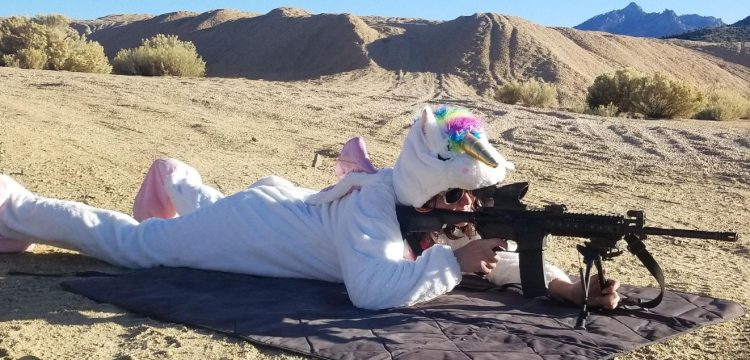
Today, Gun Culture 3.0 has taken hold, and it’s drastically different from its predecessors. Characterized by a shift toward personal empowerment, political identity, and community building, Gun Culture 3.0 represents a new, often misunderstood face of firearm ownership. And yes, sometimes they wear unicorn outfits to the range.
What Defines Gun Culture 3.0?
Gun Culture 3.0 is primarily defined by a departure from traditional rural hunting and military associations, moving instead toward self-defense, individual rights, and empowerment. Modern gun owners are more likely to view firearms as a tool for personal protection, a symbol of freedom, or even a means of building community. Social media has played a huge role in this shift, creating digital communities where gun enthusiasts can share knowledge, discuss issues, and even educate new firearm owners.
I’ll go on the record right now to state I’m all for responsible gun ownership. Despite the title of this article and the funny pic I chose as a featured image, I’m not going to really make fun of anyone for wanting to own a firearm. I’ve volunteered to help more than a couple of new gun owners pick the weapon that’s right for them and teach them how to use it safely. The world is a dangerous place, and more people are coming to grips on the reality of this and the fact they may be forced to protect themselves against some of the more dangerous elements in it one day.
This latest generation of gun owners often brings a more diverse demographic into the fold, with increases in ownership among women, minorities, and urban dwellers. Many of them view gun ownership as a way to assert autonomy and protect themselves in an uncertain world, a sentiment that’s been fueled by recent social unrest, concerns about government overreach, and media narratives surrounding personal safety.
Let’s look back just a little bit to Hurricane Helene. The well had seemingly run dry at FEMA. Conspiracy theorists in the form of militias were on the ground in North Carolina, telling people the government engineered the storm as a weapon against them so they could come in and mine for lithium. People actually believed this. Some meteorologists even received death threats as if they created the weather or something. It got so bad that FEMA officials were afraid to go door to door in some rural areas of North Carolina. This kind of paranoia makes it seem that everyone is against you and if you don’t defend yourself, no one will.
The New Gun Owners: Diverse, Informed, and Politically Active
In recent years, the demographics of gun ownership have diversified significantly. The COVID-19 pandemic, alongside events like the protests of 2020 and growing political polarization, sparked a wave of first-time gun buyers, many of whom didn’t fit the traditional profile of the American gun owner. Data from multiple sources, including the National Shooting Sports Foundation (NSSF), shows a substantial increase in gun purchases among African Americans, Latinos, women, and LGBTQ+ individuals.
With diversity comes a shift in priorities. For many, gun ownership isn’t about heritage or tradition—it’s a practical response to perceived threats and a means of self-preservation. Women, in particular, are joining the ranks of gun owners in record numbers, often citing self-defense as their primary motivation. Organizations such as The Well Armed Woman and Black Guns Matter have emerged to support and educate these new communities, advocating responsible gun ownership while challenging stereotypes.
Gun Culture 3.0 and Political Identity
Unlike previous generations, Gun Culture 3.0 is increasingly intertwined with political identity. Gun owners today are more likely to see firearm rights as part of their broader ideological beliefs. In fact, gun ownership has become a powerful symbol of resistance against government overreach for many, fueled by a mix of constitutional advocacy and distrust in the political establishment both on the right and on the left.
With this politicization comes tension. Some members of Gun Culture 3.0 feel alienated by traditional organizations like the NRA, viewing them as relics of an outdated ideology that fails to address their concerns or protect their rights effectively. Instead, these gun owners are more likely to align themselves with grassroots, decentralized movements that focus on personal freedom and self-reliance rather than political lobbying.
The Role of Social Media in Gun Culture 3.0
Social media has played an indispensable role in shaping Gun Culture 3.0. Platforms like Instagram, YouTube, and even TikTok have become hubs for firearm enthusiasts to share information, showcase firearm builds, and offer training tips despite some platform’s best efforts to shut them down. Influencers in the gun community—often self-trained or former military personnel—have fostered online communities where followers can find camaraderie and support. Team SOFREP comes immediately to mind.
These digital spaces have given rise to a new form of firearm education, one that emphasizes self-training, situational awareness, and responsible ownership. This shift has created a paradox: while the internet has democratized access to firearm knowledge, it’s also led to concerns about the quality and accountability of the information being shared. Nonetheless, the impact of social media on Gun Culture 3.0 is undeniable, helping to reshape how Americans perceive firearms.
The Future of Gun Culture in America
As Gun Culture 3.0 continues to evolve, it’s clear that the landscape of firearm ownership in the United States is shifting. Today’s gun owners are more diverse, technologically savvy, and politically engaged than ever before, representing a movement that is both empowering and polarizing. The growth of this new culture raises questions about the future of gun rights, public safety, and societal values in America.
How Gun Culture 3.0 will ultimately influence American society remains to be seen, but one thing is certain: firearms are no longer just tools or relics of tradition. For many, they’ve become symbols of autonomy, community, and resilience in an increasingly unpredictable world.








COMMENTS