

The Tomahawk Land Attack Missile, on the other hand, boasts an extended reach of up to 1,200 miles, making it a potent asset in modern naval warfare.
Meeting Changing Geopolitical Realities
This groundbreaking system represents the US military’s response to evolving geopolitical dynamics.
It is part of a concerted effort to establish a ground-launch long-range precision missile capability following the expiration of the Intermediate-Range Nuclear Forces Treaty (INF).
This treaty had previously prohibited the possession of ground-launched cruise and ballistic missiles with ranges between 500 and 5,500 kilometers (310 to 3,417 miles).
While the treaty had limited the use of land-based missiles, it did not cover sea-based or air-delivered missiles. Hence, the development of the MK 70 and similar systems is critical to fill this gap and bolster the country’s defense capabilities.
The development of the MK 70 is a testament to collaboration between various branches of the US military.
Lockheed Martin, in partnership with the US Army, has designed and delivered four prototype launchers, of which the MK 70 is one.
This partnership allowed the integration of technologies from different programs, ultimately creating a solution to meet the Army’s mission requirements.
INF Treaty Legacy and Security Adaptations
The MK 70 launcher is part of the broader Typhon program, an initiative aimed at fielding land-based precision fires with extended ranges. The need for such capabilities became evident after the expiration of the INF treaty, which had restricted land-based missiles.
In response to evolving security needs, the Army and Marines began developing land-based Tomahawk launchers in 2019.
The 1987 INF Treaty, which aimed to eliminate land-based missiles with ranges of 500 to 5,500 kilometers, marked a historic moment in arms control. However, allegations of Russian violations and the eventual US withdrawal in 2019 highlighted the evolving global landscape and the need for the US to adapt and ensure its defense preparedness in a changing world.
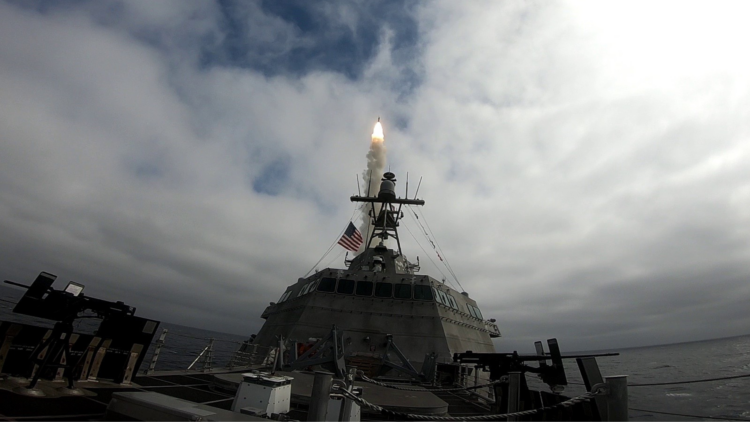
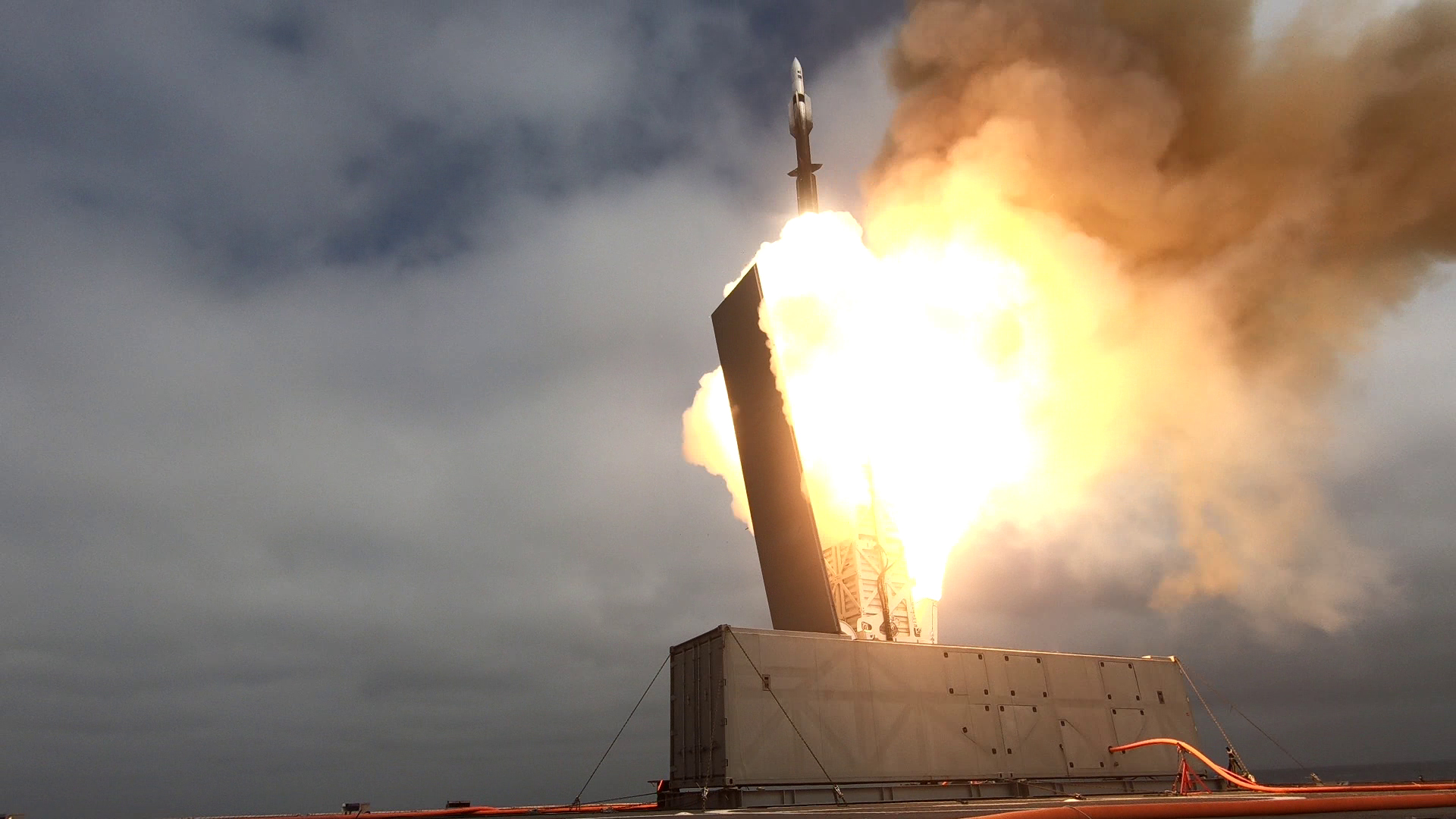
The recent test-firing of the SM-6 from the MK 70 aboard the USS Savannah offers a glimpse into the system’s capabilities. The ability to successfully integrate a containerized weapons system with an LCS for surface target engagement underscores the modularity and lethality of Littoral Combat Ships.
This week's #LiveFireFriday – USS Savannah (LCS 28) Blue conducts a live-fire demonstration in the Eastern Pacific Ocean utilizing a containerized launching system that fired an SM-6 missile from the ship at a designated target.
📸 Lt. Zachary Anderson pic.twitter.com/QkTj9QeSzf
— U.S. Pacific Fleet (@USPacificFleet) October 27, 2023
The MK-70 and similar systems are likely to play a crucial role in the Navy’s evolving strategy.
~
The US Navy’s test-firing of the SM-6 from the MK 70 Payload Delivery System aboard the USS Savannah demonstrates the ongoing pursuit of advanced defense technology and showcases, at the same time, the adaptability of the Navy in the face of changing global security dynamics.
The MK 70’s versatility and long-range capabilities make it a valuable addition to the nation’s defense arsenal. As the Navy continues to modernize its fleet, it’s clear that such innovations will be integral to its future success in safeguarding American interests and protecting its servicemen and women around the world.








COMMENTS