

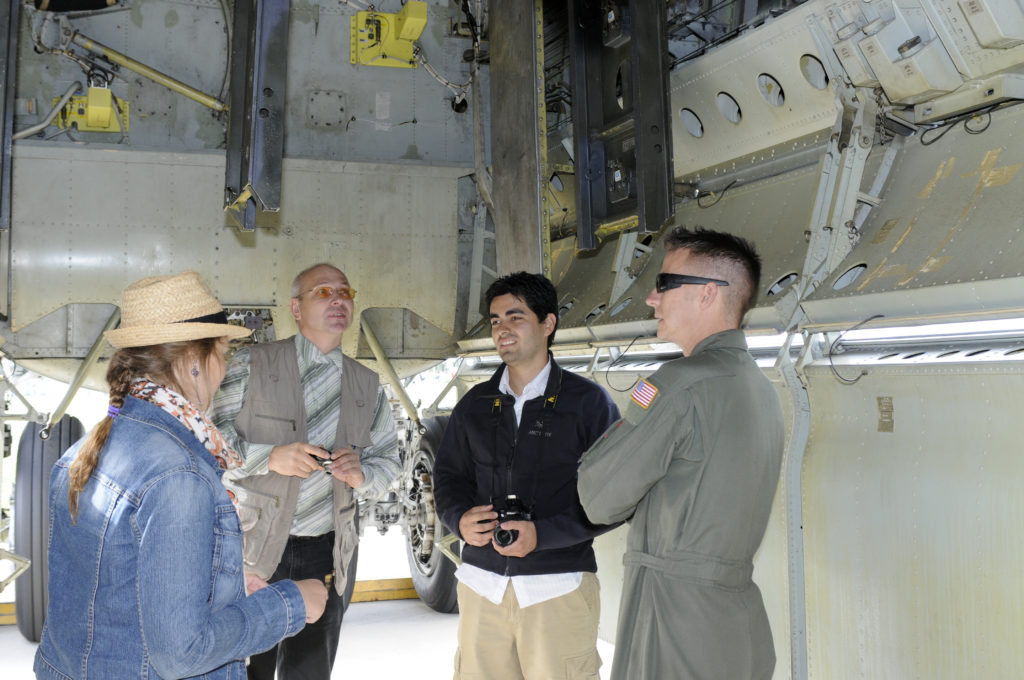
Maj. Eric Armstrong, an RC-135 Rivet Joint pilot currently the deputy director of the base reconstruction effort at Offutt Air Force Base, said they have their “own slang” when conversing with each other that is “not conversational language.”
“They have to understand the mission’s military language … so they can grasp, ‘This type of person is probably talking to this type of person in this role about these things,'” he said.
Armstrong added that because of this, they could inform them if there is a threat to their partners.
“If it is a threat to our partners, we’re able to tell them that threat. We may not have to give them the whole ‘who, what, why, and where,’ but we can tell them that, ‘Hey, there’s something dangerous and watch out.”
The training of foreign forces can also be aided by military personnel who are fluent in other languages, the report said.
For instance, at the Naval Small Craft Instruction and Technical Training School, a US institution, Air Force Capt Jordan Garcia filled in as an “interpreter” for Ukrainian students. This year, the Navy began a program in Mississippi to educate foreign special operations forces in tactics and strategy.
Garcia was a part of the Air Force’s Language-Enabled Airman Program and fluent in Russian and Ukrainian. The initiative includes online courses for Space Force guardians and active-duty military airmen to learn a foreign language.
“Linguist Next”
According to McAndrews, the Air Force has launched an initiative at the institute called “Linguist Next” to advance linguistic proficiency. The agency anticipates that more periodic proficiency examinations will enable the information to “stick” more rapidly than it would.
“Language equities across the Air Force are in high demand and are a significant and costly resource to create and maintain,” she said.
“The Air Force works closely with the Department of Defense through a multitude of working groups to strike the right balance of capability to meet the needs of our nation and the service,” she added.
Casualties
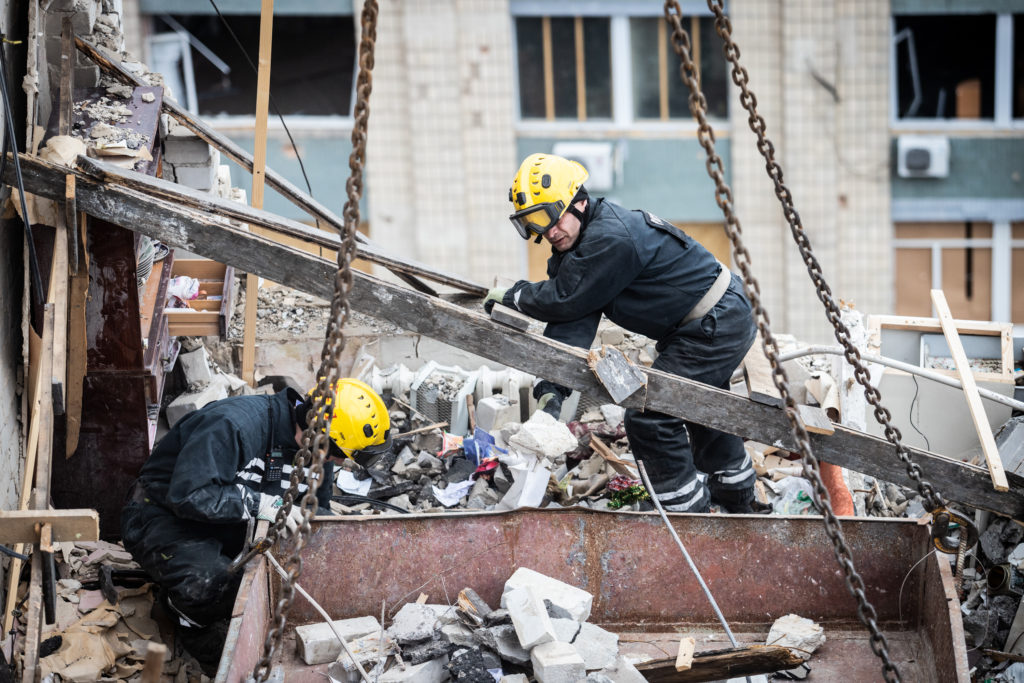
As of July 4, 11,152 civilian casualties were reported by the Office of the UN High Commissioner for Human Rights (OHCHR), including 4,889 deaths and 6,263 injuries. This comprised:
An aggregate of 4,889 fatalities (1,862 men, 1,264 women, 137 girls, and 157 boys, as well as 41 children and 1,428 adults whose sex remains unidentified)
6,263 people were hurt in total (1,246 men, 881 women, 138 girls, and 193 boys, as well as 190 children and 3,615 adults whose sex is yet unknown)
6,252 casualties in the districts of Donetsk and Luhansk (2,844 killed and 3,408 injured)
5,242 fatalities in government-controlled jurisdiction (2,643 killed and 2,599 injured)
1,010 casualties on the ground under Russian military control and allied armed groups (201 killed and 809 wounded)
4,900 people lost their lives in other parts of Ukraine (including the city of Kyiv and the regions of Cherkasy, Chernihiv, Kharkiv, Kherson, Kyiv, Mykolaiv, Odesa, Sumy, Zaporizhzhia, Dnipropetrovsk, Poltava, Rivne, Vinnytsia, Ternopil, and Zhytomyr), which were under government control
Due to delays in receiving information from some areas where violent confrontations have occurred and several reports still awaiting confirmation, OHCHR estimates that the actual numbers are far more significant.









.jpg)
COMMENTS