

Iran Is Not a Blank Slate
Iran presents an additional complication that must be acknowledged honestly. The United States has prior history in Iran’s internal political affairs. In 1953, American and British intelligence services supported the overthrow of Prime Minister Mohammad Mosaddegh and reinforced the Shah’s rule. Regardless of how one judges that Cold War decision today, it remains a central reference point in Iran’s political memory.
That history matters. It shapes how internal dissent is framed, how legitimacy is contested, and how external involvement is perceived. Even limited U.S. military action risks allowing the regime to recharacterize domestic protest as foreign manipulation rather than indigenous opposition—potentially weakening the very movements it seeks to support.
Supporting human dignity does not always mean directing outcomes.
The Consistency Problem
If the United States asserts a moral obligation to intervene in Iran, it must confront an unavoidable follow-on question: does that obligation extend to every country experiencing unrest or attempted regime change?
There is no coherent doctrine under which America can intervene everywhere. Resources, risks, regional dynamics, and consequences vary widely. That reality makes consistency difficult—but it does not make criteria optional.
Selective intervention without a publicly articulated framework invites accusations of hypocrisy and erodes legitimacy abroad and at home. The alternative is not paralysis, but clarity: defined thresholds, defined limits, and an honest accounting of trade-offs.
If our doctrine is “we intervene wherever people protest,” we are committing to permanent war. If our doctrine is “never,” we are committing to moral abdication. The responsible position lies between those extremes.
Authorization, Escalation, and Constitutional Discipline
Any discussion of military action in Iran must confront a constitutional question that often receives less attention than strategy or morality: when does presidential authority end and congressional responsibility begin?
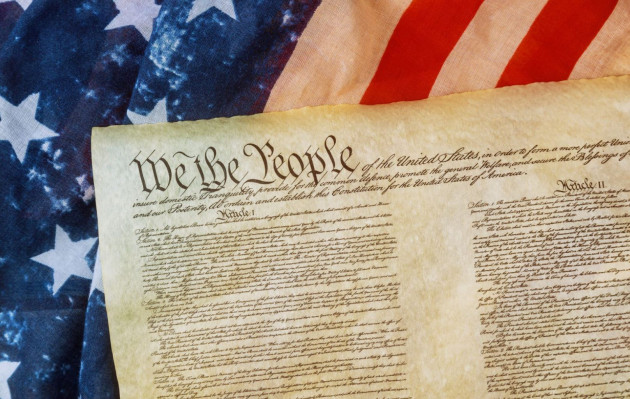
The Constitution grants Congress the power to declare war, while designating the President as Commander in Chief. That division was intentional. Presidents are empowered to respond quickly to emergencies, defend U.S. forces, and repel imminent threats. They are not empowered to commit the nation to sustained war unilaterally.
Modern practice has blurred this line. Limited strikes, defensive actions, and short-term deployments have sometimes expanded into prolonged hostilities without renewed congressional authorization. The problem has not been executive action per se, but authorization drift.
Iran is a stress test for that boundary. The country has numerous pathways for indirect retaliation—through regional proxies, cyber operations, and maritime disruption. Actions framed as limited may carry a foreseeable risk of escalation. When that risk exists, the constitutional balance shifts.
Speed may justify initial action. Duration, escalation, and foreseeable consequences demand consent.
Forewarning and Congressional Responsibility
Civil unrest and movements toward regime change rarely emerge overnight. They typically develop over time, accompanied by political, economic, and social indicators that diplomatic and intelligence institutions are designed to monitor at a strategic level.
When instability unfolds over weeks or months rather than hours, the justification for unilateral executive action weakens accordingly. The President’s emergency authority exists to address surprise, not to replace deliberation when time permits it.
Forewarning changes the constitutional calculus. Where time allows, Congress has not only the opportunity but the obligation to debate, authorize, limit, or reject U.S. involvement. Reliance on executive discretion alone in such cases is not necessity—it is choice.
Escalation Without Ownership Is Not Strategy
Iran is unlikely to respond symmetrically to U.S. military action. Escalation would more likely occur through proxies, deniable attacks, and regional destabilization. That reality complicates any assumption that intervention can be clean, limited, or contained.
Intervention also creates ownership. If U.S. action breaks internal security structures or alters the balance of power, responsibility for what follows rarely remains optional. Stabilization, humanitarian consequences, and regional spillover become part of the ledger whether they are formally accepted or not.
Force is not merely an instrument; it is a commitment.
Choosing Restraint Is Not Choosing Indifference
None of this argues for passivity or moral disengagement. The United States has options short of war: diplomatic pressure, information support, coordination with allies, and measures designed to reduce harm rather than reshape political systems by force.
What restraint requires is honesty—about limits, about history, and about consequences. It requires acknowledging that not every injustice can be corrected by American power, and that attempting to do so can produce outcomes worse than the conditions that prompted intervention.
A nation serious about liberty must be equally serious about constitutional limits, strategic humility, and ownership of consequences.
The hardest discipline is not knowing how to act.
It is knowing when—and how—to refrain.
—
Disclaimer
All statements of fact, opinion, or analysis expressed are those of the author and do not reflect the official positions or views of the U.S. Government. Nothing in the contents should be construed as asserting or implying U.S. Government authentication of information or endorsement of the author’s views.
About the Author
Steve Gottlieb is a retired U.S. Navy Medical Service Corps officer, former CIA analyst, and prior firefighter/paramedic.








COMMENTS