

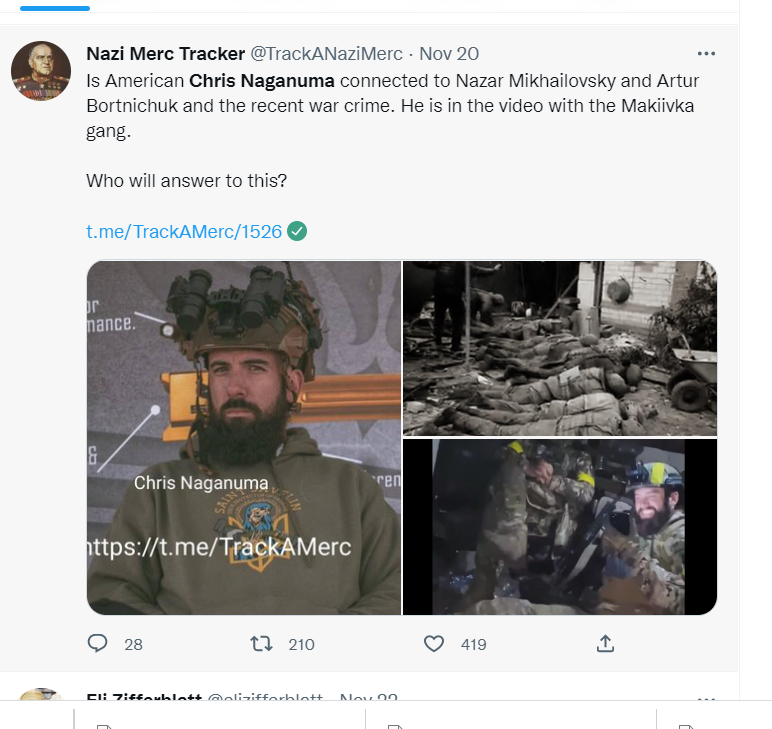
His “outing” of “mercenaries” consists of following social media accounts of foreigners serving in Ukrainian army units and claiming that they are either in the country or have left. Beyond that, it’s pretty slap-dash and not revealing of someone doing any real leg work on who these people are. TrackAMerc doesn’t even seem to know the definition of a “Mercenary” which was defined by the UN convention this way, -a non-national person participating in an armed conflict for financial gain substantially greater than that paid to the military of the hiring country and not wearing the uniform of its armed forces.
These are not the circumstances of those foreigners serving in the Ukrainian army in its war with Russia. Many are volunteers and take no pay at all, while virtually all are wearing the uniform of the AFU, are led by Ukrainian officers, and are answerable to the laws and military justice system of Ukraine. When the war started we wrote a word of caution about what joining a foreign military can entail, but we made it quite clear that volunteering and serving in the Ukrainian army does not make you a “mercenary” under US or International law.
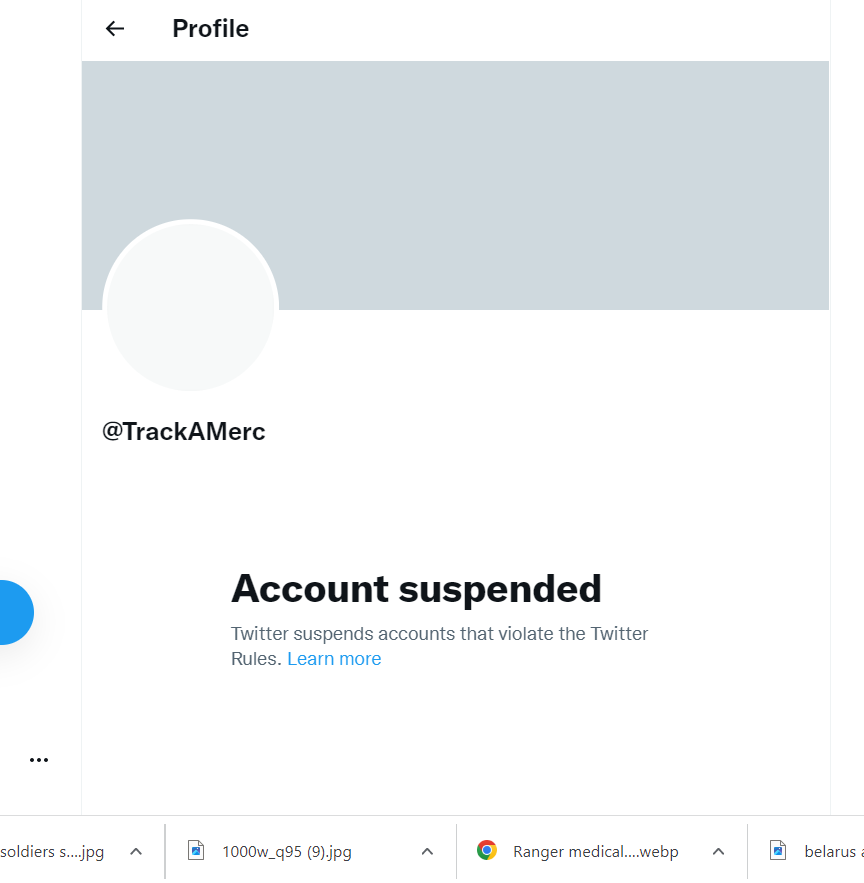
Mr. Nagamura told us he began to receive death threats on his Instagram account after he was misidentified by the Russia-aligned @TrackaNaziMerc, which is the new Twitter handle for a previous account called @TrackAMerc that was suspended from Twitter last week.
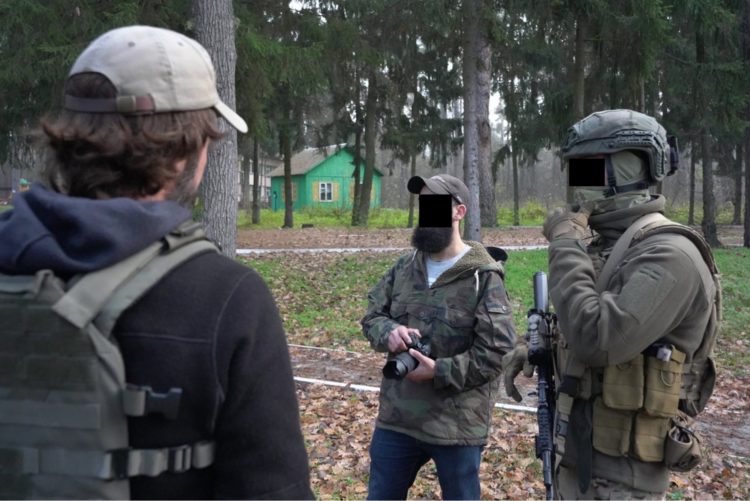
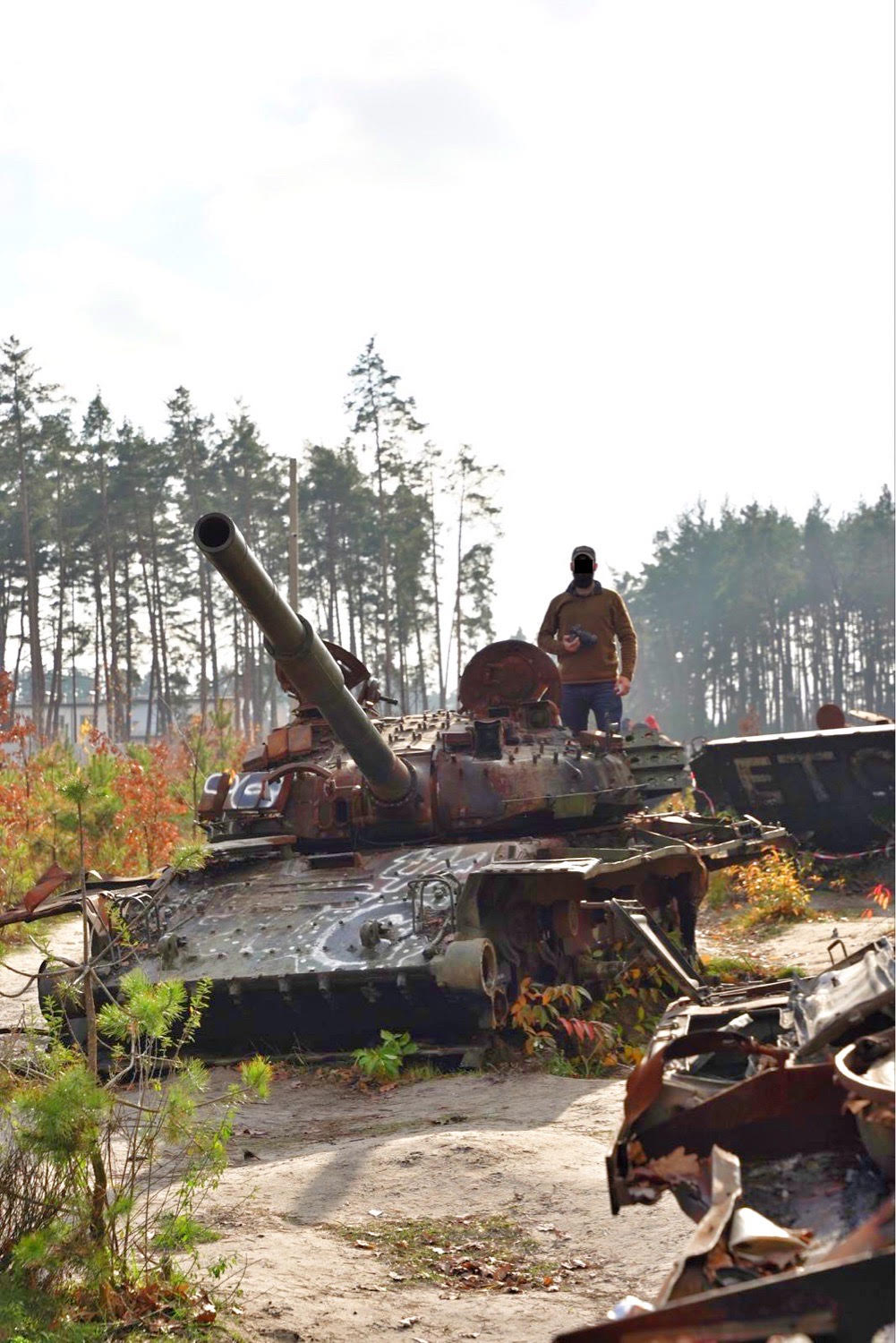
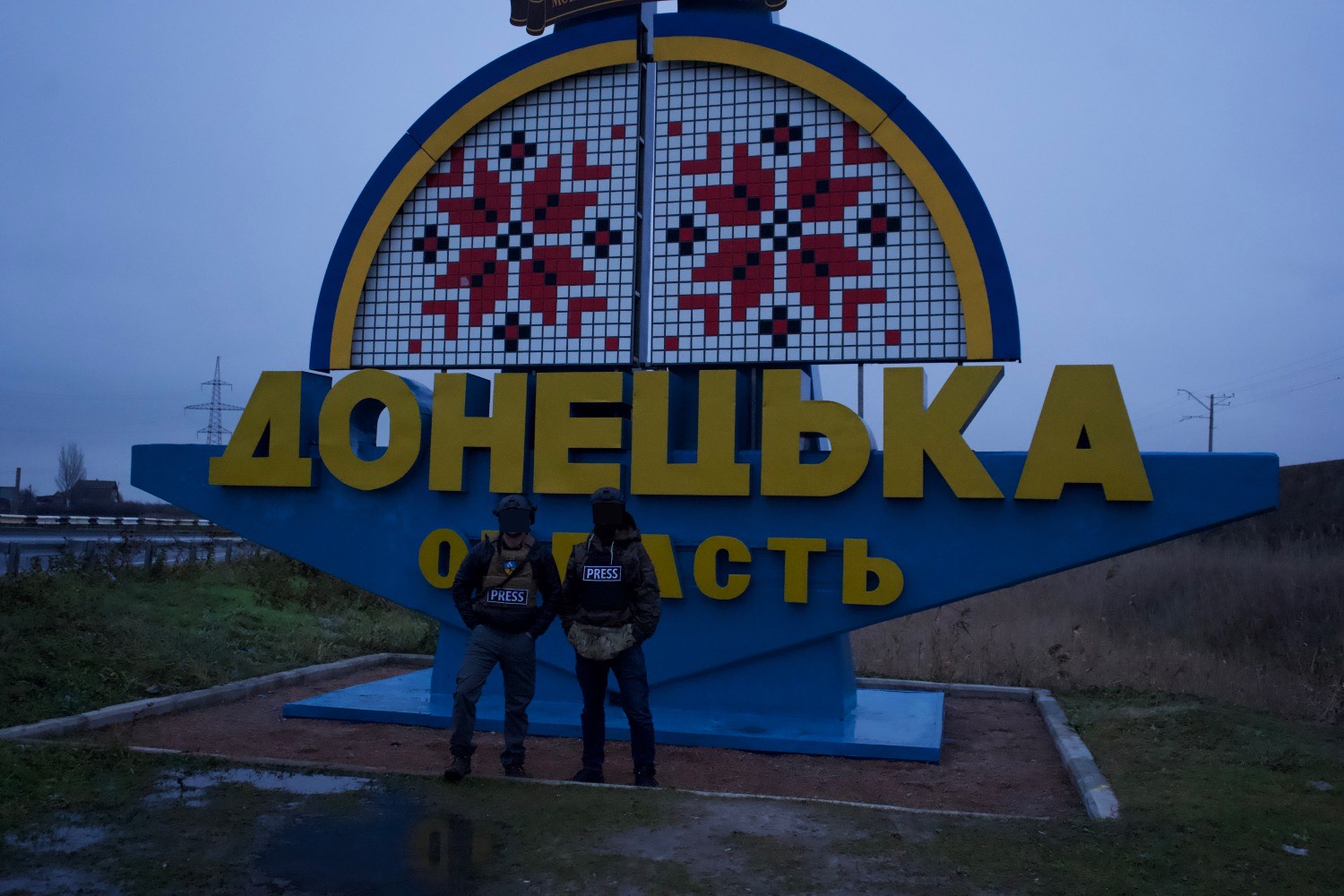
Chris Naganuma is a US army combat veteran who deployed to Iraq in 2004 as an 11B Stryker combat vehicle crewman. He is now a photo-journalists working for Project Leaflet which seeks to document the stories of foreigners serving in the Ukrainian army.
His LinkedIn profile states he is a freelance photo-journalist for Leaflet Project which his is own self-supported project. You can find that here on Instagram. After his time in the army, he didn’t sign on with any private military contractor company. Instead, he worked for several small arms companies and founded his own to make after-market barrels for Glock handguns.
Other than a passing resemblance to Mr. Naganuma the evidence is very thin. It’s two guys with beards which is not at all uncommon in Ukraine or among US veterans here in the US. We’ve seen recent pictures of Mr Naganuma and his beard is of the salt and pepper variety, gray and black.
We reached out to Mr. Naganuma and exchanged several emails and telephone calls. He states he is not a mercenary or combatant in the Ukraine war. He has journalist credentials from the government of Ukraine that allows him to travel in areas restricted by the civil authorities. He tells us that he was in the US until November 10th when he arrived in Europe. He did not arrive in Ukraine until the 12th. Arriving in Kviv, he conducted interviews with an interpreter in the Kviv area. The closest he came to the village of Makiivka was Kramatorsk nearly 60 miles to the north. That may not seem very far, but it would mean a 60-mile trip South along the front lines of the conflict. You aren’t going to cover that distance in one hour drive through the countryside. In any event, he had only arrived in Kyiv on the 12th, the day before Ukraine announced that they had the village of Makiivka in their possession. He states he left Ukraine on the 21st to return to the US.
Mr. Naganuma provided this statement:
“In short I just wanted to quickly cover that I was in no way involved in this team’s actions or mission. Nor was I at the location of the shooting. My last trip in country was from (November) 12th-21st. Half of it was spent doing interviews in Kyiv. The other time we traveled 3000 km in 5 days conducting interviews along the way. The cities we entered we as follows. Bucha, Irpin, Mykolayiv, Dnipro, Kramatorsk, Bakhmut (right outside), Kyiv, Odesa, and Chornobyl. I wish I could tell you more about what happened that day, but I like everyone else am at a loss…..I’m nothing more than a dude with a camera.”
He also told us he contacted TrackAMerc to protest being misidentified as a “Mercenary” combatant and a participant in war crimes, “They just called me a liar and claimed that the screen cap of the bearded Ukrainian soldier was me.”
The Global War on Terror occurred as the Internet was still growing and before social media accounts like Twitter, Facebook, and Instagram even exists on the web. Nevertheless, there was still an information war online that was a component of the larger conflict. Al Qaeda used the internet to raise money, to communicate internally, disseminate propaganda and recruit new members. The war in Ukraine is no different. There is a concerted effort by Russia to try and shape the information landscape in its favor. Among its favorite, but flimsy propaganda claims for the last 9 months is that Ukraine is run by Nazis that Russia must cleanse and that foreigners serving in the AFU are all “mercenaries.”
The disguised Russian accounts who accused Mr. Naganuma of war crimes repeat these tropes about nazi mercenaries in Ukraine like a script. Some of it no doubt is for a Russian audience cut off from social media outside of approved Russian platforms and some of it is intended for a Western audience they hope will accept these claims at face value. For Mr Naganuma these false claims could complicate his return to Ukraine as a photojournalist, should he somehow fall into Russian hands in the war zone. Since the latest Russian invasion of Ukraine in February of this year, 15 journalists have been killed in Ukraine while working.
The Russians are not famous for their treatment of POWs either. When Alex Drueke and Andy Huynh we captured while serving in the International Legion, both were held for 105 days before being returned in a prisoner exchange with Ukraine. They both reported that they were beaten, tortured, starved and interrogated by the Russians who believed them both to be CIA spies. During their time in captivity, they were forced to make video-tapped pro-Russian propaganda messages under threat of rape, disfigurement and death that were broadcast on Russian media.








COMMENTS