

However, there are challenges in fully institutionalizing IW. For instance, the 2022 National Defense Strategy only references IW twice, suggesting that its integration into broader defense policies may still be inconsistent. Organizationally, concerns have been raised about the establishment of the Irregular Warfare Center within the Defense Security Cooperation Agency, as it could fragment the development of IW expertise. On the positive side, Congress has authorized the creation of an Irregular Warfare Functional Center (IWFC) to enhance understanding and knowledge of IW across the Department of Defense.
Looking ahead, there are recommendations to strengthen the institutionalization of IW. Consolidating IW knowledge development under U.S. Special Operations Command (USSOCOM) could centralize expertise and improve efficiency. Ensuring high-level accountability for the IWFC is also essential, potentially involving senior leaders who are directly responsible for IW operations overseas. Furthermore, continuing to invest in human capital is critical, as skilled and adaptable personnel remain the greatest competitive advantage in irregular warfare.
By making IW a core competency, the Department of Defense aims to build a more agile, cost-effective, and sustainable approach to addressing irregular threats. This proactive strategy will help the U.S. compete effectively against adversaries and maintain its edge in an increasingly complex global security environment.
Special Operations Forces in the Gray Zone
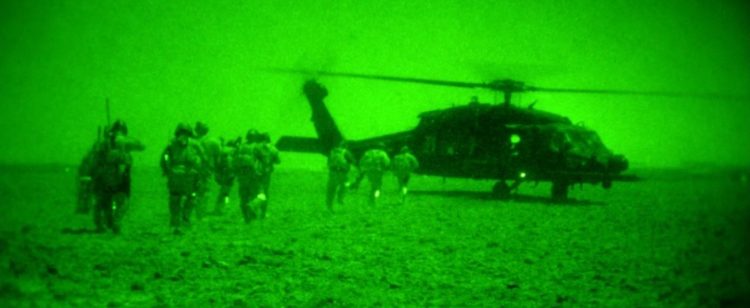
Maier noted that special operations forces (SOF) are uniquely positioned to operate in the “gray zone” between peace and conventional warfare, engaging in activities that deter adversaries and shape the strategic environment without escalating to full-scale conflict. He stated,
“Special operations forces have been crucial in U.S. counterterrorism efforts, but they also have a place in what is also known as great power competition.”
Collaboration and Partnerships: A Strategic Imperative
The U.S. Special Operations Command (USSOCOM) places a strong emphasis on collaborations and partnerships with allied nations to enhance global security and improve interoperability. These partnerships are essential for tackling complex international challenges and strengthening collective capabilities. Through the International Operations Office, USSOCOM works closely with partner nations and industry to develop and deploy specialized capabilities tailored for Special Operations Forces (SOF). This includes activities like exchanging information and equipment, conducting technical experiments, collaborating on capability development, and evaluating operational interoperability.
USSOCOM also facilitates Foreign Military Sales, coordinating agreements between governments to transfer defense articles and services to allies. Subject Matter Expert Exchanges (SMEEs) are another vital aspect, bringing together SOF units from different countries to share knowledge, tactics, and build trust. Events like SOF Week provide further opportunities for the global SOF community to discuss challenges, share innovations, and collaborate on new initiatives.
Recent collaborative efforts highlight the success of these partnerships. For instance, during Tropical Dagger 2024 in Jamaica, U.S. and Canadian forces joined Caribbean SOF units to train on troop leadership and operational planning. Additionally, a multinational capabilities demonstration during SOF Week involved commandos from 10 countries showcasing their ability to work together in scenario-based exercises. USSOCOM leadership continues to emphasize the value of the global SOF network, which provides unique insights into global events and accelerates the development of advanced capabilities.
These partnerships bring numerous benefits. Regular joint exercises and exchanges enhance interoperability, allowing allied SOF units to operate seamlessly together. Collaborative efforts also promote the sharing of best practices and innovative solutions to common challenges. Building personal relationships during these events fosters trust and mutual understanding between forces, while collective problem-solving enables SOF units to tackle global security issues more effectively. By prioritizing international partnerships, USSOCOM is strengthening a global SOF network that is more resilient and adaptable to diverse security challenges worldwide.
Countering Irregular Tactics in Great Power Competition
In the context of great power competition, Maier highlighted that adversaries are increasingly employing irregular methods, such as cyber operations, disinformation campaigns, and proxy forces, to challenge U.S. interests. He asserted that the U.S. must be prepared to counter these tactics with a comprehensive irregular warfare approach that integrates military and non-military tools.
Organizational Changes to Enhance Irregular Warfare
Organizational changes aimed at enhancing irregular warfare (IW) have become a critical focus for military institutions as they adapt to evolving threats and operating environments. One of the primary goals is to institutionalize IW as a core competency across the Department of Defense (DoD), ensuring that both conventional and Special Operations Forces (SOF) are equipped to address these challenges.
A whole-of-force approach has also emerged, emphasizing the involvement of the entire force, not just SOF, in IW-related activities. This includes continuous access to specialized training, doctrine, and education for military personnel and civilians alike.
Adapting to new threats has also become a priority. With a shift in focus from counterterrorism to addressing challenges posed by near-peer adversaries like China and Russia, the DoD is working to take a proactive stance. This involves controlling the tempo of adversarial competition through prevention and early intervention rather than reacting to crises. Additionally, a whole-of-government approach is being promoted, encouraging collaboration between military and non-military agencies to tackle the multifaceted nature of modern threats.
Technological advancements are another key area of focus. Efforts are being made to modernize military procurement systems and attract the talent needed to handle future conflicts. At the same time, cultural shifts within the military aim to dismantle rigid organizational structures and mindsets that may hinder adaptation to IW challenges. International partnerships also play a crucial role in this strategy, with USSOCOM emphasizing collaborations with allied nations to enhance global security and improve interoperability in IW contexts.
Despite these efforts, significant challenges remain. For instance, as noted above, the 2022 National Defense Strategy only mentions irregular warfare twice, suggesting that the concept has not yet been fully integrated into overarching defense strategies. Additionally, concerns have been raised about the potential fragmentation of IW expertise across different organizational structures, which could dilute its effectiveness.
To address these issues, several recommendations have been proposed. These include consolidating IW knowledge development within U.S. Special Operations Command (USSOCOM), ensuring high-level accountability for IW initiatives, and prioritizing investments in human capital as the primary competitive advantage in IW. By embracing these changes, military institutions aim to create a more agile and resilient force capable of addressing the complex challenges posed by irregular threats in today’s dynamic security environment.
A Strategic Recalibration for Modern Threats
Maier’s remarks underscore a strategic recalibration within the DoD, recognizing that the evolving security landscape requires a versatile and adaptive approach. By embedding irregular warfare capabilities across the force, the U.S. aims to effectively navigate the complexities of modern conflicts and maintain a competitive edge against both state and non-state adversaries.
Summing Up: Sustained Investment in Irregular Warfare
In conclusion, the integration of irregular warfare into the National Defense Strategy reflects a nuanced understanding of contemporary threats and the necessity for a multifaceted response. As Maier aptly stated, “We must not—and will not—repeat the ‘boom and bust’ cycle that has left the United States underprepared for irregular warfare in both Great Power Competition and conflict.” This commitment signals a sustained investment in the capabilities required to address the full spectrum of challenges in today’s dynamic security environment.








COMMENTS