

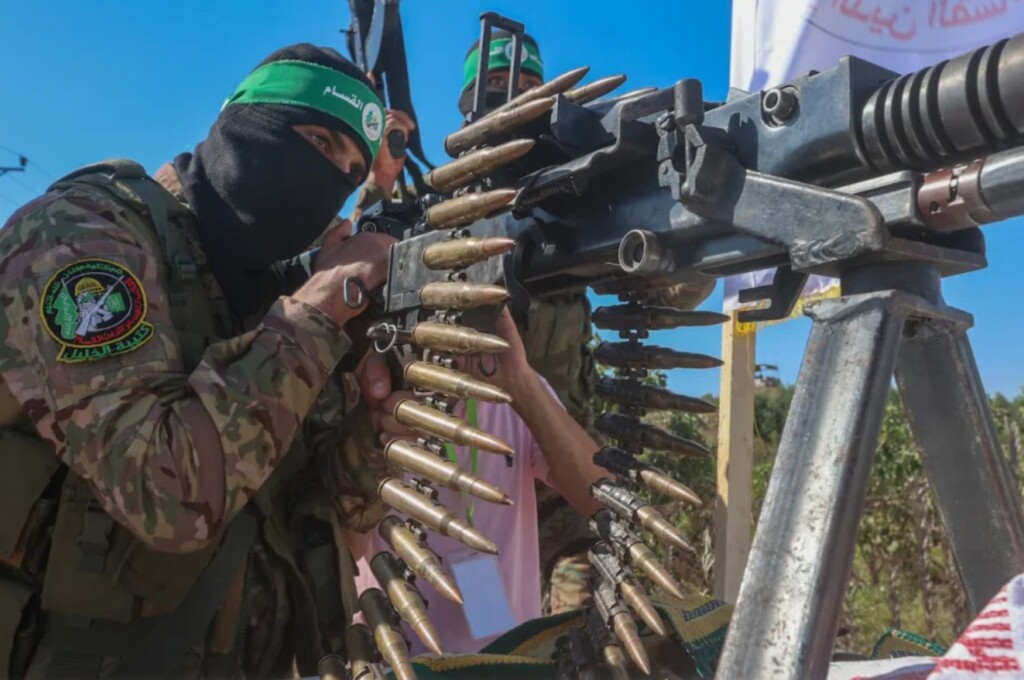
Jordan once backed, sheltered, and helped train Palestinian guerilla organizations to strike Israeli military and civilian targets. Along with the Arab-Israeli wars Jordan took part in, the country also had numerous clashes with Israel in the interwar periods.
Eventually, one of the militant groups Jordan trained, the Palestinian Liberation Organization (PLO), attempted to overthrow the Jordanian monarchy due to the impatience and rumors of “betrayal” of the Palestinian cause. The near assassination of King Abdullah and the insurgency led to Black September, where tens of thousands of Palestinians were killed by the Jordanian Army, along with a subsequent expulsion.
Jordan would quietly support US-backed Camp David Accords and joined their own peace rapprochement with Israel in 1994. Even though Camp David a key peace agreement that set the stage for other reconciliations like the Abraham Accords, tensions continue to escalate.
Against the backdrop of the Israel-Hamas War, Jordan feared Israel would mass expel Palestinians from the kingdom and implied war over concerning tensions. Whereas King Abdullah II wants to maintain good relations with Israel and the West while pushing for a two-state solution, many Jordanians are openly pro-war and sympathetic to various Palestinian militant factions.
Akin to the Arab nationalist impatience over Jordan’s precarious position in the prior wars, the kingdom could face another uprising—especially as the country is next door to the West Bank, which is facing increasing violence between radical Israeli settlers and growing Palestinian militant groups.
Brewing Tensions in Egypt
Egypt’s position in the Gaza War is longstanding. During the Arab-Israeli Wars, Egypt not only had the strongest military out of the Muslim-majority countries, but the Egyptians also commanded the coalitions throughout the conflicts.
After the 1948 war, Egypt occupied Gaza and, for decades, trained, armed, and funded various Palestinian paramilitaries. The Muslim Brotherhood, a theocratic hardline Islamic movement, would also gain traction in Egypt during the conflict with Israel.
Anwar Sadet, the former president of Egypt who initiated the 1973 October War, would later be labeled a “traitor” by the Arab world over peace talks with Israel and later assassinated by various hardline affiliates during a military parade.
The Muslim Brotherhood would create Hamas as their Palestinian branch to spread theocratic Islam. The organization also won Egypt’s elections after Hosni Mubarak’s overthrow, and the MB would later be ousted and outlawed by current and former military officer President Sisi.
Despite being a signatory of the Camp David Accords, deep-rooted hostilities against Israel never simmered in Egyptian society and the country’s citizens remain steadfast in support of Palestinian armed factions.
Akin to Jordan, Egypt is also threatening a breakdown of the Camp David Accords if the remaining Gazans were expelled into the Sinai Peninsula. Egypt, for the past decade, has witnessed a major insurgency in the Sinai that has seen at least 3,000 Egyptian soldiers’ deaths.
Egyptian tourism suffered from the Sinai insurgency, and the ongoing war can exacerbate a sector of Cairo’s economy that cannot be replaced. Fears of attacks against tourists, particularly Israelis and Westerners, grew, especially as an Egyptian policeman opened fire and killed several Israeli tourists immediately after the October 7th attacks.
The Egyptian government is already on thin ice with America over documents that showed Egypt planned on supplying Russia in their invasion of Ukraine, and with an ongoing economic collapse, the new junta will need a distraction to unite the people against a common foe instead of the government. Enter the continuing standoff and situation at Rafah.
Could Rafah be the Nail in the Coffin?
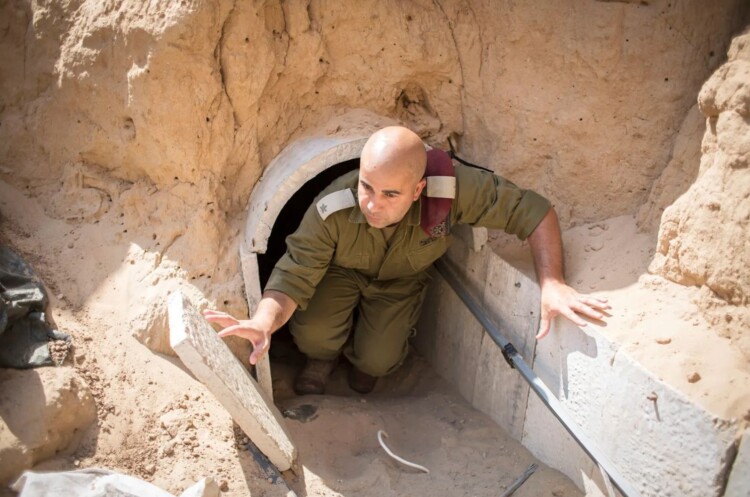
Egypt’s government, in the last few months, has been heavily critical of Israel with fears that a Rafah offensive could push a million Palestinians into the Sinai. Cairo is also concerned as the IDF also uncovered tunnels into the Sinai, which now undermines if Egypt was serious about closing the freedom of movement of terrorist groups.
President Sisi, a secularist, is also concerned about extremism in Egypt, as back in 2013, the then Egyptian Minister of Defense overthrew the Muslim Brotherhood-led government.
During the ongoing Israel-Hamas War, there have been signs that the Egyptian government is losing control of its security apparatus—particularly due to the policeman attack on Israeli tourists and the recent border skirmish between an Israeli and Egyptian outpost that killed one Egyptian soldier.
A firm in the Sinai has made tens of millions in human trafficking in and out of Rafah, and the government, in various ways, has done little to stop it. Cairo, despite being a major backer of American aid, is compelled to conduct a show of strength in the future if Israel and Egyptian tensions did not simmer.
Restless American diplomatic engagement in the Middle East and backdoor negotiations between Israel, Egypt, Jordan, and other major regional players are keeping the Camp David Accords alive. However, if these regional powers were to take diplomatic missteps, one of the strongest peace deals in modern history could tread on thin ice.
—
Disclaimer: SOFREP utilizes AI for image generation and article research. Occasionally, it’s like handing a chimpanzee the keys to your liquor cabinet. It’s not always perfect and if a mistake is made, we own up to it full stop. In a world where information comes at us in tidal waves, it is an important tool that helps us sift through the brass for live rounds.








COMMENTS