

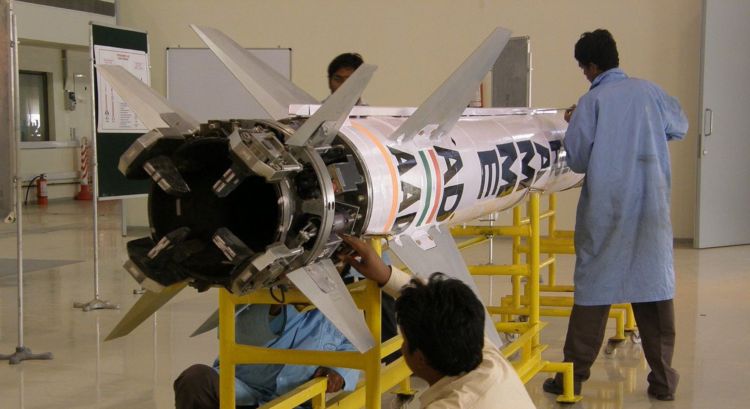
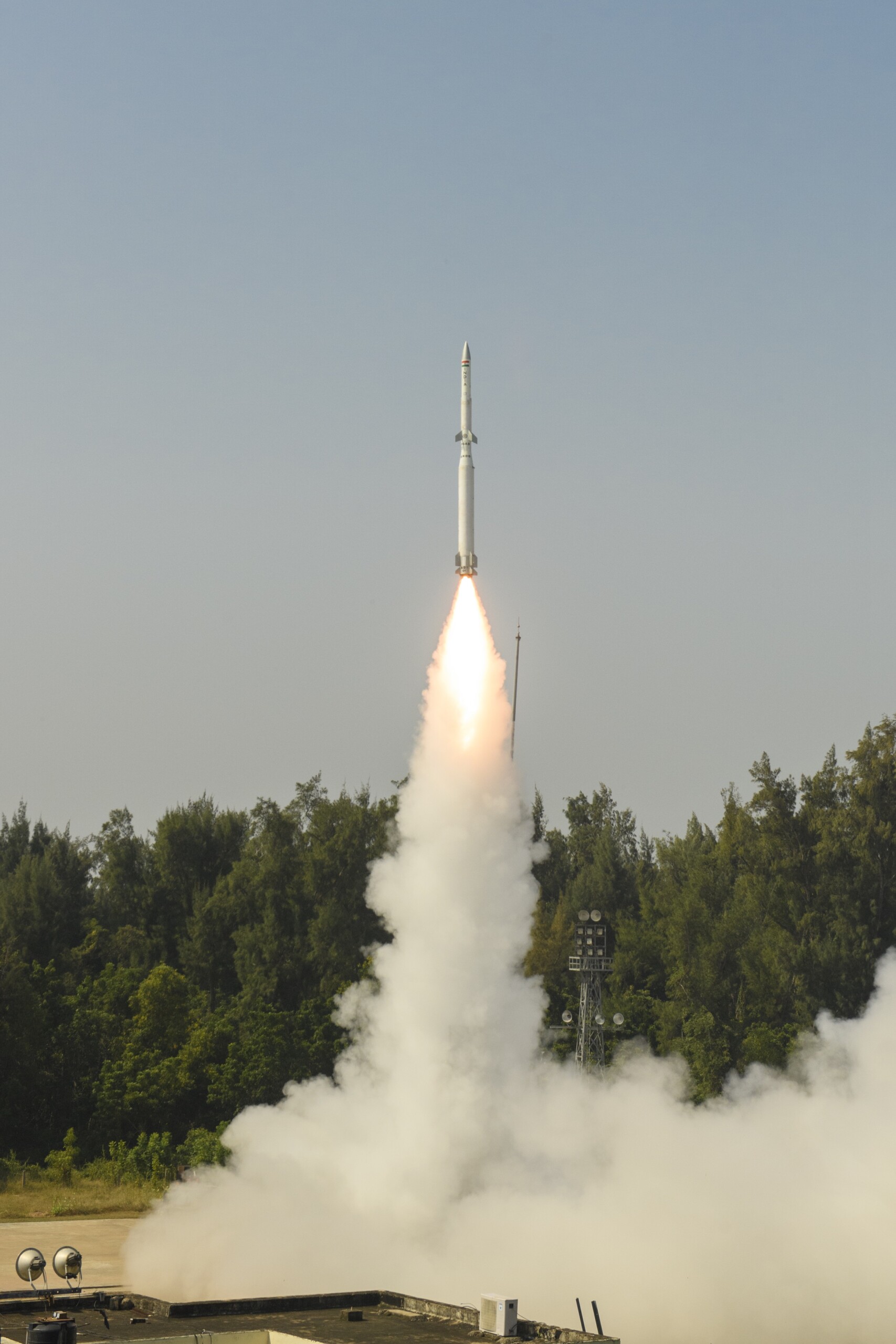
In addition, the DRDO has completed a series of tests for a land-based two-tier BMD system designed to track and destroy nuclear payload from both the inside (endo) and outside (exo) of the earth’s atmosphere at altitudes from 15-25 km to 80-100 km.
Moreover, the DRDO has achieved a significant milestone previously by completing a series of tests for its land-based variant. Like the sea-based, this BMD system seeks to detect and intercept incoming nuclear payloads and other threats at both the endo (inside the earth’s atmosphere) and exo (outside the earth’s atmosphere) ranges, covering altitudes from 15-25 km to 80-100 km.
“This is the first time that the terminal endo-atmospheric interceptor was tested from a shi against an ‘electronic target.’ More tests, including of exo-atmospheric interceptors, will of course have to be conducted,” a source said, cited by The Times of India.
He further noted the importance of both the land- and sea-based BMD systems to defend the vital areas and installations across the country, adding that “the next-generation destroyers or dedicated BMD vessels will be equipped with such systems with long-range radars and sensors to detect, track, and destroy hostile missiles.”
During the flight test of the Phase-II BMD interceptor AD-1 missile last November 2022, the DRDO successfully demonstrated the capabilities of the interceptor missile within a significant kill altitude off the coast of Odisha. Using a two-stage motor propeller, it showcased its capacity to thwart long-range nuclear payloads and aircraft. Other advanced features include its indigenously-made control system, navigation, and precise guidance algorithm.
While India’s BMD program has made promising progress with its latest milestone, there is still a long way to go before it becomes operational.
Against Hostile Neighbors’ Threats
India sits between hostile neighbors Pakistan and China, which are equipped with conventional or nuclear warheads and therefore face ballistic missile threats, which makes New Delhi’s BMD system more significant.
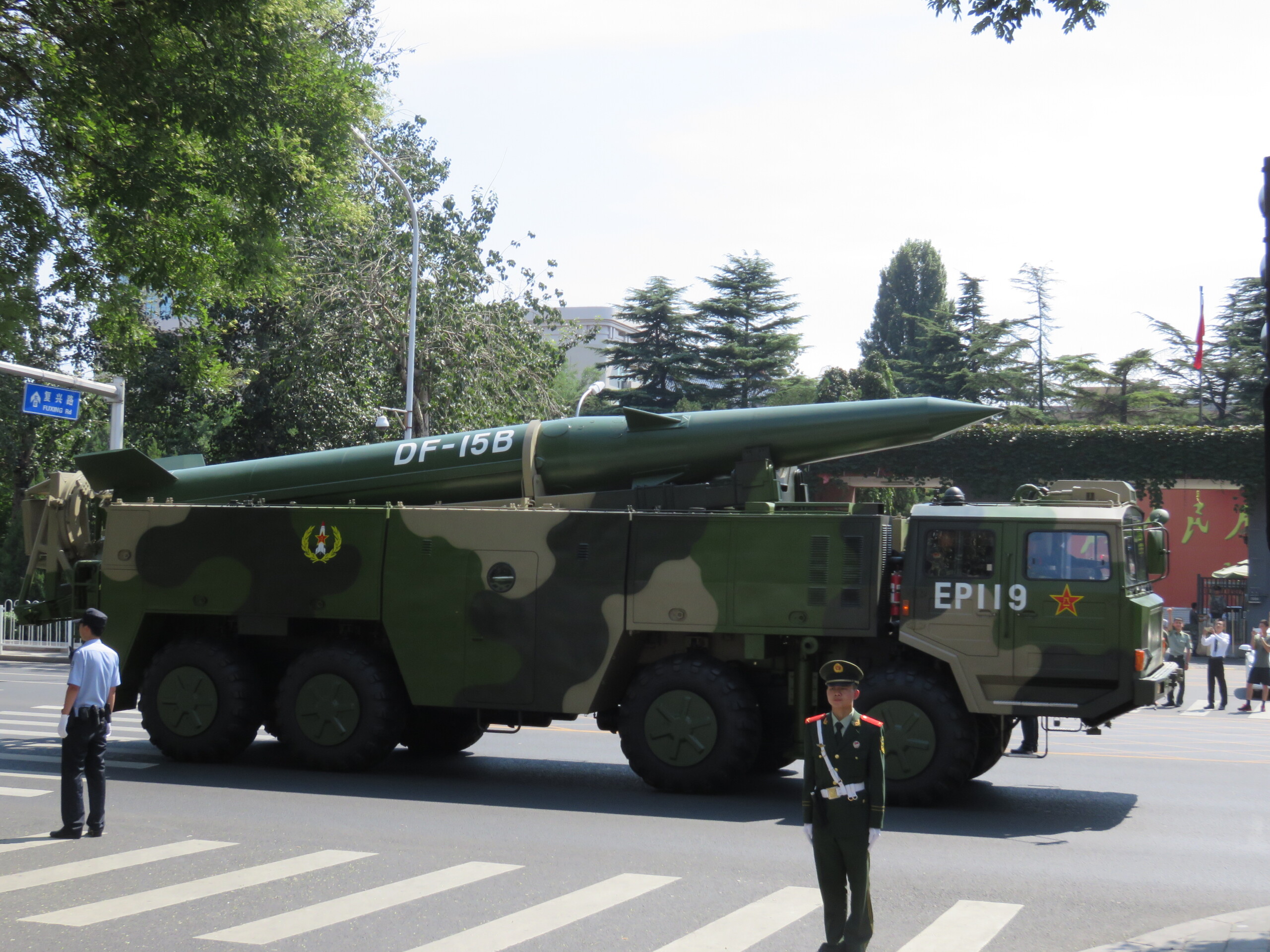
Both its hostile neighbors possess powerful and lethal ballistic missiles, with Pakistan owning short- and medium-range munitions—the latter can reach the farthest western coast of India and most of its northern region. Meanwhile, China has been progressively advancing its military modernization ambition and maintaining a more powerful arsenal, including the Dong Feng intercontinental ballistic missile system that can reach any part of India and beyond, or at least up to 15,000 km range.
Besides its BMD program, India works on developing an anti-satellite (A-SAT) system, another advanced technology that only a few superpowers have, including Russia, China, and the US. Dubbed ‘Mission Shakti,’ the A-SAT is India’s first capable of neutralizing threats from Low Earth Orbit (LEO) and has successfully tested in late March 2019.
Other Indian air defense systems include Akash medium-range surface-to-air missile (SAM), Barak-8 long-range SAM, and Spyder short to medium-range mobile air defense system, among others that integrates components designed and developed in the country. Moreover, it is also inducting a Russian-built S-400 Triumf missile system—a long-range SAM capable of reaching up to 400 km and engaging targets at an altitude of 30 km—which has been delayed owing to Russia’s continuing invasion of Ukraine.
—
Discover the 1947 split, which initially promised its people freedom in both political and religious beliefs, but ultimately resulted in greater schisms and the establishment of the Muslim state of Pakistan. Check out The Great Partition: The Making of India and Pakistan by Yasmin Khan. Click here to buy today!









COMMENTS