

Olevs Nikers, the president of the Baltic Security Foundation, told Newsweek that the security situation on NATO’s eastern flank deteriorated rapidly after Russia’s second attack on Ukraine this February.
The Baltic states are the most vulnerable to Russian aggression, and now it is vitally vital for eastern Europe and the Baltic states, as well as for Europe and transatlantic communities, to maintain the deterrence’s credibility on its eastern border.
Small Baltic states rely heavily on land forces, Nikers said, for bearing Russian action. He said that the focus should be shifted to combat and combat readiness, including anti-tank weapons, anti-air defense, coastal missile batteries, multiple launch rocket systems, and supporting radars.
Any Russian incursion into the Baltic states would be too large to absorb significantly if a Russian westward drive from Belarus through the Suwalki Gap cut off Poland from them.
“They don’t have enough operational depth, and that’s the problem,” Voyager said. “They must have this advanced system in order to strike the Russians from a distance.”
The Estonians and Lithuanians must prevent the Russians from advancing.
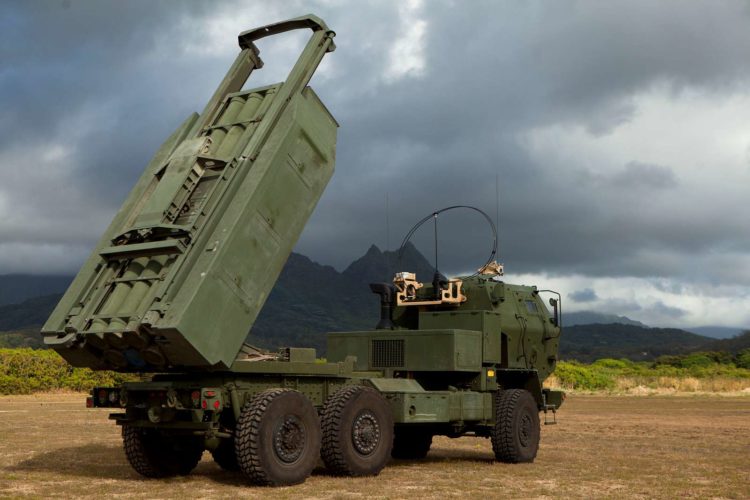
Voyager believes that the long-range artillery is a game changer for the Baltic nations and Poland and that orders will increase from those countries as well as Romania and Bulgaria.
According to Antanaitis, long-range artillery and missiles are critical weapons in Russia’s arsenal. By eliminating these weapons, the Baltic States can severely damage or disable Russia’s most lethal conventional weapon: artillery.
“When you don’t have the capability to shoot far behind the front line, it’s like trying to cut the heads off a Hydra,” Antanaitis said of counter-artillery operations. “When you have long range artillery and missiles, you can kill the Hydra.”
It’s Not an All-out Miracle Weapon
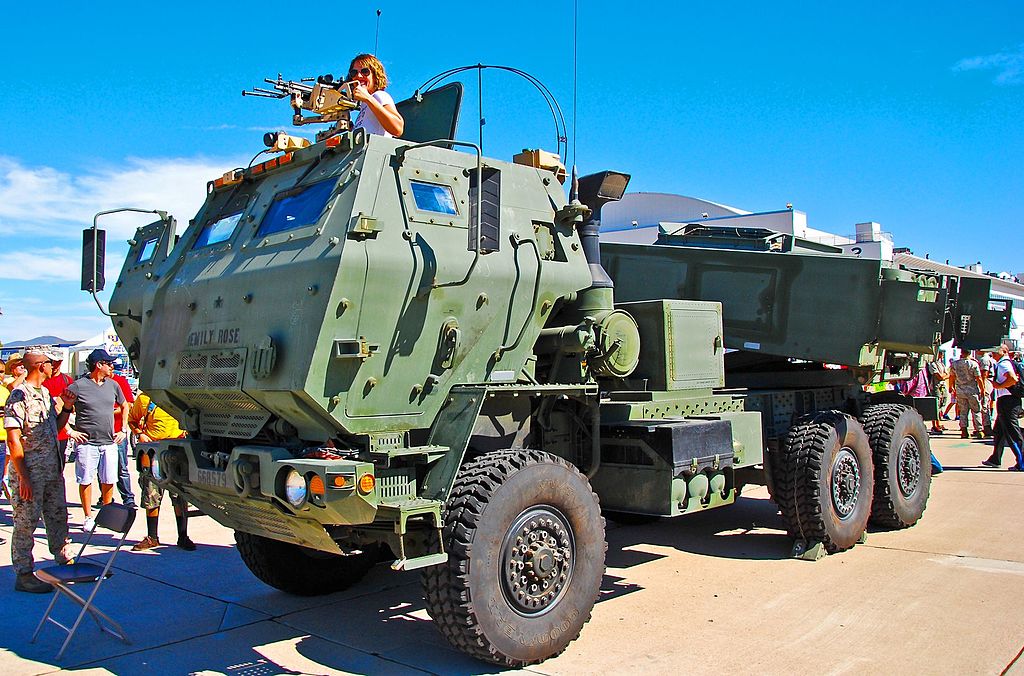
The Ukrainian people and their global supporters have fallen in love with HIMARS. However, the deterrence strategy is more comprehensive than that.
“We must understand that HIMARS is just a system, it is not a ‘wunderwaffe’ [wonder-weapon],” Antanaitis said.
Western weapons and ammunition are experiencing high attrition rates, creating problems. Although Lockheed Martin—the manufacturer of the HIMARS—is increasing production, Western nations generally have smaller weapons and ammunition stockpiles than their Russian adversaries.
According to Voyger, the issue is that HIMARS is an extremely costly system because of its long-range, powerful nature. We’ll see if the randomness and multiplicity of Russian and Soviet systems can be offset by the precision and range of the HIMARS. Many believe the HIMARS will still prevail.
The Kremlin’s hope that Ukrainian and western resolve would fade has not materialized, but the bleak economic forecasts and the approaching winter create some hope, Nikers said. However, he said that societal cohesion remains more critical than any weapons system.
“The main lesson from this war is that resilience of the whole of society matters the most, as far as it goes to values of freedom and democracy, which will be defended by all means,” Nikers said.
“Russia in Ukraine is widely using asymmetrical and non-conventional means of warfare, which is something that we should be always aware of when thinking about how to strengthen our defenses and societal resilience effectively.”









COMMENTS