

The different agencies went through many reorganizations and name changes over the years. The space race was in full swing throughout the 60s and 70s, and hundreds of satellites were thrown into the sky to see what would work. The Vietnam War saw the first use of communications and weather satellites to provide intel to the battlefield. The Pentagon recognized the importance of space as more than simply another field on which to place weaponry. The Pentagon also understood that control of space should be centralized rather than administered willy-nilly by the different branches.
Air Force Space Command
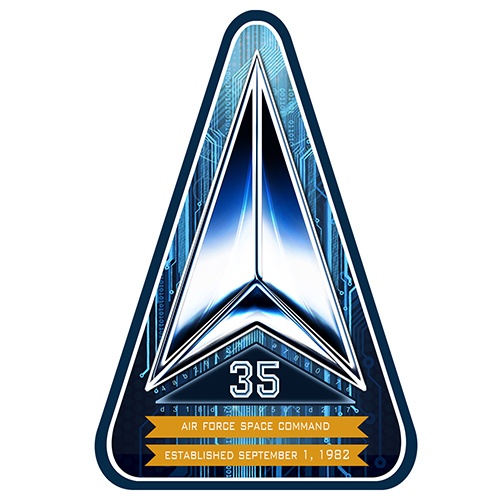
The Air Force Space Command was how the Department of the Air Force responded to the space race. Formed in 1982, Space Command consolidated Air Force communications, weather, and defense under one flag.
The first Gulf War saw space systems leveraged for use on the battlefield in ways never used before. Iraq had no space force and relied on commercial satellites for communications and weather. U.S. forces had the might of Space Command behind them, providing real-time satellite information about weather and conditions on the ground.
After Desert Storm, the Space Command stagnated. Everything that had been thought of had been deployed or rejected. Air Force leadership focused on its air role, prioritizing pilots and aircraft support personnel over space personnel. However, the 2001 Space Commission recommended an independent space corps within the Air Force, similar to the original Army Air Corps, the birthplace of the USAF.
Space on the Back Burner
The events of 9/11 and the subsequent Global War on Terror, took focus away from space and placed it firmly on homeland defense and counter-terrorism. For a while, the space field of operations bounced around under different commands. No one seemed to know what a branch covering space should be doing, how it should be doing it, and who should be responsible for it.
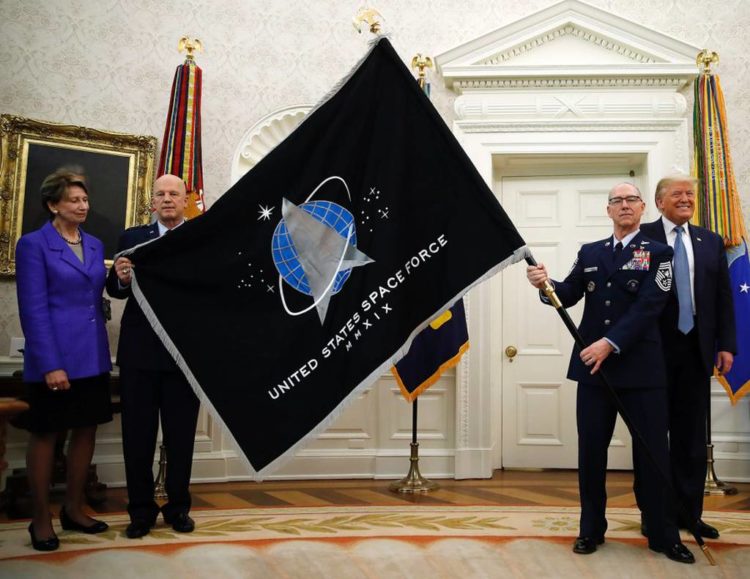
In 2019, the National Defense Authorization Act initiated the U.S. Space Force Act, which reorganized Air Force Space Command into the U.S. Space Force creating the first new branch of the military since the Air Force’s inception in 1947. Air Force Space Command personnel were transferred en masse to the new branch forming its core. Army, Navy, and Marine Corps personnel are slated to transfer into the new branch in FY2022 as long as the budget is approved and signed.
Finally, the U.S. Space Force!
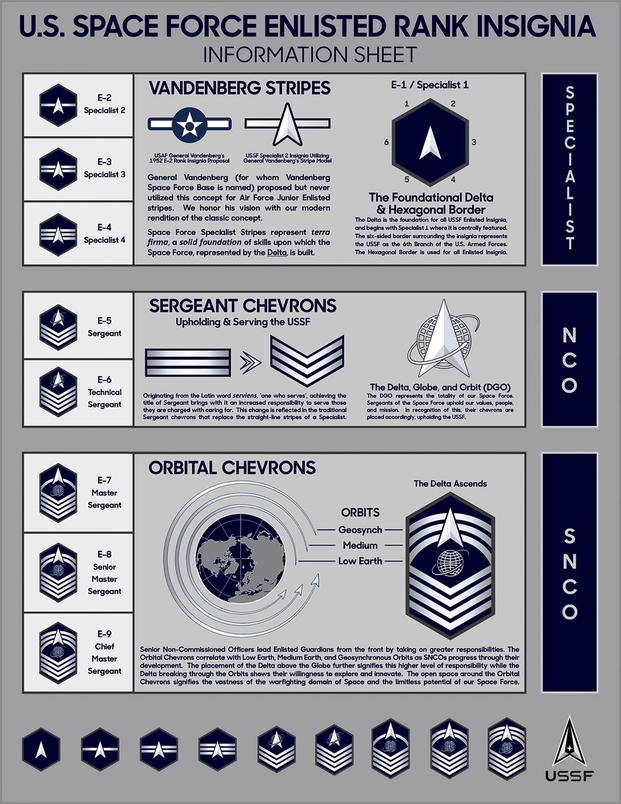
As a new, independent, service, Space Force members needed a name, and the moniker Guardian was adopted. Guardian is NOT a nod to James Gunn’s Guardians of the Galaxy, which would be cool; rather it’s an homage to Air Force Space Command’s motto, Guardians of the High Frontier. The branch’s rank structure combines elements from Air Force and Army ranks, with lower enlisted called specialists and NCO and SNCO ranks matching existing Air Force ranks. Officer ranks match those of the Air Force, Army, and Marine Corps. Officer insignia remain the same, while enlisted chevrons got an update.
The branch’s insignia, names, and uniforms have all taken a beating in the media. Comparisons to Star Trek abound, and the general idea of Space Force conjures images of sci-fi movies, books, and games. Uniform prototypes, rolled out to the public on September 21, do little to dispel that image. Drawing comparisons to Star Trek and Battlestar Galactica, the dress uniform does look a little… derivative.
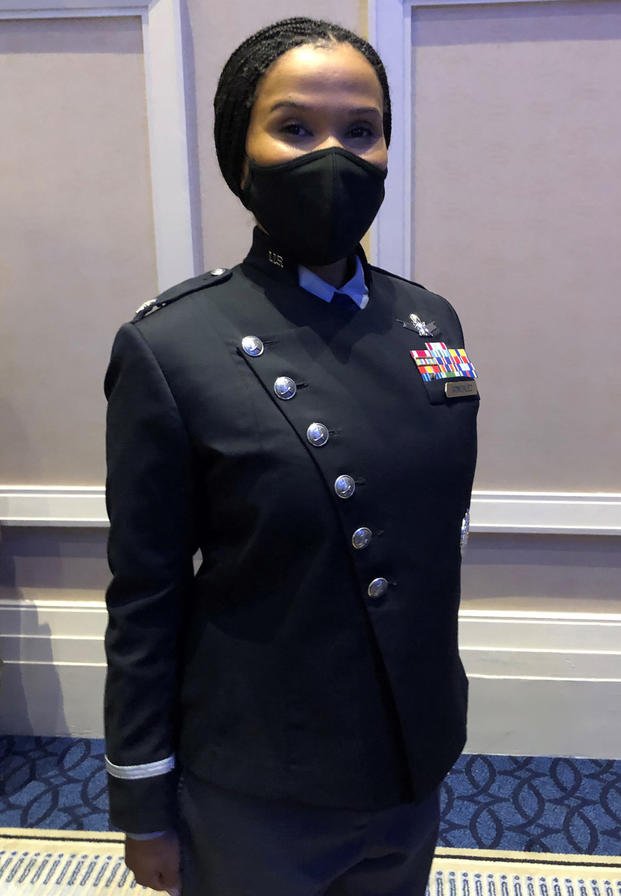
Regardless of the sci-fi comparisons, the U.S. Space Force is a reality. And maybe, just maybe, the uniforms do need to look a bit outlandish. Just like the insignia is an homage to and progression from earlier iterations of Air Force and Army insignia, the uniform is a progression from legacy and existing dress uniforms. Similar to Star Trek and Battlestar Galactica, the Space Force’s legacy is, well, space. At some point, actual Guardians will be deployed to stations in space so a futuristic look just makes sense.
The new branch’s motto is Semper Supra (Always Above). The Delta symbol in the logo pays homage to the Air Force and Air Force Space Command. Enlisted SNCO chevrons are meant to represent the Earth’s orbit. The name Guardian brings to mind sentinels standing guard over the Earth. Everything about the newest branch of the military seems futuristic. And why not? It is futuristic.
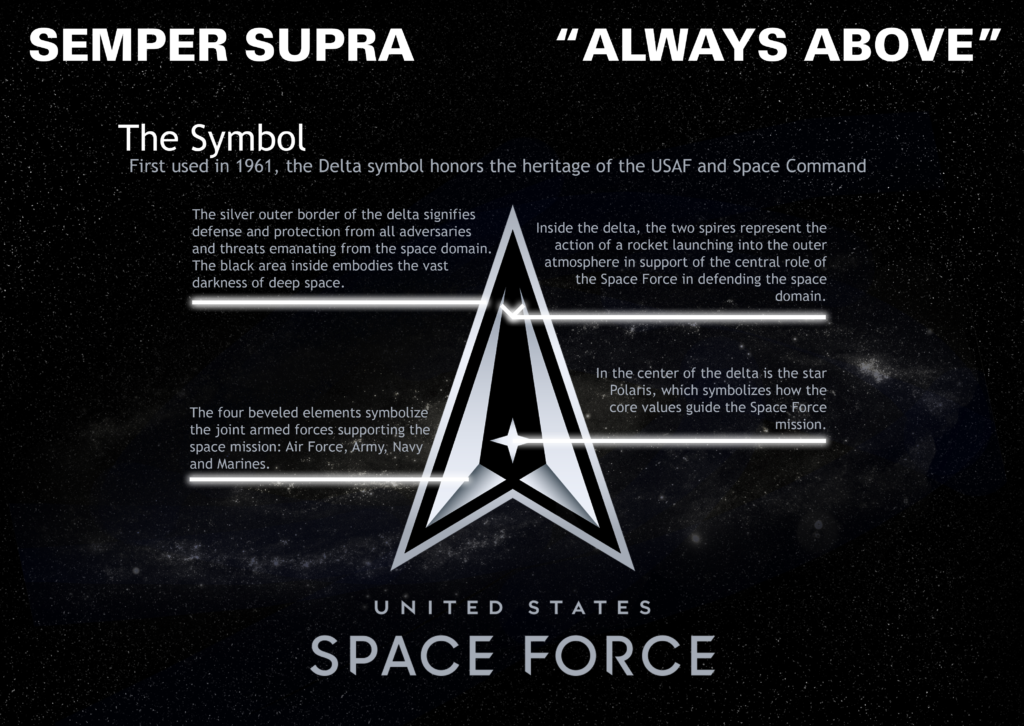
Space Force is the newest chapter in America’s national defense. In 1910, few believed aerial combat would ever be a thing, and dismissed it as impossible. Now the USAF is the premier Air Force in the world. And in 2020, few believed Guardians will ever be in space, “Always Above.” Just wait.








COMMENTS