

While the Navy had recently implemented stricter drug-testing policies, these SEALs had apparently flown under the radar—one even openly admitted to using TRT but was allowed to continue due to concerns about potential health risks from stopping treatment.
On top of that, the report found that one SEAL had undergone a medical procedure while deployed without the Navy’s approval. This kind of unauthorized surgery puts both the SEAL and the mission at risk, and it underscores a pattern of special treatment for SEALs compared to regular sailors, who face much stricter oversight.
Then, there’s the matter of alcohol consumption on the USS Lewis B. Puller (ESB-3).
While Navy regulations prohibit drinking onboard, the report suggests that members of the SEAL team might have had alcohol, possibly to share a toast in honor of fallen comrades. While the intent might have been sentimental, it’s yet another instance of rule-bending within the SEALs.
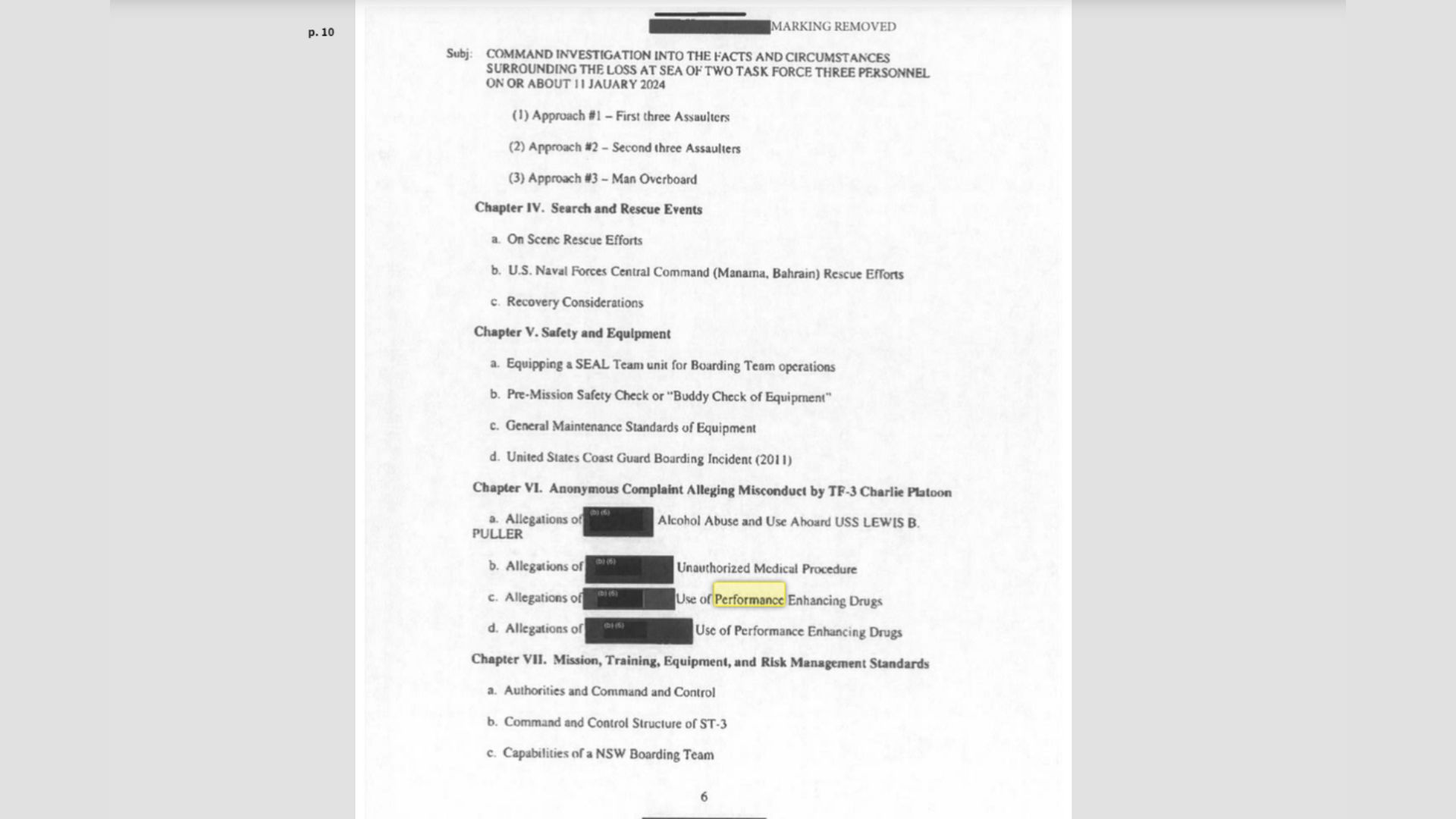
You can see the full report here.
The Impact on the SEAL Community
For a long time, Navy SEALs have enjoyed a certain level of latitude and freedom to bend the rules in the name of getting the job done. Their missions are high-stakes, high-risk, and they’re often seen as the military’s best of the best.
But this culture of exceptionalism comes at a cost, and the deaths of Chambers and Ingram have shined a spotlight on it.
The investigation’s findings raise questions about the broader impact of this kind of behavior.
PED use, for instance, is medically disqualifying for special operators, yet it still seems to be an open secret within the SEAL community.
The use of testosterone and other substances may increase physical performance in the short term, but it can also lead to long-term health risks and compromise the integrity of the force.
Moreover, the Navy’s report suggests that this culture of rule-bending might be putting lives at risk, not just from dangerous missions but from decisions made off the battlefield.
Unauthorized medical procedures and ignoring safety protocols for flotation gear might seem small at the moment, but they can have deadly consequences, as this incident tragically proved.
Moving Forward: Changing the SEAL Culture
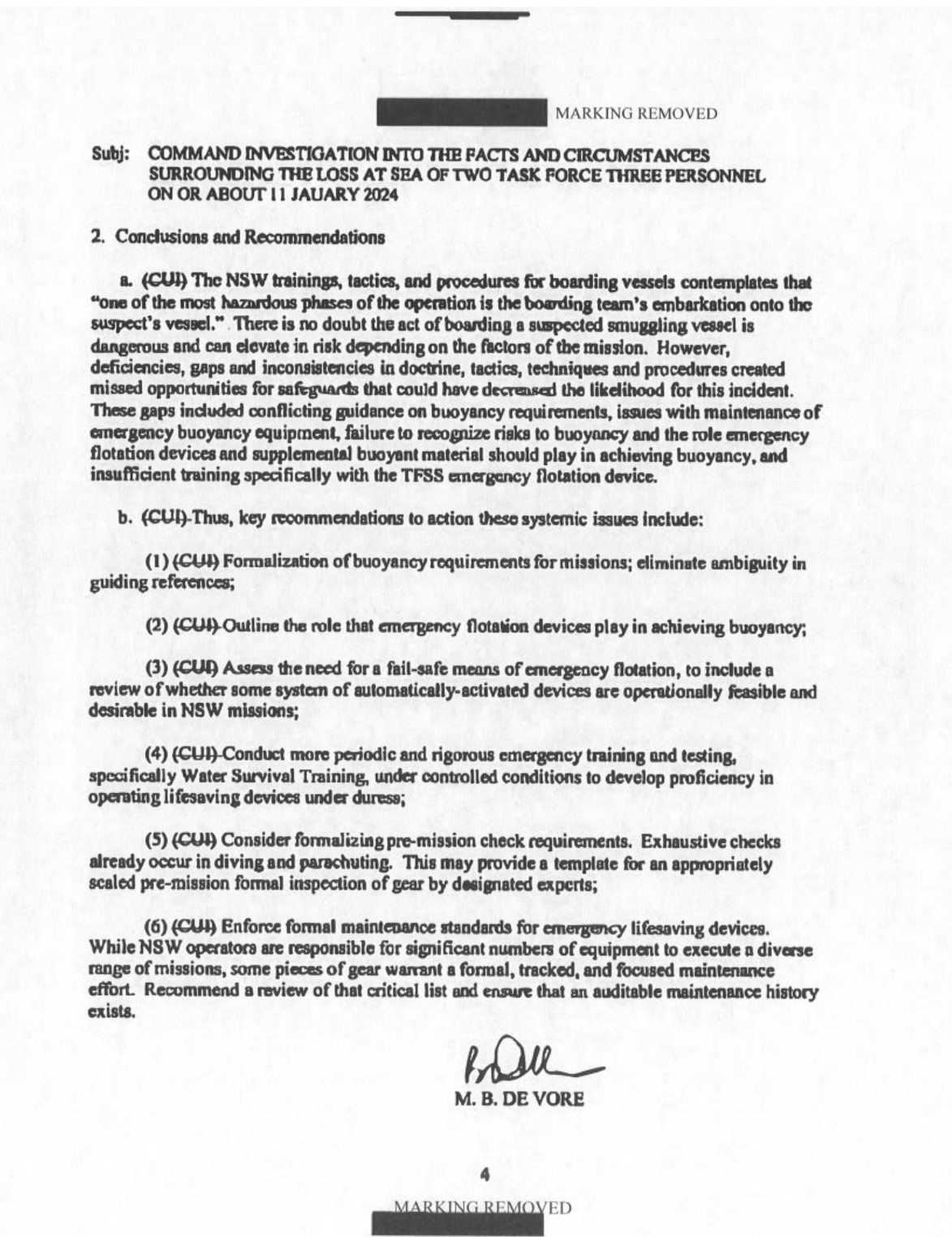
As this investigation continues to make waves, it’s clear that the SEAL community must confront some hard truths.
While these elite warriors operate in some of the most dangerous environments on the planet, the rules are in place for a reason. By allowing SEALs to skirt regulations—whether it’s using PEDs or overlooking safety gear—the Navy risks undermining not only the health and well-being of its operators but also the success of its missions.
In the wake of this report, there’s likely to be renewed scrutiny of the SEALs and a push for greater accountability.
The Navy has already begun cracking down on PED use, but it’s clear more needs to be done. A shift in culture is necessary to ensure that safety protocols are followed and that the same rules apply to everyone, from the most elite special operators to the newest recruits.
The deaths of Chambers and Ingram serve as a tragic reminder that even the best-trained forces need to follow the rules, and the Navy has a responsibility to ensure that the SEALs continue to operate at the highest level without cutting corners.
Moving forward, there’s hope that this tragedy will spark positive change within the SEAL community to prevent further loss of life and to maintain the integrity of one of the military’s most respected units.
—
Disclaimer: SOFREP utilizes AI for image generation and article research. Occasionally, it’s like handing a chimpanzee the keys to your liquor cabinet. It’s not always perfect and if a mistake is made, we own up to it full stop. In a world where information comes at us in tidal waves, it is an important tool that helps us sift through the brass for live rounds.








COMMENTS