

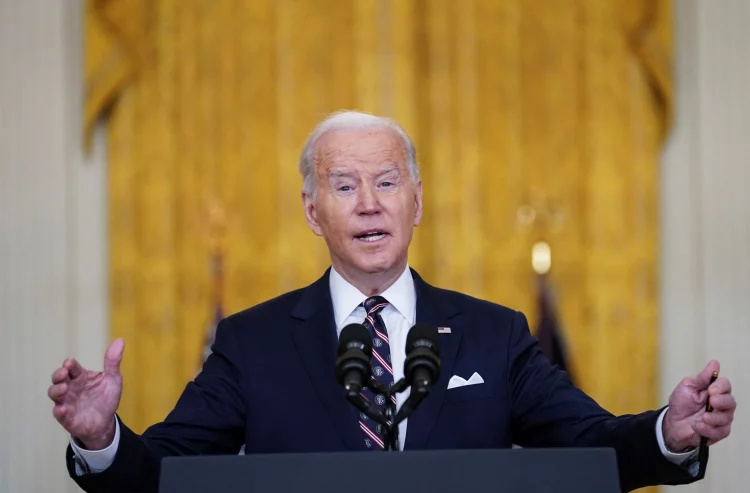
Should Russia attack any of its NATO allies, Biden has stated that the United States will defend NATO territory, meeting the United States’ commitment to Article 5. It is one of the cornerstone provisions of NATO that states an attack on one of its members is an attack on all members of the organization. The article was first invoked after the 9/11 attacks when al-Qaeda drove hijacked planes into the World Trade Center and the Pentagon.
Alongside these statements, NATO Secretary-General Jens Stoltenberg has given the authority to NATO’s Supreme Allied Commander (SACEUR) Europe US Gen. Tod Wolters of calling up the 40,000 troops comprising the NATO Response Force together with its defense plan. However, he also stated that NATO would not militarily intervene with Russia’s invasion of Ukraine. Collectively, the US and NATO are beefing up their eastern flank in case Kyiv falls to Russia.
“There are no NATO combat troops, no NATO troops at all inside Ukraine. We have made it clear that we don’t have any plans and intention of deploying NATO troops to Ukraine,” he said.
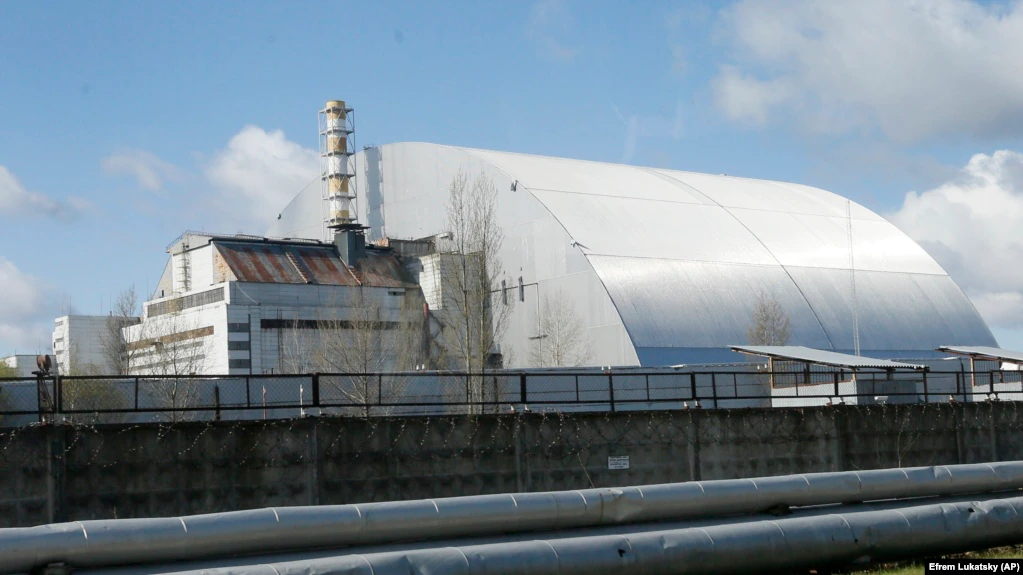
Just a few hours ago, it was reported by Ukrainian officials that the Chernobyl nuclear power plant and the exclusion zone around it had been captured by Russian troops, which many analysts indicate to be of extreme importance as it is a location that lies within the shortest route from Belarus to Kyiv, the Ukrainian capital city. According to the Carnegie Endowment for International Peace think tank, Chernobyl is the quickest way from point A to point B, where the nuclear plant lies just 81 miles from the capital. It may be key to a swift takedown of Kyiv, where the majority of the Ukrainian government is located. Despite still being highly radioactive, fighting had still commenced.
Today, it was reported that 137 people had been killed on Russia’s first day of invading Ukraine, with hundreds more wounded amid the gunfire and missile blasts to key military installations, bases, and air defenses. This number is continually fluctuating as reports have tended to differ due to the ongoing invasion.
Second Tranche of Sanctions
Today, I authorized a new round of sanctions and limitations in response to Putin’s war of choice against Ukraine.
We have purposefully designed these sanctions to maximize the long-term impact on Russia – and to minimize the impact on the United States. pic.twitter.com/wM0kEBcZba
— President Biden (@POTUS) February 25, 2022
Biden had also announced that he was now laying out new sanctions against Russia, which were designed to impair Russia’s ability to compete in a 21st-century economy technologically. These measures include blocking Sberbank, the largest Russian bank, and VTB, Russia’s second-largest bank, from accessing the US financial system. More so, the US also blocked Bank Otkritie, Sovcombank OJSC, and Novikombank, along with 34 of its subsidiaries. In totality, the US has now sanctioned Russian banks that hold $1 trillion in assets, which hold over 80% of Russian banking sector assets.
Russian elites were also not safe from the sanctions. Several oligarchs, including Sergei Ivanov, Nikolai Patrushev, Igor Sechin, Andrey Puchkov, Yuriy Soloviev, Galina Ulyutina, Alexander Vedyakhi, and several of their family members are being sanctioned. They are blacklisted from traveling to the United States, and any assets they have in the US are frozen, cutting them off from the US financial system. 24 Belarussian individuals, entities, banks, and nine defense firms were also sanctioned due to their participation with Russian forces in the takeover of Ukraine.
Sanctions to deny Russia of exports related to the development of weapons aims to weaken the Russian defense development and research efforts, cutting off their access to cutting-edge technology. “This includes Russia-wide restrictions on semiconductors, telecommunication, encryption security, lasers, sensors, navigation, avionics, and maritime technologies,” a White House statement said.
“We will limit Russia’s ability to do business in Dollars, Euros, Pounds, and Yen to be part of the global economy,” he said. “It will strike a blow to their ability to continue to modernize their military. It’ll degrade their aerospace industry, including their space program. It will hurt their ability to build ships, reducing their ability to compete economically. And it will be a major hit to Putin’s long-term strategic ambitions,” he added.
Biden also stated that he was not alone in implementing the sanctions. He reported that he had just spoken with G7 leaders and the European Union to join the United States in imposing the sanctions. However, he did state that these sanctions and their effects will take time to be fully felt by Russia’s economy and that Putin is testing the resolve of the West with the aforementioned sanctions.
Some effects of the sanctions seem to be felt as the Russian ruble has hit a historic low since the invasion, with the US dollar rising as much as 7% against the ruble. It was reported that the ruble was down 3.6% against the dollar at 5:50 am ET. The Moscow Stock Exchange also experienced heavy volatility, falling as much as 30% to 50% today, which is equivalent to $180 billion in value. In response, the Russian central bank ordered to suspend short-selling on the Russian exchange until further notice. Lastly, oil prices hit $100 a barrel for the first time since 2014 after Russian forces started attacking Ukraine as Russia is not just a major supplier of gas in Europe but is also known as the second-largest producer of natural gas in the entire world.
Tuning in to SOFREP for the first time? Click here and enjoy a free 2-month trial membership and be up to date with the latest developments in Ukraine and elsewhere around the globe.








COMMENTS