

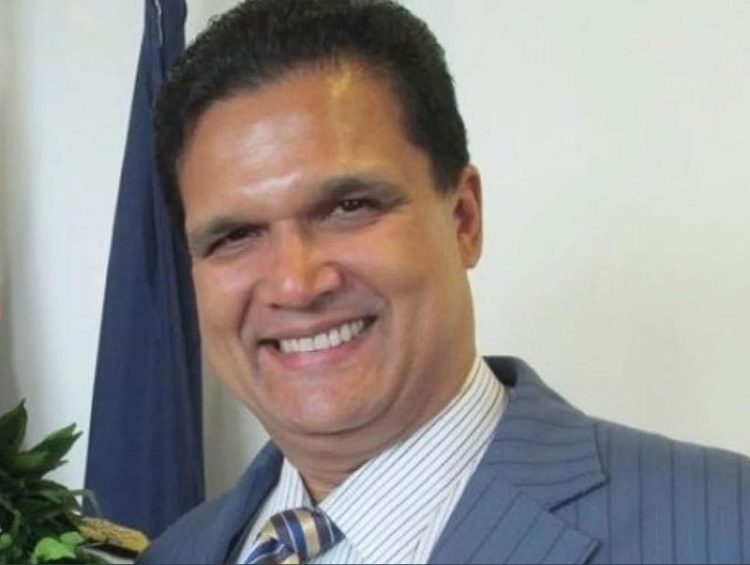
Authorities attempted to investigate him no less than 14 times between 2004 and 2012, and yet he evaded consequences each time. He even managed to turn an agent from the Naval Criminal Investigative Service (NCIS) into his mole, getting insider information about ongoing investigations.
But his days of hiding in plain sight came to an end in 2013.
In an impressive sting operation, investigators tricked the NCIS mole into believing that the serious investigations had been dropped, luring Francis to San Diego for a meeting with Navy officials.
The moment he stepped into his hotel room, he was greeted not by Navy brass, but by armed federal agents who took him into custody.
Francis was finally in handcuffs, but the story was far from over.
A Guilty Plea and the Twist of His Escape
After his arrest, Francis pled guilty in 2015 to bribery, conspiracy to commit bribery, and conspiracy to defraud the United States. His cooperation with prosecutors was substantial—he met with them over 65 times, providing “unprecedented” insight into the inner workings of his scheme and implicating more than 30 Navy officials.
Thanks to his testimony, over 30 convictions were secured, though eight were later reduced due to trial misconduct, and hundreds more individuals were referred to the Navy for disciplinary action.
However, this cooperation came with some privileges. In a surprising twist, a judge allowed Francis to be released from custody to undergo medical treatment for cancer and other ailments.
But “home detention” didn’t mean laying low for Francis.
Instead, he moved into a mansion costing $7,000 a month, where he lived in luxury and, of all things, started recording a podcast about his experiences.
Just when he was about to take the witness stand in a high-profile trial, he vanished. Weeks before his sentencing in September 2022, he cut off his GPS ankle monitor and fled, first to Mexico, then to Cuba, and finally to Venezuela, where authorities eventually tracked him down.
Justice Finally Served?
When Francis was extradited back to the US last year, it seemed like the last chapter of his saga had finally arrived.
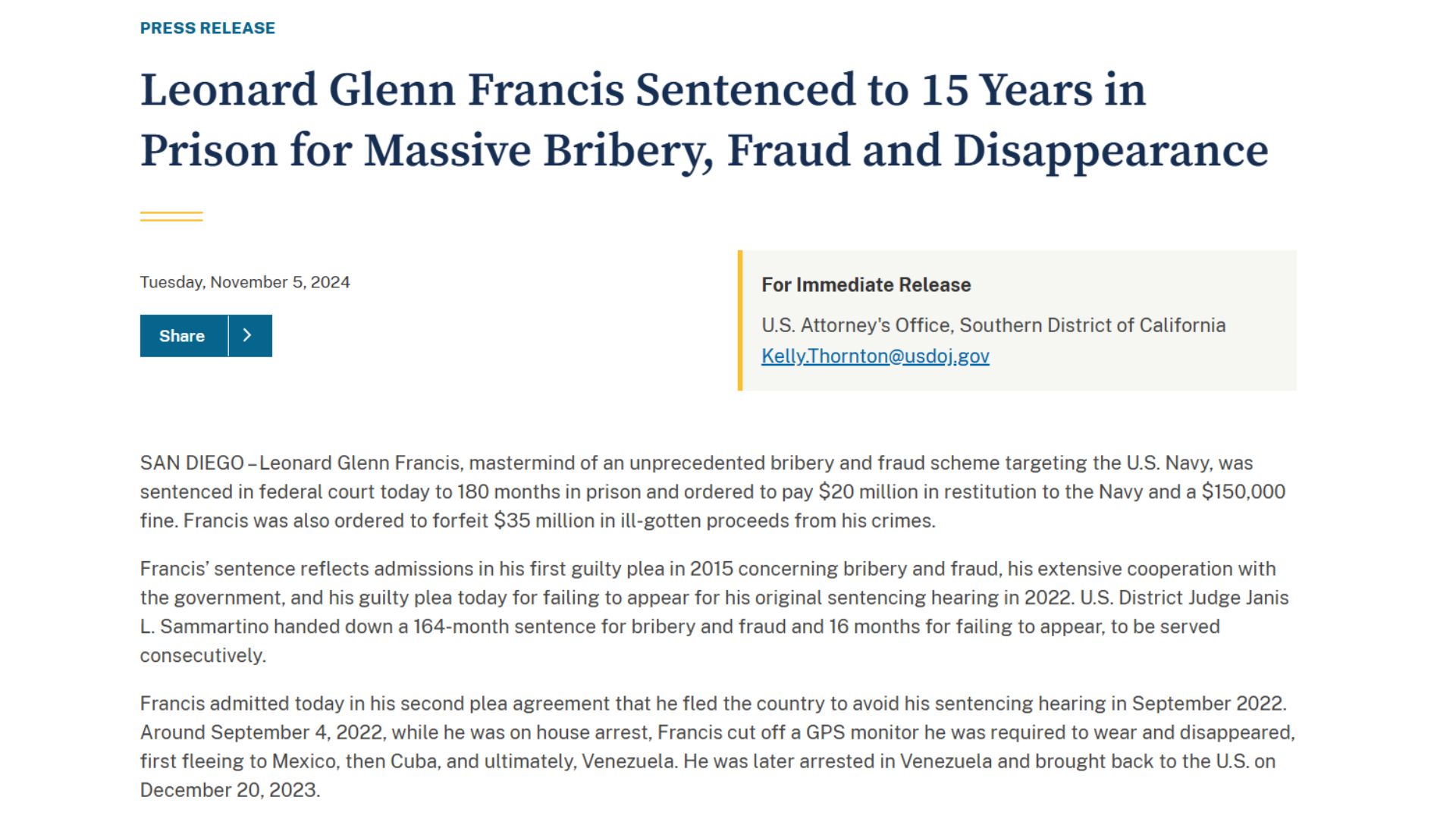
The judge handed down a 15-year sentence, which includes credit for the years he’s already spent in custody.
On top of that, he has been ordered to pay $20 million in restitution to the Navy and forfeit the $35 million he made through his fraud.
Francis, who rarely spoke in court, offered a few somber words, expressing regret and asking for mercy so he could be reunited with his children.
“I sincerely regret my misconduct that led to this day,” Francis addressed the judge, adding that his actions were “inexcusable and wrong.”
It’s a long-awaited end to a scandal that rocked the Navy and exposed deep vulnerabilities within its ranks.
While many Navy officials took the fall, Fat Leonard’s arrest and conviction highlighted how one man’s greed and manipulation could exploit even the most disciplined institution. His story leaves the Navy with the hard task of regaining the trust of its personnel and the American public.
Final Thoughts
Even with his sentence handed down, questions remain. Francis has been known to boast about hiding his assets, so whether he’ll ever pay the full amount owed to the Navy is unclear. And while the government worked hard to bring justice, this case raised serious questions about prosecutorial conduct — eight felony convictions were reduced to misdemeanors due to misconduct.
Plus, with one defendant’s case being dismissed entirely, it’s clear there were missteps along the way.
In the end, Francis’s case serves as a cautionary tale, a stark reminder of what can happen when the system’s checks and balances fail. For now, the Navy is working to pick up the pieces and address the lingering questions that his case raised. As for Fat Leonard, he will spend his time in a federal prison, far from the mansions and luxury cars that once defined his life.








COMMENTS