

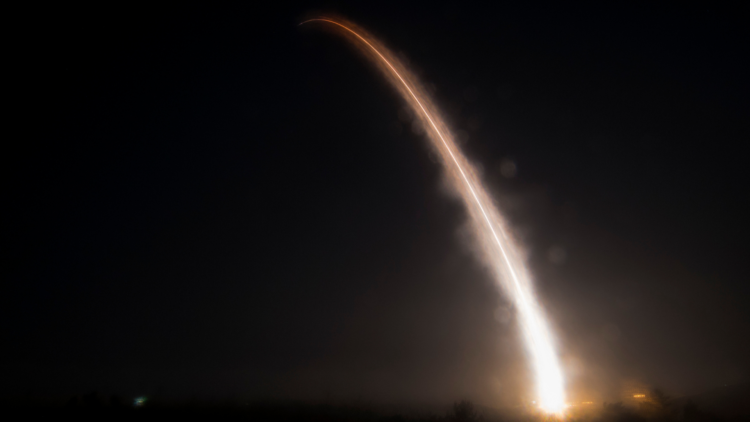
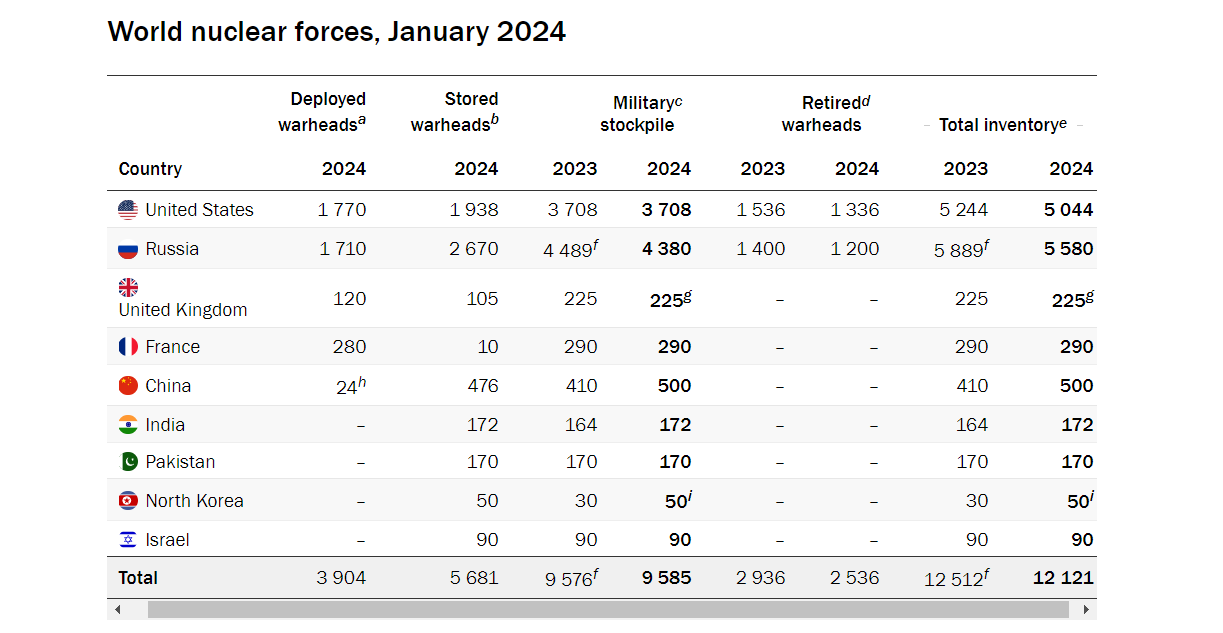
Meanwhile, China’s rise as a nuclear power is also a cause for concern, with their spending coming in second at $11.8 billion.
As reported by SIPRI, China’s arsenal has grown to an estimated 500 warheads, with a possible first-time deployment of missiles during peacetime. Their intercontinental ballistic missile (ICBM) capabilities are also projected for significant growth.
The report finds similar trends elsewhere: the UK plans a stockpile increase, France is developing new delivery systems, India and Pakistan are expanding their arsenals (India focusing on longer range), and North Korea has significantly boosted its estimated warhead count while testing new delivery systems. This raises concerns about the potential early use of tactical nuclear weapons by North Korea in a conflict.
Even Israel, which doesn’t officially acknowledge nuclear weapons, is believed to be modernizing its arsenal. These developments highlight a global shift away from disarmament efforts and towards a more heavily armed nuclear landscape.
Transparency Concerns
The reports also highlight a worrying decline in transparency surrounding nuclear forces, particularly between the US and Russia.
Dialogue channels established during the Cold War to foster communication and reduce the risk of accidental escalation have been severed.
Additionally, key treaties aimed at limiting nuclear proliferation, such as the New START treaty, are hanging by a thread.
This lack of transparency creates a dangerous environment where miscalculations and misunderstandings could have catastrophic consequences.
A Call to Action
Experts warn that the current trajectory is deeply concerning.
A new nuclear arms race fueled by mistrust and a return to Cold War-era thinking threatens to destabilize international security and increase the risk of nuclear war.
The reports urge a renewed commitment to disarmament treaties and a return to open communication channels between nuclear powers.
Only through dialogue and cooperation can we prevent the world from slipping back into the dark shadow of a nuclear confrontation.
The Road Not Taken
The alternative to this dangerous path is a world free from nuclear weapons.
The Treaty on the Prohibition of Nuclear Weapons, which has been ratified by 70 countries, offers a viable roadmap for achieving this goal.
While none of the nuclear-armed states have yet joined the treaty, it represents a powerful global norm against nuclear weapons and a starting point for a future free from the threat of nuclear annihilation.
“We are now in one of the most dangerous periods in human history,” said Dan Smith, SIPRI Director. “There are numerous sources of instability—political rivalries, economic inequalities, ecological disruption, an accelerating arms race. The abyss is beckoning and it is time for the great powers to step back and reflect. Preferably together.”
—
Disclaimer: SOFREP utilizes AI for image generation and article research. Occasionally, it’s like handing a chimpanzee the keys to your liquor cabinet. It’s not always perfect and if a mistake is made, we own up to it full stop. In a world where information comes at us in tidal waves, it is an important tool that helps us sift through the brass for live rounds.








COMMENTS