

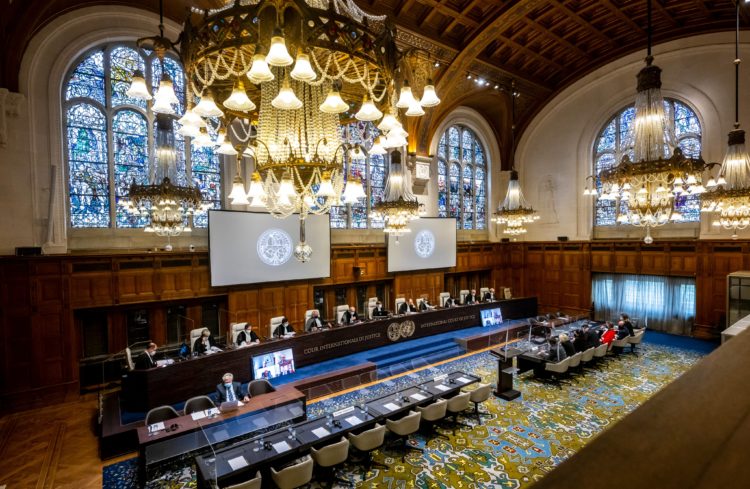
“Indeed, any military operation, in particular one on the scale carried out by the Russian Federation on the territory of Ukraine, inevitably causes loss of life, mental and bodily harm, and damage to property and to the environment,” said Donoghue.
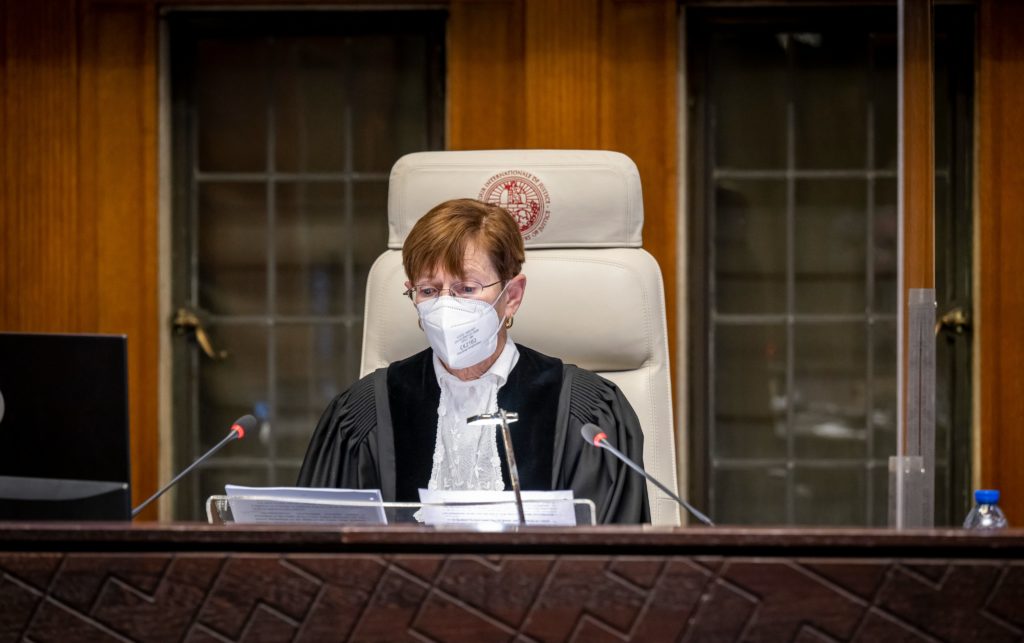
The ICJ presidents sympathized with Ukraine’s civilian population, which has been most vulnerable because of the conflict. It has been reported throughout the three-week-old war that Russia has been deliberately targeting civilian populations with its bombardment campaigns, with the most controversial ones being those that used White Phosphorus munitions. Recently, Russians also attacked a shelter for Ukrainian refugees in Mariupol, specifically the Mariupol Drama Theater that was serving as a safe haven for locals as missiles rained on their doorsteps.
“Attacks are ongoing and are creating increasingly difficult living conditions for the civilian population. Many persons have no access to the most basic foodstuffs, potable water, electricity, essential medicines, or heating. A very large number of people are attempting to flee from the most affected cities under extremely insecure conditions,” she explained.
It is important to note that another international body, the International Criminal Court, had launched an investigation regarding these alleged war crimes and crimes against humanity that Russia may or may not have committed.
Ukraine gained a complete victory in its case against Russia at the International Court of Justice. The ICJ ordered to immediately stop the invasion. The order is binding under international law. Russia must comply immediately. Ignoring the order will isolate Russia even further
— Volodymyr Zelenskyy / Володимир Зеленський (@ZelenskyyUa) March 16, 2022
Ukrainian President Volodymyr Zelensky celebrated the victory from the Hague on Twitter. “Ukraine gained a complete victory in its case against Russia at the International Court of Justice. The ICJ ordered to immediately stop the invasion,” wrote Zelensky. “Russia must comply immediately. Ignoring the order will isolate Russia even further.”
Another Useless Ruling For Ukraine?
Rulings from the ICJ are bound under the UN Charter, thus “create international legal obligations for any party to whom the provisional measures are addressed.” However, the court has no means to enforce these rulings. The Russian Federation exploited this weakness from the UN to reject any application of the verdict.
“We can’t take that decision into account,” said Russian Press Secretary Dmitry Peskov.
Peskov reiterated Moscow’s statements during the earlier parts of the ICJ hearing, saying that the court has no jurisdiction on the matter, given Kyiv’s request falls outside the bounds of the Genocide Convention.
“There’s such a thing as consent of the parties in an international court. There can be no consent here,” he added.
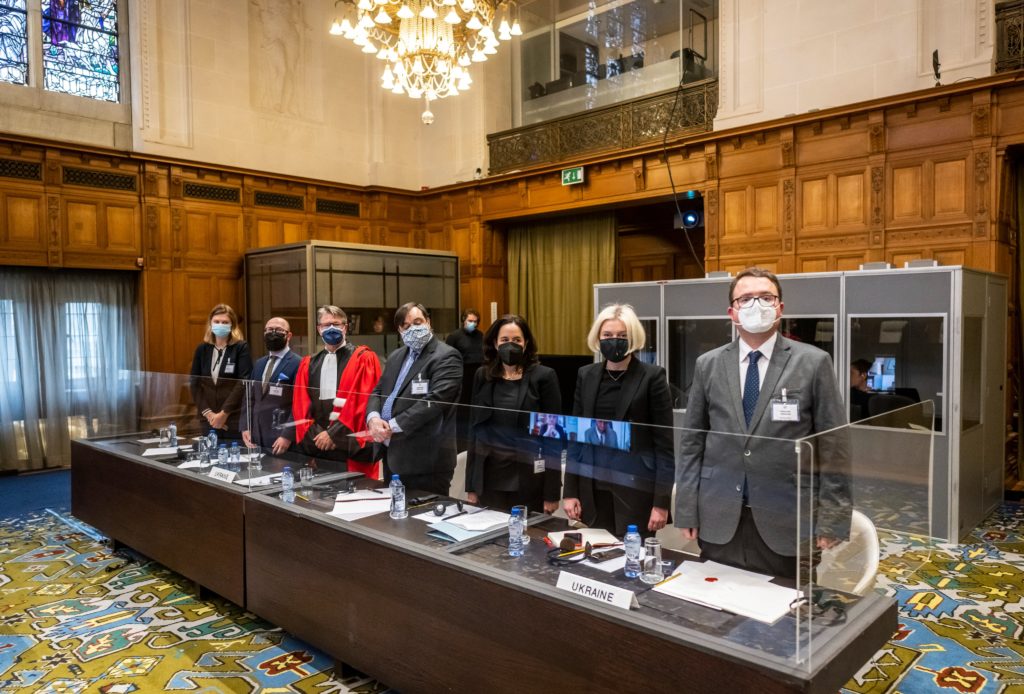
The ICJ’s primary role is to settle disputes between sovereign states and cannot impose charges on individuals, thus making the win symbolic. This was the same situation the Ukrainians were subjected to when the Russians used their veto through the Russian Ambassador to the UN, Vasily Nebenzya, to block the passage of a resolution condemning the Russian invasion.
In response to the veto, the emergency meeting of the United Nations General Assembly commenced, with 141 out of 193 in favor of a resolution that “deplores” the Russian invasion of Ukraine. However, while it was passed, the wins are considered mainly symbolic as the UN again has no means of implementing their resolutions.
Furthermore, the ICJ’s rulings could only be imposed by the UNSC, in which Russia is a permanent member and could again use its veto powers to evade sanctions.
In the event that one of the conflicting sides is “ignoring basic principles of law, there’s a question about the utility of invoking the law vis-à-vis that party when you don’t have a strong enforcement power,” said Yuval Shany, an expert on international law at Hebrew University in Jerusalem.
This means that without the cooperation of the two parties, a verdict from a ruling body with no enforcement capacity will be near useless.
However, Shany added that the verdict from the ICJ could still bring “some value” to Ukraine. For one, the ruling invalidates Russia’s casus belli for the war, which pushes the idea of it being a baseless occupation of Ukraine.
If you’re just tuning into SOFREP for the first time, click here to enjoy a free 2-month trial membership and be kept up to date on developments in Ukraine and elsewhere around the globe.








COMMENTS