

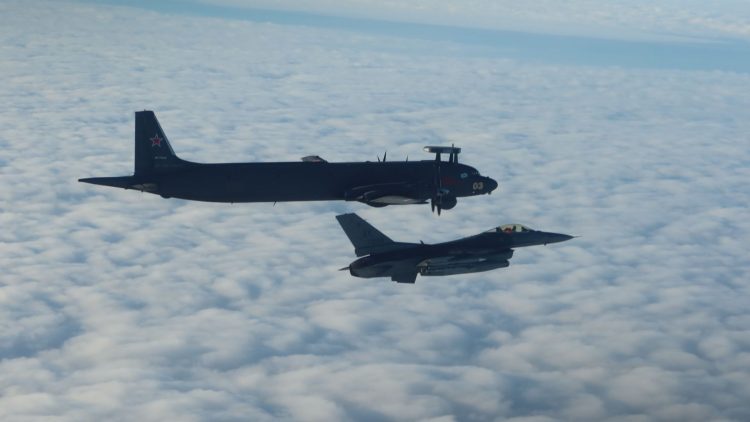
They also noted that everything was conducted according to international airspace rules, which helps keep things from escalating.
Why Does This Happen So Often?
Russian aircraft operating near the Alaska ADIZ isn’t exactly rare. These flights happen fairly regularly and have been going on for years.
For Russia, these missions are routine long-range training flights, but they also serve as a way for them to show they can operate close to Uncle Sam’s borders like some sort of military muscle-flexing without crossing any red lines.
Meanwhile, for NORAD, tracking these flights is part of their everyday job. One of the main missions of our troops in the north is to monitor and, if necessary, intercept aircraft entering this zone to make sure there’s no funny business going on.
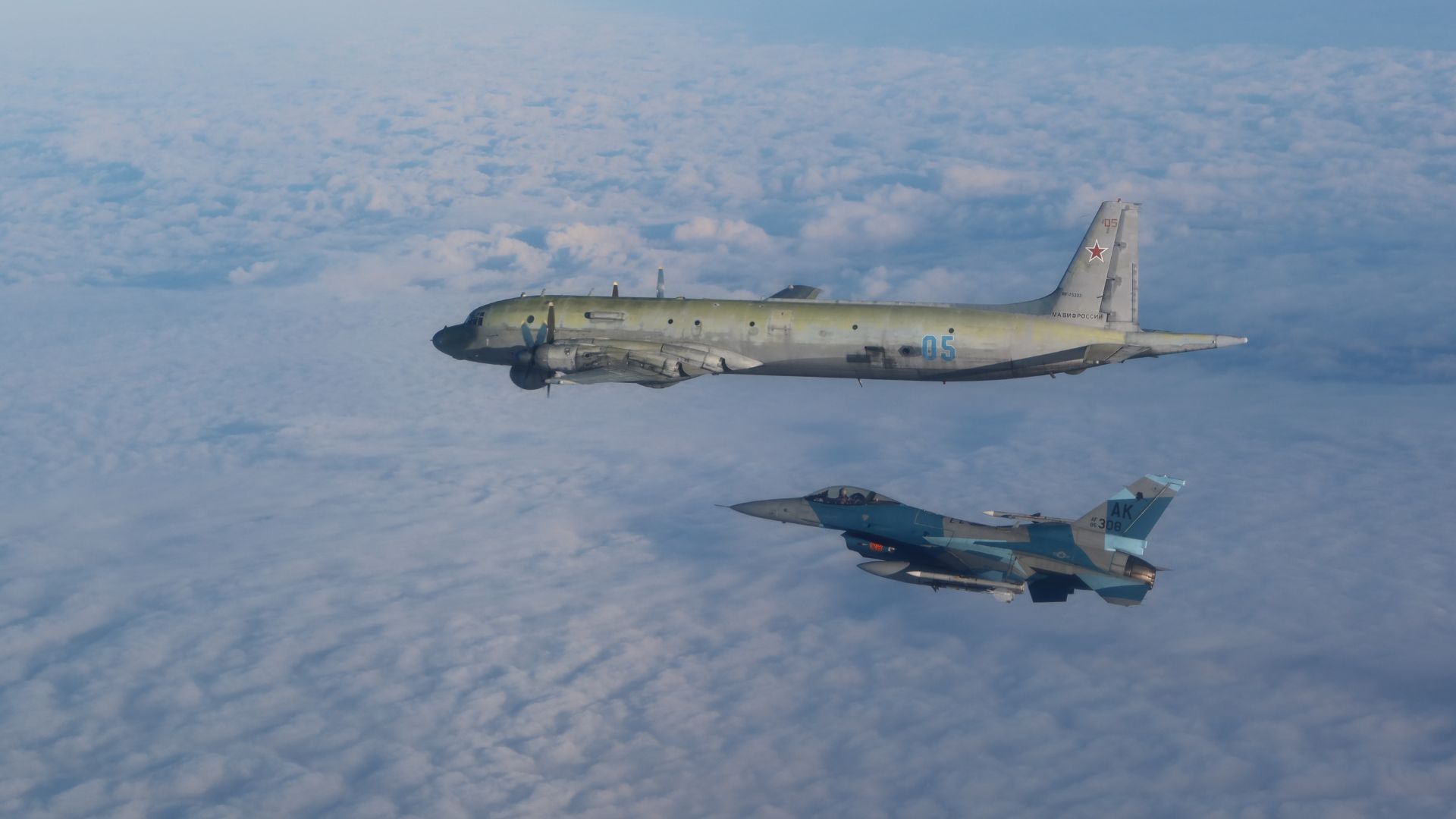
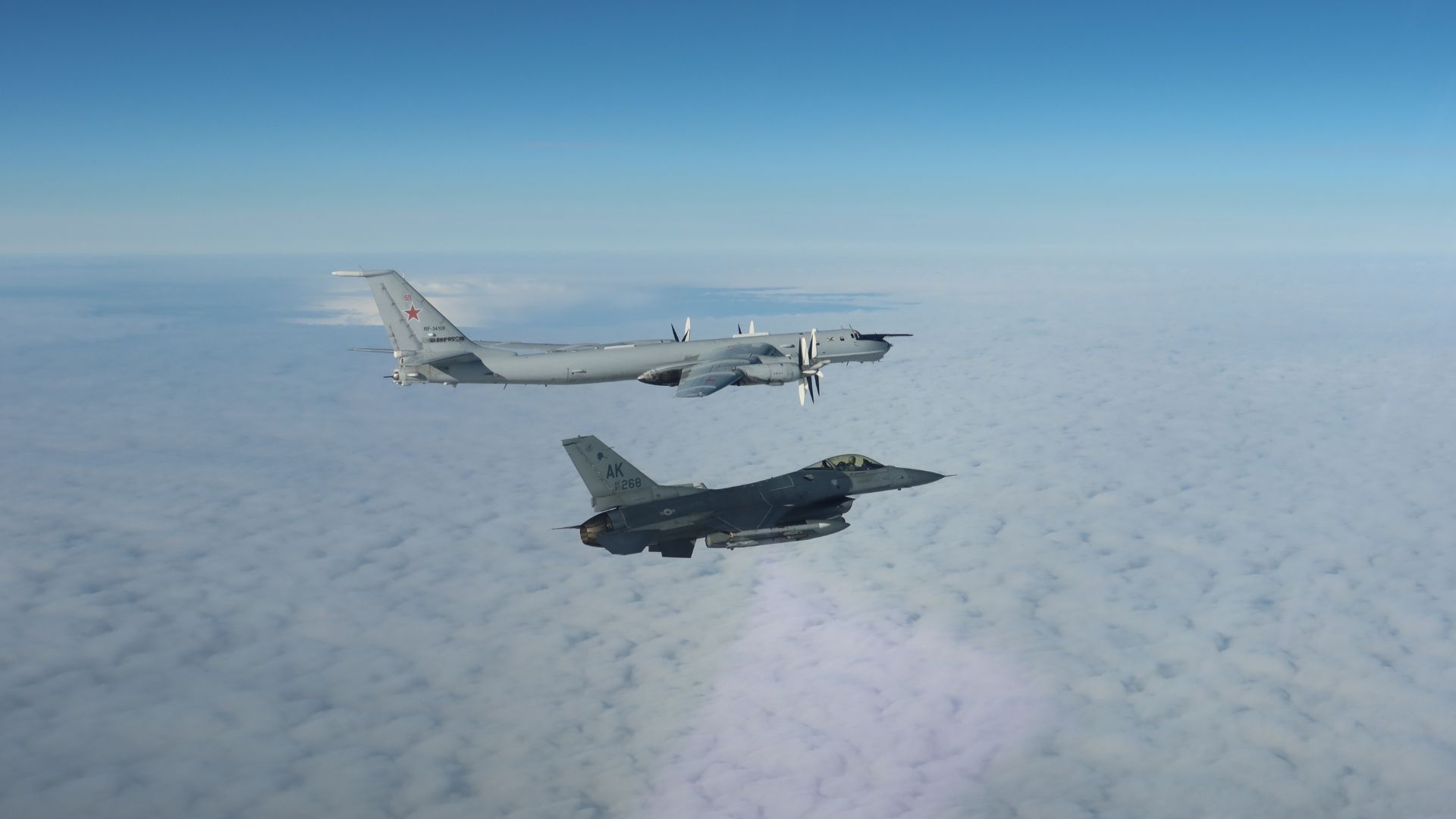
In this case, US Air Force F-16s were sent to intercept and keep an eye on things.
Photos released by NORAD show these intercepts in action, including Russian Tu-142 maritime patrol aircraft and IL-38s that were also spotted earlier in September.
These intercepts are routine, but they give us a glimpse of the cat-and-mouse game that happens in international airspace.
Why Is the Alaska ADIZ Important?
As you probably know already, the Alaska ADIZ is strategically significant for a few reasons.
ONE, Alaska is close to Russia, and TWO, the ADIZ covers a big part of the Arctic, which is becoming an increasingly important region for global powers.
As ice melts and new shipping lanes open up, countries like the US, Russia, and others are vying for influence in the region.
The ADIZ allows the US to keep track of who’s operating in these crucial areas.
Beyond that, Russia’s long-range bombers are capable of carrying nuclear weapons, so keeping tabs on their movements is always a good idea.
While the aircraft spotted on Monday were following the rules, it’s still important for NORAD to stay alert and ready.
Zooming Out: Russia, China, and Airspace Violations
This incident comes at a time when there’s been a noticeable uptick in airspace activity, not just around Alaska but in other parts of the world too.
Japan, for example, has recently seen violations of its airspace by Russian and Chinese aircraft, which has raised alarms.
Japan’s defense officials have been vocal about their concerns, especially after a Chinese Y-9 electronic intelligence aircraft entered Japanese airspace in August and most recently a
Russian Il-38 breached Japan airspace thrice, which prompted Japan to launch flares near the aircraft as a warning.
Nikkei map of Russia’s violations of Japanese airspace on Monday (lighter blue denotes 🇯🇵’s territory off coast of northern Hokkaido). Follows China’s similar violation a couple of week’s ago and is a reminder of the security threat to Japan’s northern flank. pic.twitter.com/V9OVXx0sts
— Robert Ward (@RobertAlanWard) September 25, 2024
These kinds of airspace skirmishes are part of the larger geopolitical tensions playing out globally.
Seemingly, countries are testing boundaries—sometimes literally—through military exercises, reconnaissance missions, and yes, even accidental airspace violations.
Final Thoughts
So, what’s the takeaway here? While it might sound alarming to hear that Russian bombers are flying near Alaska, it’s not as big of a deal as it may seem. This kind of activity happens regularly, and as long as the planes stay in international airspace, it’s more about posturing than provocation.
NORAD continues to do what it does best—keeping a close watch on any potential threats and ensuring that nothing crosses the line. As tensions rise globally, especially with Russia and China, incidents like this are worth paying attention to, but they’re not something to lose sleep over.
At the end of the day, it’s all part of the complex game of global military presence, with countries like Russia showing off their capabilities and NORAD making sure nothing gets too close for comfort.
—
Disclaimer: SOFREP utilizes AI for image generation and article research. Occasionally, it’s like handing a chimpanzee the keys to your liquor cabinet. It’s not always perfect and if a mistake is made, we own up to it full stop. In a world where information comes at us in tidal waves, it is an important tool that helps us sift through the brass for live rounds.








COMMENTS