

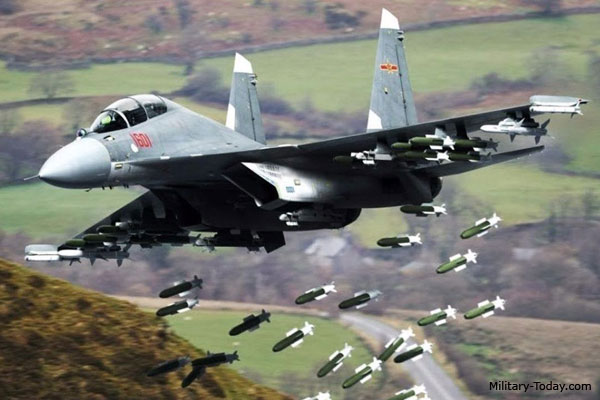
In recent years, Taiwan, which China claims as part of its sovereign territory, raised concerns about frequent Chinese air force missions near the island’s air space. The Taiwanese brand these military deployments as “grey zone” warfare, strategically done to slowly wear out the island’s air force while constantly testing its defense capabilities.
This March, the Taiwanese air force was forced to ground its Mirage 2000-5 fighter jet fleet after a streak of crashes during routine operations. It was suspected that the French-made fighter’s poor performance in Taiwan was caused by shorter maintenance periods and heavier flight demands brought by the frequent incursions of PLA aircraft.
More Chinese Aggression to Come
Beijing continues to view Taiwan as a renegade province that remains a part of China. Notably, the CCP has not ruled out the possibility of using force to seize the island and has upped the ante in conducting military operations near its territory.
One analyst predicts the CCP will only continue to mount pressure on Taiwan as the island democracy gets cozier with the United States. Last month, President Joe Biden went off script and said that the US would defend Taiwan in the event of a Chinese invasion.
The assessment came after the US Senate’s armed services committee submitted a draft of the 2023 National Defense Authorization Act, which gives provisions to expand defense-related cooperation with Taiwan. This includes joint military training, exercises, and other activities.
The purpose of these flights by China is to saber rattle at Taiwan, demonstrate that they can navigate large formations of aircraft over water and to test the reaction time of Taiwan’s air defense system.
China's third aircraft carrier the #Fujian. pic.twitter.com/twb16fNIkw
— Zhang Meifang (@CGMeifangZhang) June 19, 2022
Principal defense analyst Janes Ridzwan Rahmat said the possibility of an armed conflict between the two Chinas is significantly higher today than half a decade ago.
“This is because the PLA will soon be equipped with the tools needed to mount an invasion force across the Taiwan Strait,” Rahmat said. “Given this ability, we can expect Beijing to exhibit a lot more assertiveness when it comes to dealing with Taiwan.”
Last Friday, the PLA launched the Fujian, its latest aircraft carrier. The addition of the China-made Fujian brings the total number of the country’s aircraft carrier fleet to three, closer to its 2035 goal of at least six. In addition, it is China’s first carrier that can use advanced electromagnetic catapult systems.
A military historian from Cornell University in Washington, David Silbey, said that the CCP is also expected to explore non-military options to get Taiwan back under its wing.
“They could attempt to integrate Taiwan economically into the mainland in such a way that reunification becomes inevitable,” Silbey said. “The Chinese have been doing this for many years already with a fair amount of success, but it’s something of a long process.”








COMMENTS