

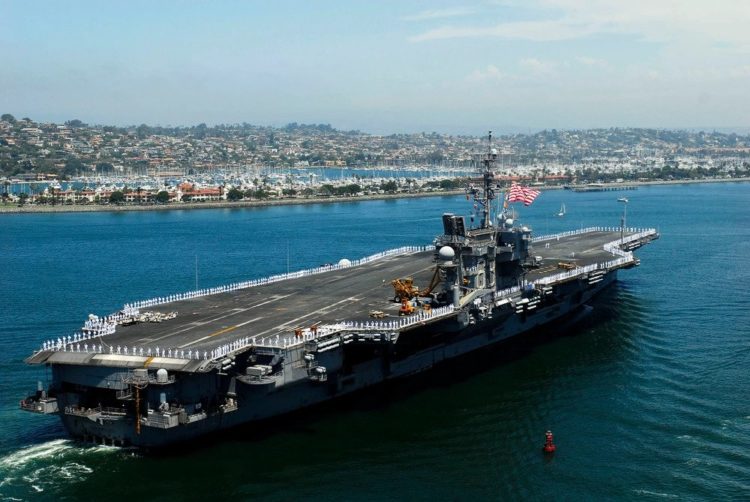
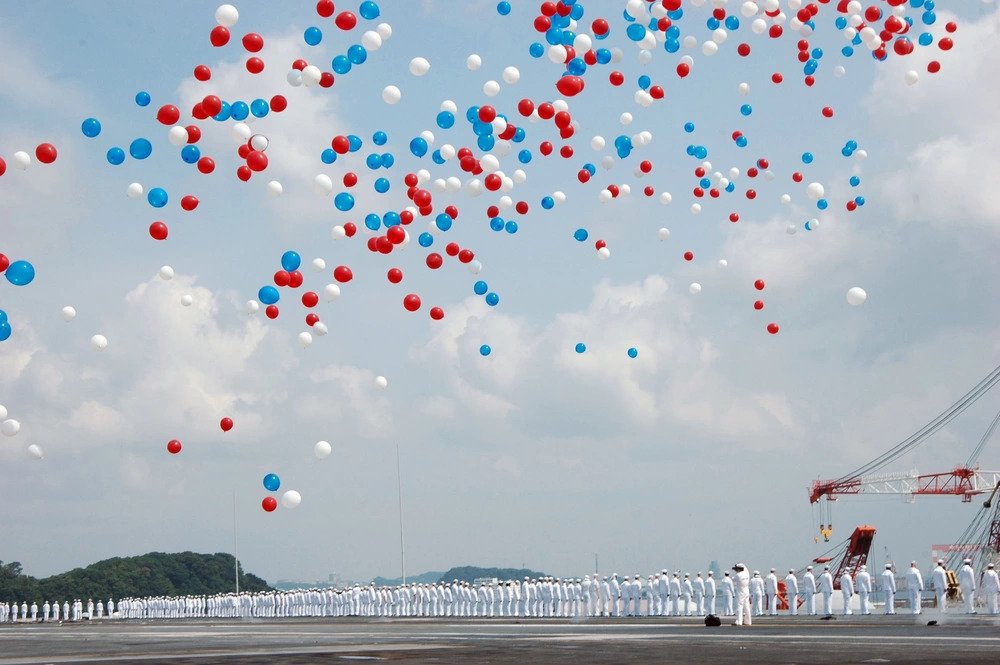
Another veteran, Neal Woodall, served on the ship from 1966 to 1968 during two tours in the Vietnam War.
“This is just a great day, one I certainly never expected,” Woodall said.
Working aboard the Kitty Hawk saw him travel to different parts of the world, including the Philippines and Hongkong. He admitted that the day has been emotional for him and some veterans.
“It’s been a remarkable day,” he said. “It was an honor and even more so now. I’m glad I’m still alive to see this day.”
Thrilling History of the Battle Cat
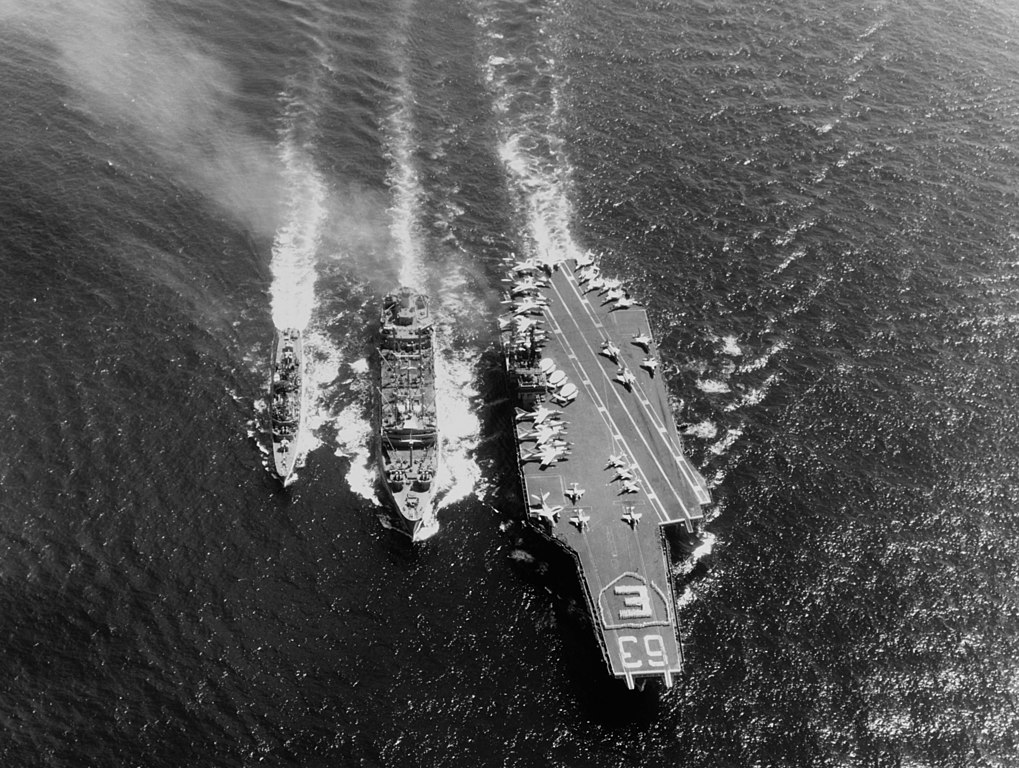
The USS Kitty Hawk’s time in service saw some of the most tumultuous times in the US Navy’s history. Launched in 1960, it was named after the outer banks of North Carolina where the Wright brothers made their first historic flights in 1903.
The carrier proved to be a crucial piece in the Vietnam War’s Tet Offensive, specifically from December 1967 to June 1968. It was awarded, along with its air wing, a presidential unit citation for “inflicting extensive damage and destruction to sites and installations vital to the enemy’s operations” in 1969. It remained stationed in some of the hottest combat zones of the war, with the air wing launching hundreds of strikes on the enemy.
In 1972, race riots broke aboard the Kitty Hawk between several white and black sailors. Around 40 to 60 were injured during the incident, which ultimately led to the creation of serious programs to address racial concerns within the Navy.
The carrier was also part of an incident with the Soviet Union during the latter years of the Cold War. In 1984, the Soviet nuclear attack submarine K-314 had been stalking the carrier and mistakenly popped to periscope depth directly in the path of the 80,000 aircraft carrier. during operations in the Sea of Japan. In the collision that followed, the bow of the Kitty Hawk was opened to the sea while the Russian submarine’s stern and propellers were mangled.
The vessel was also deployed as part of Operation Southern Watch and Operation Iraqi Freedom in the North Persian Gulf. The Constellation and Kitty Hawk carrier strike groups steamed in the Arabian Gulf while the USS Harry S. Truman and USS Theodore Roosevelt operated in the Mediterranean.
Decommissioning the Kitty Hawk marks the end for the US Navy’s conventionally powered aircraft carriers. Her breaking and dismantling is expected to take around a year and a half.
What Happens to the Kitty Hawk Now?
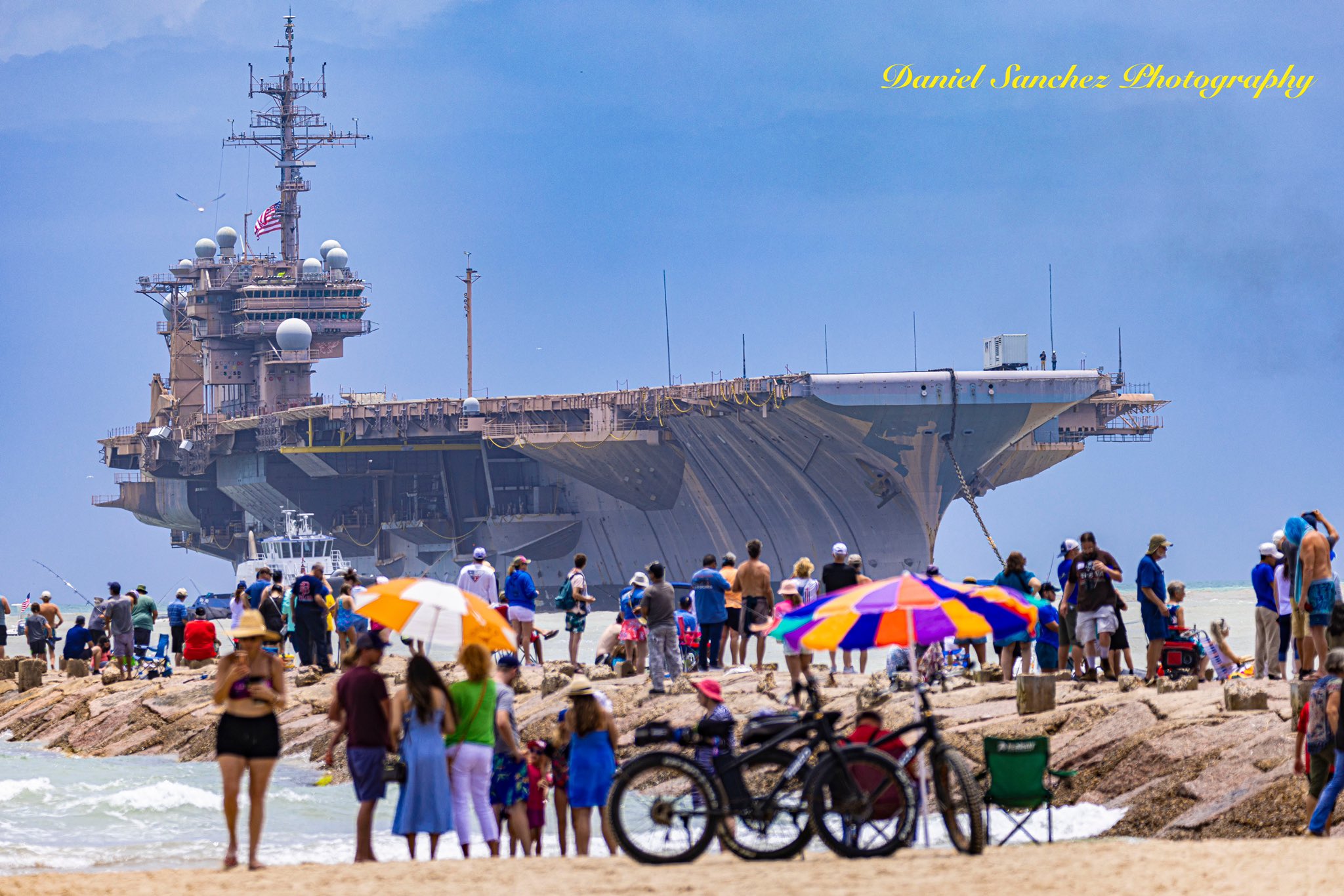
After retirement in 2009, the carrier was left in cache for over a decade. It was only in 2021 that the Navy signed a deal with International Shipbreaking Ltd./EMR Brownsville (ISL) to dismantle the USS Kitty Hawk, along with the USS John F. Kennedy. The deal does not involve ISL buying the two vessels; rather, it is just providing recycling service for the US Navy.
“ISL is providing a recycling service to the US Navy at the lowest cost possible to the US taxpayer (1 cent). The US Navy still owns both vessels, and we will never have [the] title. ISL contract requires complete recycling of the ships and does not allow for any visitors onboard or inside the facility during recycling operations,” the ISL said in a Facebook post.
The ISL is also planning to have challenge coins minted from the Brass removed from the ship, as well as to cut 3″x5″ ship sections for the veterans to have as a keepsake to honor their time aboard the vessel.
Before being towed from Washington to Texas, the Kitty Hawk was thoroughly inspected by a team of experts provided by the company. The U.S. Navy is very particular about who gains access to the engineering of its vessels. This meant that ISL employees had to pass background checks from the Defense Counterintelligence and Security Agency.
ISL has recycled other former carriers, including the USS Independence, USS Constellation, and USS Ranger.
ISL Senior Manager Chris Green said that the company had received numerous requests from veterans for a chance to walk on the ship’s decks but said they were unfortunately not allowed to do so under their contract.
“The carriers are special because they touched so many people’s lives,” Green said. “I’ve heard a whole lot of stories.”
Thank you for your service, Kitty Hawk! We also thank all of our sailors who served on the vessel in its long and very rich history!








_and_USS_Turner_Joy_(DD-951)_refueling_from_USS_Kawishiwi_(AO-146)_on_23_April_1964.jpg)
COMMENTS