There are some instances when the world just does not have the luxury of time, and vaccines should be rushed, and the same thing happened during World War II when the war couldn’t just wait.
Read the full article for more on:
Important insights and detailed analysis
Expert commentary on current events
Breaking developments and updates
Updating summary...
The Acceleration of Military Vaccines During WWII
SOFREP News Team
Speed
1x
Listen
COMMENTS
There are some instances when the world just does not have the luxury of time, and vaccines should be rushed, and the same thing happened during World War II when the war couldn’t just wait.
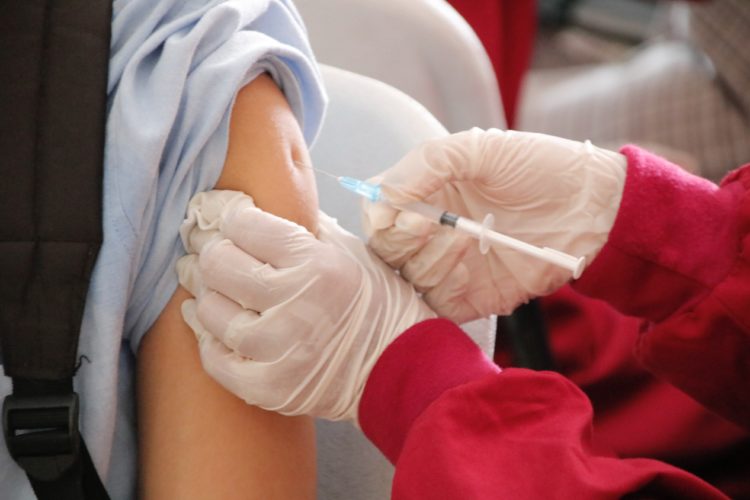
A student is being injected with a vaccine. [Photo by Ed Us/@isengrapher via Unsplash]
When the first vaccines for COVID-19 were developed, many were skeptical about their effectiveness and possible risks because it was created rather quickly. However, the virus was identified in December 2019, and after a year, Pfizer’s vaccine received its emergency use authorization from the Food and Drug Administration. Usually, vaccines take around 10 to 15 years to develop, having to go through different phases of testing and clinical trials before administering to the public. Before COVID-19, the fastest vaccine to create was for mumps, which took four years. However, there are some instances when the world does not have the luxury of time, and vaccines should be rushed. The same thing happened during World War II when the war couldn’t just wait.
Advertisement
War Within the War
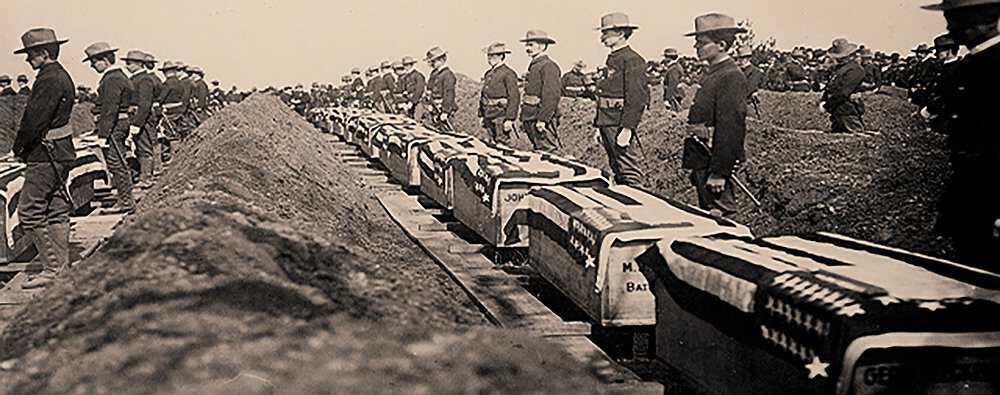
Whenever we think of war, it is not just always about the guns and explosives, the soldiers in uniform marching and gallantry fighting for their beliefs. It’s also weeks of no proper bath or even brushing teeth, murky water, vermin-infested trenches, and open wounds. In addition, people are traveling and more likely carrying or catching germs and viruses that they don’t have immunity against. The diseases could grow and spread in an area, and people could not stop the spread.
Caskets of American soldiers in Cuba | HSL University of Virginia. (pbs.org)
When World War II broke out, the US government realized that diseases were as a threat as the enemies to their troops. To prevent past mistakes, they partnered with academics and industries to develop vaccines that would make the soldiers immune to diseases before they were sent off to fight. This was to avoid soldiers from having to leave due to sickness. While the partnership was good, the scientists realized they were being held back by the organization’s constraints, limiting them from coming up with the much-needed shots for the troops.
Advertisement
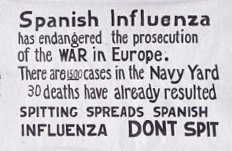
Spanish Influenza sign at Navy Yard in 1918. (US. Navy, Public domain, via Wikimedia Commons)
To make things easier, the US Army created a commission that would develop a vaccine to protect the troops in case of a pandemic. In addition, leading specialists from different institutions like universities, hospitals, public health laboratories, and private organizations all worked together for research and development to ensure they could prevent spreading diseases to the military.
Soon, the experts were already working on vaccines not only for syphilis, typhus, and dysentery but also for bacterial meningitis, bacterial pneumonia, measles, mumps, neurotropic diseases, tropical diseases, and acute respiratory diseases. The military commission also encouraged and enabled them to pick up the research.
Advertisement
Speeding Things Up
Virologist Thomas Francis Jr. led the commission to develop a flu vaccine that the FDA approved in less than two years. They also developed operations-specific vaccines, like the vaccine for botulism for the Normandy Invasion when a faulty intelligence that the Nazi bombs were laced with botulinum. Japanese encephalitis immunity was also administered before the troops were sent out for an invasion of Japan.
The FDA did not approve some vaccines because they were developed hastily but still proved effective for specific operations. In addition, the cooperative approach made it easy for the military to extract information from the entities involved.
In the 1970s and 1980s, a series of legal, economic, and political changes ended the cooperation. Today, the military researchers are involved in developing treatments for malaria and HIV infections like in the US military’s HIV Research Program (MHRP) at the Walter Reed Army Institute of Research.
Advertisement
While en route to Pearl Harbor in 1943, the crew of carrier HMS Victorious was operating with the USS Saratoga.
Saw the efficiency of the USN in the treatment and concern for the men that served. A case of diphtheria aboard Victorious exhausted the supplies of serum on the ship and her escorts; radio silence was broken because of the fear of an epidemic among the crew. A B-24 Liberator dropped a waterproof case of serum in front of the destroyer screen, and the man was saved. The ship was 300 miles away from the closest land, and the man would surely have perished before the ship had made a port.










.jpg)
COMMENTS