

The Third World Wasn’t Just Watching from the Sidelines
In places like Africa, Asia, and Latin America, the Cold War was a game played close to home. Both superpowers tried to woo developing nations to their side.
There were covert missions, economic aid, and lots of whispered promises. It’s a complex tale, full of nuance and intrigue, that takes the Cold War out of Washington and Moscow and brings it to people’s doorsteps.
The War Scare of ’83: When Things Almost Got Too Real
Remember that feeling when you were a kid and almost got caught sneaking cookies from the cookie jar? Now, multiply that by about a million and add nuclear weapons.
1983 was already tense, and NATO decided to conduct a military exercise called “Able Archer 83.” It was a realistic nuclear war simulation, complete with fake broadcasts.
The goal was to test how well NATO forces would respond to a nuclear attack, but someone forgot to pass the memo to the Soviets.
The USSR saw all these preparations and thought, “Hey, wait a minute, this looks like the real deal!” They put their forces on high alert, ready to launch a counterattack if necessary.
Things got so tense that some reports say Soviet nuclear forces were ready to strike.
Meanwhile, folks scratched their heads in Washington, wondering why the Soviets were suddenly acting so jumpy. It took some top-level diplomacy, a few nail-biting days, and plenty of luck to defuse the situation.
Cold War’s Impact on the Environment: Not So Cool
We often think of the Cold War regarding spies, speeches, and missile silos, but what about the environment?
Nuclear tests in remote areas, toxic waste from weapon production – the Cold War left scars on Mother Earth that we’re still dealing with today. It’s a sobering reminder that wars, even cold ones, have consequences long after the final treaties are signed.
Indigenous Peoples’ Struggles and the Cold War
Amid the superpower tug-of-war, indigenous peoples were fighting their own battles.
From the Amazon to the Arctic, their struggles for rights and recognition were often caught up in the broader Cold War currents. It’s a story not often told but adds vital depth and humanity to our understanding of this complex time.
The Kitchen Debates: Nixon, Khrushchev, and a Clash in the Kitchen
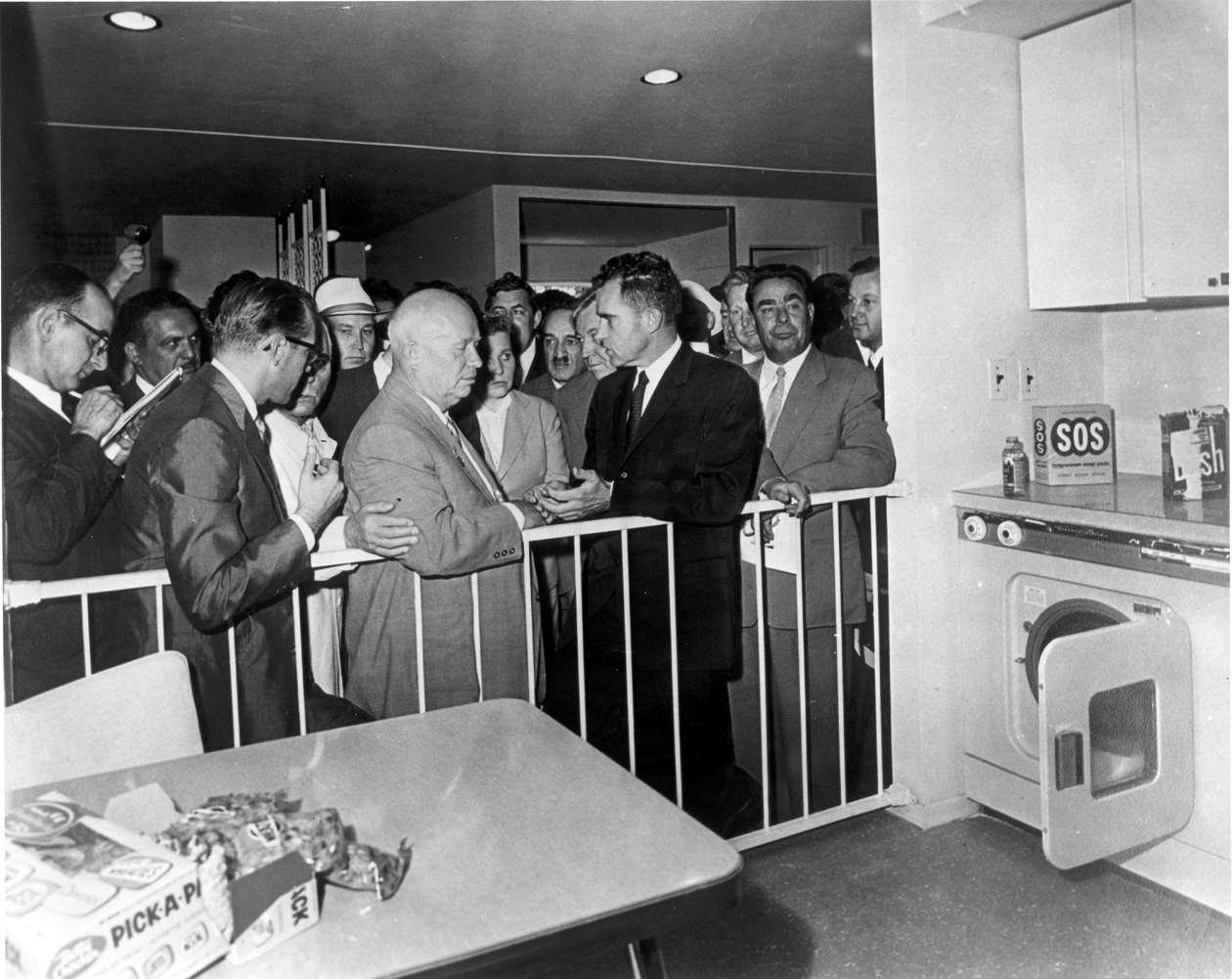
Ever imagine two world leaders arguing in a model kitchen? Sounds like something out of a sitcom, right? But it actually happened.
During the 1959 American National Exhibition in Moscow, then-Vice President Richard Nixon and Soviet Premier Nikita Khrushchev engaged in impromptu debates. They argued about the merits of capitalism and communism in the middle of a model American kitchen.
These became known as the “Kitchen Debates,” symbolizing the era’s ideological battle. It’s like a dinner party debate but with the world’s weight on their shoulders.
A Fresh Look at the Cold War’s Lesser-Known Stories
The Cold War wasn’t just a standoff between two giants. It was a swirling dance involving people from all walks of life and every corner of the globe.
From secret armies hiding in the shadows to cosmic battles among the stars, from jazz melodies that crossed borders to close calls that nearly brought us to war. What a time to be alive.
And here’s the takeaway: history is more complex than it seems. It’s not just dates, treaties, and old guys in suits. It’s alive, filled with stories, mysteries, and lessons waiting to unravel.








COMMENTS