

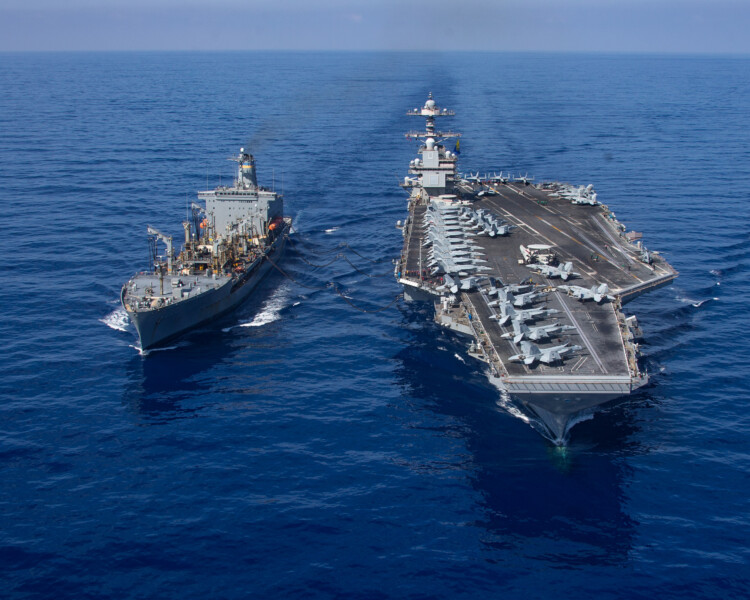

Against the backdrop of Israel’s military campaign in Gaza, the United States, the UK, France, Spain, and Italy all sent naval support due to the threats from Iranian-backed groups. Two American Carrier Strike Groups, led by the USS FORD and USS Eisenhower, are currently leading the Western naval support.
Along with the naval support, the 26th Marine Expeditionary Unit is on standby, and Washington is moving various air defense systems throughout undisclosed allies in the region.
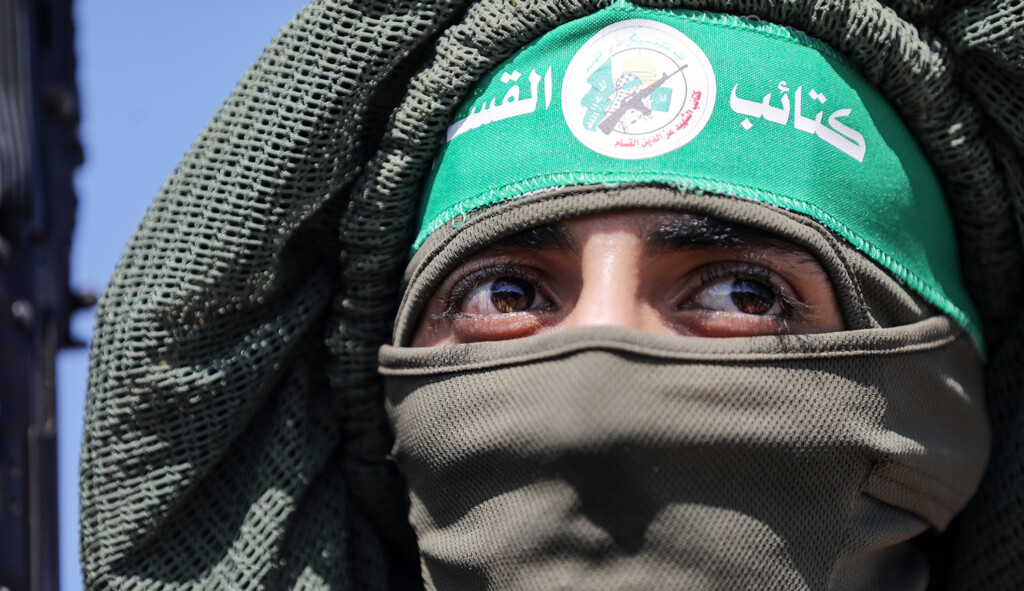
Prior Policies Only Emboldened IRGC-Backed Groups
One could argue the Iranian Nuclear Deal, known as the JCPOA, benefitted the Khamenei and IRGC more so than the people of Iran, who felt the brutality of the Mullahs and morality police during the Masha Amini Protests last year.
The JCPOA has allowed the Islamic Republic to stall its nuclear program and gave an avenue for the IRGC to export weaponry. Russia has used the infamous Shahed drones to maim Ukrainian civilians and attack infrastructure across the country during their invasion. Weapons shipments continue to flow into countries Syria and Lebanon from Iran.
Last year, Tehran broke its agreement with the International Atomic Energy Agency and turned off the cameras in their nuclear reactors, which was a precondition for sanctions relief. The United Nations Security Council also expressed concerns about growing uranium enrichment from Tehran, which could lead to the red line of a potential nuclear bomb and war between Israel and Iran.
Last month, the United Nations embargo against the Islamic Republic ended, which now means the IRGC could export and import ballistic missiles legally—a grave danger with Iranian-backed proxies that are currently active across the region.
Deterrence is Needed More than Ever
Though Israel’s invasion of Gaza to officially end Hamas has the potential to expand into a regional war, current American intelligence has stated Iran has no intentions of a direct conflict. Likewise, despite his constant warlike rhetoric, Hezbollah’s Secretary General indicated the group would not look for a wider war as it would draw in American military intervention.
The passive responses from Hezbollah and the Mullahs hint at their fears of foreign intervention, particularly by the US, which is Israel’s biggest military backer, showing the policy of deference is still valuable in 2023.
The presence of a naval building not seen in the region since the Iraq War has the major pro-Iranian factions and IRGC second guessing if Hamas would be worth the trouble to ignite a regional war. Which could cause hundreds of thousands, if not millions, of casualties if a group such as Hezbollah were to go all in.
Now, with the deterrence factor in play, the US and Europe should focus on a diplomatic solution to end the war with as few civilian casualties as possible but also display the willingness to go all in to deter other adversaries such as Russia, China, and North Korea—all three of which eye territorial ambitions on their neighbors.
The presence of the Sixth Fleet, backed by NATO allies, has so far done a tremendous job of deterring a regional war that the Middle East can ill-afford, and the policy of deterrence once shows ‘peace through strength’ triumphs over appeasement.








COMMENTS